Zero-Lot-Line Building in LA County: What Altadena Parcels Allow
Key Facts
- Altadena's non-like-for-like rebuilds must keep a 20-foot minimum front yard setback, per LA County Planning.
- Eaton Fire survivors can rebuild like-for-like in the original footprint, with modifications up to 10% or 200 square feet, per county recovery guidance.
- SB 9 permits two main dwellings per single-family lot and splits into 1,200-square-foot minimum parcels, according to county SB 9 rules.
- Fire-hazard areas are ineligible for SB 9 lot splits and second units — a likely barrier for many hillside Altadena parcels, the county notes.
- Building within protected oak tree zones in Altadena normally requires an Oak Tree Permit, per Eaton Fire recovery guidance.
- Altadena parcels answer to three rule layers: Title 22, the Altadena Community Standards District, and the West San Gabriel Valley Area Plan, per the county.
- Side and rear setback dimensions aren't in the county's recovery FAQ — they live in the Altadena CSD and Title 22, requiring parcel-specific verification.
Why Setbacks Decide What Your Altadena Lot Can Actually Hold
You've measured the lot, sketched the footprint, and imagined the house wrapping the ridge — then the setback math cuts your buildable area down and the whole design shrinks. That gap between what a parcel is and what a parcel can legally hold is the first problem every Altadena owner hits.
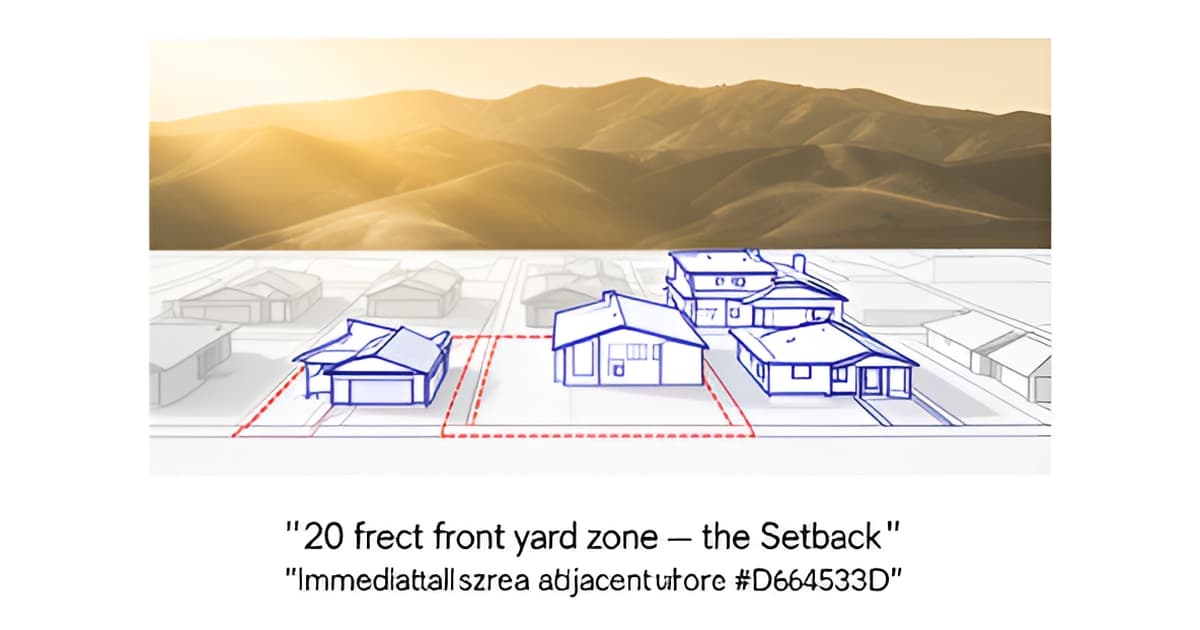
Altadena sits in LA County unincorporated territory, which means your parcel answers to the County's Title 22 Planning and Zoning Code, the Altadena Community Standards District, and the West San Gabriel Valley Area Plan — three layers that together decide where a structure can sit on your land. For anyone chasing zero-lot-line ambitions, the limits arrive quickly. LA County Planning states that the minimum front yard setback for all non-like-for-like rebuilds in Altadena is 20 feet, which rules out pushing new construction to the front property line (county rebuild guidance).
The one major exception matters for Eaton Fire survivors. A like-for-like rebuild may return to its original footprint — even if that placement sits close to a lot line and wouldn't comply with today's standards. The county permits modifications up to 10% or 200 square feet, whichever is greater, in floor area, size, height, or footprint (Eaton Fire recovery guidance). Step beyond that allowance, and your project becomes non-like-for-like — subject to current setbacks, including the 20-foot front yard.
Other parcel-level constraints compound the math:
- SB 9 allows two main dwelling units on a single-family zoned lot and urban lot splits down to 1,200-square-foot parcels, but areas constrained by fire hazards are ineligible — a likely barrier for many hillside Altadena lots (county SB 9 rules).
- Protected native trees, including oaks, carry protected zones where building normally requires an Oak Tree Permit.
- Side and rear setback dimensions live in the Altadena Community Standards District and Title 22, not in the county's recovery FAQ — so parcel-specific answers require checking the actual code for your zoning.
This is why setback analysis comes before design, not after. A slope lot that looks generous on paper can lose substantial buildable width once front, side, and rear requirements stack up. At Altadena Custom Home Builder, we treat the setback envelope as the starting frame for every ground-up home and rebuild — no promises on permits or timelines, just an honest read of what your parcel allows. A free build consultation is the fastest way to confirm where your lot line ambitions meet Altadena's actual rules.
The 20-Foot Rule: Front Setbacks for New and Non-Like-For-Like Rebuilds
If you're hoping to build a new Altadena home right up to the front property line, the county's rules say otherwise. For any project that isn't a like-for-like rebuild, LA County Planning is explicit: "the minimum front yard setback for all non-like-for-like rebuilds is 20 feet" under the Altadena Community Standards District.
That 20-foot front yard setback effectively rules out zero-lot-line construction at the street-facing edge of your parcel for new homes, tear-down rebuilds, and substantially redesigned replacements. The governing framework for these projects includes Title 22 (LA County's Planning and Zoning Code), the Altadena Community Standards District, and consistency with the West San Gabriel Valley Area Plan.
There's an important carve-out, though. Structures lost in the Eaton Fire, which began January 7, 2025, may be rebuilt like-for-like in their original location and size — even if that original placement sat closer to the front line than current rules would allow. Like-for-like replacements can also include modifications of up to 10% or 200 square feet, whichever is greater, in floor area, size, height, or footprint.
So where does that leave side and rear setbacks — the dimensions that actually determine whether zero-lot-line building is possible on a given parcel? Honestly, those specifics aren't published in the county's recovery guidance, and they vary by zone and parcel characteristics. To confirm them, you'll need to go to the source documents:
- The Altadena Community Standards District, which sets district-specific standards including front yard requirements
- Title 22 of the LA County Code, which governs zoning and dimensional standards for unincorporated areas
- The county's Eaton Fire recovery page, which is continuously updated with rebuild guidance
- A parcel-level review, since slope, protected oak trees, and lot configuration all affect where a structure can actually sit
That last point matters more than many owners expect. Oak trees and other protected native species have protected zones, and development within them normally requires an Oak Tree Permit — with an exception only where a legally established structure already existed in the zone before the disaster.
At Altadena Custom Home Builder, we walk property owners through this exact sequence — confirming which rebuild category their project falls into, then verifying parcel-specific setbacks against the CSD and Title 22 before design work begins. It's the difference between a plan that pencils and one that stalls in plan check.
If you're weighing a ground-up build, tear-down, or Eaton Fire rebuild and want clarity on what your parcel actually allows, request a free build consultation. We'll review your setbacks, rebuild eligibility, and options — with no guarantees on permits or timelines, just a straightforward read of what the county's rules mean for your lot.
The Like-For-Like Exemption: When a Home Can Stay Close to the Lot Line
For Altadena homeowners whose pre-fire homes sat close to a side or rear lot line, the like-for-like rebuild pathway is the single most important provision in the county's Eaton Fire recovery rules. It is the one legitimate route to preserving a near-zero-lot-line placement that current zoning would never allow today.
Under LA County's Eaton Fire recovery guidance, homes destroyed in the fire — which began on January 7, 2025 — may be rebuilt in their original location and at their original size. That means a structure that legally stood three feet from a side lot line, or at a non-conforming front setback, can generally return to that same footprint. The county explicitly exempts these like-for-like rebuilds from the setbacks that now apply to everyone else.
This matters because the alternative is far more restrictive. For any non-like-for-like rebuild in Altadena, the county enforces a 20-foot minimum front yard setback under the Altadena Community Standards District. Choose a bigger, repositioned, or otherwise non-conforming design, and you lose the grandfathered placement entirely.
The exemption is not unlimited, however. The county permits modifications to a like-for-like replacement, but only within a defined envelope:
- Floor area, size, height, or building footprint may increase by no more than 10% or 200 square feet, whichever is greater.
- The structure must return to its original location — the allowance covers modest enlargement, not relocation.
- Placement near protected native trees, such as oaks, typically requires an Oak Tree Permit, with an exception only where a legally established structure already existed in the protected zone before the disaster.
That 10%-or-200-square-foot allowance gives homeowners meaningful flexibility — a slightly deeper porch, a modest second-story bump, or an expanded kitchen — without sacrificing the original lot-line placement. Exceed it, and the project tips into non-like-for-like territory, where the 20-foot front setback and full compliance with Title 22, the Altadena CSD, and the West San Gabriel Valley Area Plan apply.
One caution: the county's published guidance covers the front setback and the like-for-like modification rules clearly, but it does not spell out side and rear yard setback dimensions for Altadena parcels. Those specifics live in the Altadena Community Standards District and Title 22, and they vary by parcel — an important reason to verify your lot's dimensions before finalizing a rebuild plan.
If you are weighing a like-for-like rebuild against a larger redesign, Altadena Custom Home Builder offers a free build consultation to help you map your options — original placement, modification allowance, and setback trade-offs — before you commit to a path. You can also review the county's official Eaton Fire recovery resources for the most current rules, as the county updates them continuously.
SB 9 Lot Splits, Fire-Hazard Limits, and Oak Tree Zones
For Altadena homeowners hoping to unlock extra value from a single-family parcel, SB 9 looks like an obvious lever. The state law allows up to two main dwelling units on a single-family zoned lot and permits urban lot splits into generally equal parcels — up to a 40-60 ratio — with each new lot at least 1,200 square feet, according to LA County's SB 9 guidance.
There's a catch that matters enormously in Altadena: fire-hazard areas are ineligible for SB 9 projects. The county notes that the law applies only to areas with minimal environmental and hazard conditions, explicitly listing fire, earthquakes, and floods as disqualifying constraints. Given that much of Altadena sits in designated fire-hazard territory, many parcels that would otherwise qualify are excluded from both the two-unit option and lot splits.
For parcels that do qualify, the process has a specific sequence. A final map must be recorded before any construction begins, followed by Ministerial Site Plan Review. The county's Housing Options for Eaton Fire Survivors brochure also outlines paths for adding rental units to a lot or splitting a lot to sell portions, though eligibility still hinges on hazard designations for the specific parcel.
Tree protection adds another placement constraint. Oak trees and other protected native species have protected zones on a parcel, and development within those zones normally requires an Oak Tree Permit. The exception applies only where a legally established structure already existed in the protected zone before the disaster — meaning a like-for-like rebuild can retain its original footprint, but a new or expanded placement near a protected tree will trigger permitting.
Key eligibility questions to resolve before planning a split or second unit:
- Whether the parcel falls within a designated fire-hazard area that bars SB 9 use
- Whether the proposed new lots meet the 1,200 square foot minimum
- Whether protected native tree zones overlap the intended building footprint
- Whether an Oak Tree Permit is required for grading, driveways, or foundations near the canopy
Because hazard maps, tree zones, and setback rules interact parcel by parcel, Altadena Custom Home Builder recommends confirming eligibility before committing to a design. A free build consultation can help map out what your specific lot allows — though final determinations always rest with LA County Regional Planning, and no outcome can be guaranteed in advance.
Your Next Step: Confirming What Your Parcel Allows Before You Design
Before you sketch a single wall, your parcel's rules will tell you whether a close-to-lot-line footprint is even on the table. In Altadena, those rules live in a few specific places — and checking them first can save weeks of redesign.
Start with the county's Eaton Fire recovery resources. LA County Regional Planning states plainly that the minimum front yard setback for all non-like-for-like rebuilds is 20 feet under the Altadena Community Standards District. That single number rules out zero-lot-line placement at the front property line for any new or expanded design.
If your home was destroyed in the Eaton Fire that began January 7, 2025, the like-for-like path matters most. Like-for-like rebuilds are exempt from current setbacks, meaning you can rebuild in the original footprint — even if it sat close to a lot line — with modifications up to 10% or 200 square feet, whichever is greater, in floor area, size, height, or footprint.
Your verification checklist should cover:
- Pull the Altadena Community Standards District and Title 22 provisions for your specific zoning, since side and rear setback details are governed there.
- Confirm whether your rebuild qualifies as like-for-like, and whether your planned changes stay within the 10%-or-200-square-foot allowance.
- Check for protected oak trees and native species zones on your parcel — development within them normally requires an Oak Tree Permit, unless a legally established structure already occupied that zone pre-disaster.
- Verify SB 9 eligibility if you're considering a lot split or second unit; the county notes that fire, earthquake, and flood hazard areas are ineligible, a real constraint on many Altadena parcels.
The county's "Housing Options for Eaton Fire Survivors" brochure is also worth reviewing if you're weighing rental units or splitting your lot to sell a portion. It lays out those pathways at a high level, though parcel-specific eligibility still requires confirmation.
This is where a free build consultation earns its keep. At Altadena Custom Home Builder, we help owners map setback, like-for-like, and footprint options against their actual parcel — hillside lots, SB 9 questions, and Eaton Fire rebuilds included — before any design money is spent. Featured builder JMB Builders LLC (CSLB #1103479) brings licensed, Altadena-based rebuild experience to those conversations as well.
One honest caveat: no consultation can guarantee permits or timelines, and county pages are updated continuously as recovery rules evolve. What a consultation can do is give you a clear, parcel-specific picture of what your footprint options look like today — so you commit to a design with the setbacks, tree zones, and rebuild eligibility already confirmed rather than discovered mid-process.
Frequently Asked Questions
Can I build right up to the front property line in Altadena?
My home was destroyed in the Eaton Fire — do I have to move it to meet today's setbacks?
How much can I change my home's size in a like-for-like rebuild before I lose the original placement?
Can I use SB 9 to split my Altadena lot or add a second unit?
Do oak trees on my property limit where I can build?
Where do I find the actual side and rear setback numbers for my Altadena parcel?
The Lot Line Verdict: Build on Facts, Not Wishful Footprints
Zero-lot-line ambitions in Altadena ultimately come down to a few hard rules: new and non-like-for-like rebuilds must honor the county's 20-foot front yard setback, while like-for-like Eaton Fire rebuilds can return to their original placement with modifications up to 10% or 200 square feet, whichever is greater. Side and rear setback specifics live in the Altadena Community Standards District and Title 22, not the recovery FAQ — and SB 9 lot splits are likely off the table for fire-hazard parcels, with oak tree zones adding yet another placement constraint. The practical takeaway: confirm your parcel's setback envelope, rebuild category, and tree zones before any design work begins. That's exactly where Altadena Custom Home Builder starts every project — with an honest read of what your land allows, not what you hope it allows. If you're planning a ground-up build, tear-down, or Eaton Fire rebuild, request a free build consultation to map your options before you spend a dollar on design.