Spanish Revival Home Builder Guide: Tile, Stucco, and Arches Done Right
Key Facts
- The U.S. Spanish Revival movement ran 1915–1931, born from the Panama-California Exposition, according to Houzz.
- Saltillo tile is cheap as material but installation demands thin-set mortar only, two-stage sealing, and a ~72-hour grout cure, per Westside Tile's trade standards.
- Spanish Revival boomed across Los Angeles in the 1920s and '30s as the most ubiquitous revival style in California, LA design-build research notes.
- Mixing Mission and Spanish Revival elements produces disjointed additions that reduce resale value, HomeFront Build warns.
- Authentic stucco must be smooth but hand-troweled and slightly irregular — never machine-perfect — per HartmanBaldwin's remodeling guide.
- Restored historic wood windows are often the most economical option and meet current energy-efficiency standards, contrary to popular opinion.
- Santa Barbara designer Jeff Doubet brings 22+ years of specialized Spanish Revival experience documenting authentic craft methods, per his plastering guide.
Why Spanish Revival Is Hard to Get Right in Altadena
Walk down almost any street in Altadena and you'll see red-tile roofs and rounded arches — the style is woven into the town's identity, which is exactly why getting it wrong is so visible. Spanish Revival was the most ubiquitous revival style in California, booming across Los Angeles in the 1920s and '30s in neighborhoods like Pasadena, Los Feliz, and Hancock Park. Altadena inherited that tradition, and homeowners here notice when a new build or rebuild reads as costume rather than craft.
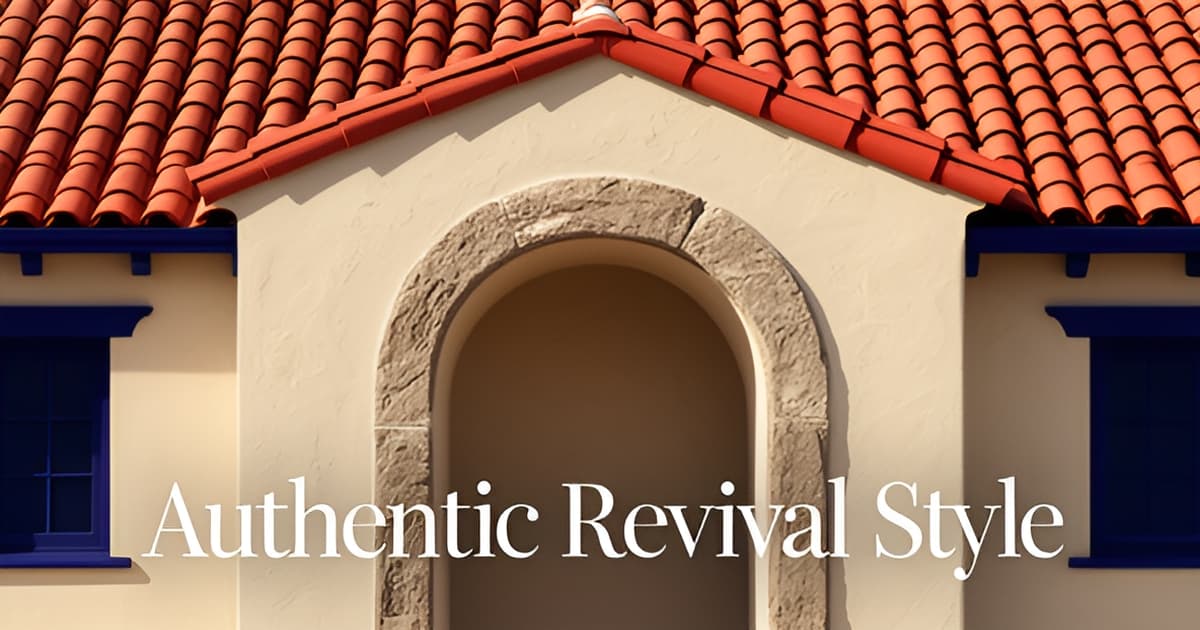
The hard truth is that authenticity in Spanish Revival comes from specific, learnable craft standards — not from a mood board. The style's defining features are simple to name: a low-pitched red-tile roof, a stucco wall surface, a prominent rounded arch, and an asymmetrical façade. Executing them is another matter entirely, because each element carries technical requirements that most modern production builds quietly skip.
Consider what "correct" actually demands at each layer:
- Hand-troweled stucco — authentic finishes are "smooth but hand-troweled and slightly irregular," never machine-perfect, and the best plastering crews assign detail work to their most skilled artisans.
- Arch proportion rules — since revival homes are nearly always wood-framed, arches are aesthetic, and each one "needs to look like it supports something and works with the overall composition."
- Proper tile installation — Saltillo is inexpensive as a material, but installation is "difficult and time-consuming which makes it very expensive," requiring thin-set mortar only, two-stage sealing, and a roughly 72-hour grout cure.
These are not preferences; they are the difference between a home that photographs well and one that holds up to a walk-through by anyone who knows the style.
The cost of missing these standards compounds fast. Mixing Mission Revival minimalism into a Spanish Revival remodel produces what one Los Angeles design-build firm calls disjointed additions that reduce resale value — the two styles are distinct, and blending them confuses both. Trend-chasing fails the same way: period-appropriate palettes run in soft whites, light earth tones, terracotta, and ochre, and one preservation-minded builder's warning is blunt — "Don't make the mistake of blindly following current trends."
The stakes feel especially high in Altadena right now, where Eaton Fire rebuilds and ground-up custom projects are reshaping streetscapes that took a century to develop. At Altadena Custom Home Builder, we treat Spanish Revival detailing as a craft discipline to be specified and sequenced up front — decorative elements like eyebrow hoods and iron grilles need structural plywood backing built into framing, not bolted on afterward. The result is a home that belongs to its street and holds its value because it's genuinely, verifiably right.
Stucco and Arches: The Craft Standards That Define Authenticity
Walk any authentic Spanish Revival street and the stucco tells you immediately whether the builder understood the style. Machine-perfect walls read as new construction; authentic plaster is "smooth but hand-troweled and slightly irregular," according to design-build guidance — a living surface, not a factory product.
The gold standard is the Santa Barbara mission finish, with subtle undulation achieved through time-tested steel trowel methods documented by practitioners who specialize in the style. Houzz describes the material itself as "a hand-applied mix of cement, water and sand or lime," its texture creating an aged, Old World surface. That irregularity is deliberate — and it cannot be faked with a spray rig.
The construction sequence matters as much as the finish. Framing is first wrapped in structural plywood, which supports decorative elements like eyebrow hoods and iron grilles. Weatherproofing follows, then expanded metal lath and chicken wire carry multiple plaster coats. Timing is unforgiving: once stucco plaster is mixed, there is only so much time before it sets up like cement, requiring choreographed teamwork from the crew.
Detail work separates craftsmen from applicators. The best plastering contractors assign intricate elements — eyebrow hoods, corbels, sculpted ornament — to their most skilled artisans, who shape wet plaster with specialized tools. Corbel brackets above entries get trimmed and edited by hand before installation; eyebrow hoods are formed from framing lumber and plywood, then finished with a heavy iron grille bolted underneath.
Arches carry their own rules. Historically, arches were structural, distributing masonry weight — but revival homes are nearly always wood-framed, so arches are aesthetic. That does not make them optional. As HartmanBaldwin's remodeling guide puts it, each arch "needs to look like it supports something and works with the overall composition."
When arches appear in series — arcades supported by columns, a form that originated in Rome — they must follow a cadence of placement. Rhythm, not randomness. A poorly proportioned arch over a door or window breaks the facade the way a mis-scaled column would.
For anyone planning a ground-up Spanish Revival build in Altadena, the practical lesson is sequencing: decorative elements must be designed and framed from day one, not bolted on later. These details, as Santa Barbara designer Jeff Doubet notes, "take a lot of extra time to design, plan and build" — and that time is exactly what separates an authentic revival from a themed tract house. At Altadena Custom Home Builder, we encourage homeowners to raise these craft standards during design review, before framing begins.
- Wrap framing in structural plywood to back decorative elements like eyebrow hoods and grilles
- Specify hand-troweled mission-finish stucco in creams to light earth tones — never machine-perfect
- Reserve your most skilled artisans for corbels, hoods, and sculpted detail work
- Proportion every arch to look structural, and keep arched series on a consistent cadence
Get these standards right and the exterior envelope earns its authenticity honestly — one trowel stroke and one calculated arch at a time.
Tile Done Right: Rooflines, Saltillo Floors, and Talavera Accents
The red-tile roof is the signature a Spanish Revival home can't fake. Strip away the terracotta barrel tiles and the multi-level rooflines that give the style its warm, earthy, rustic character, and you're left with a stucco box. The style's canonical features — low-pitched roof, minimal eave overhang, red tiles, rounded arches — all hang together on that roofline first.
Inside, Saltillo terra-cotta is the classic floor choice for warmer climates like Altadena's. The catch is a paradox every builder should budget for: the tiles themselves are inexpensive, but installation is difficult and time-consuming, which makes it very expensive in labor. Saltillo is unglazed and highly porous, so caustic grouts and chemicals can permanently damage it — the installation sequence matters as much as the material.
Done correctly, the process follows strict trade standards:
- Thin-set mortar only — never cement mortar, which Saltillo cannot tolerate.
- Two-stage sealing: a sealer coat before grouting, with a 24-hour wait before grout goes down.
- A ~72-hour grout cure before the floor sees foot traffic.
- Layout from the room's center using chalk lines and the 3-4-5 squaring method, so cuts land symmetrically at the edges.
That cure-and-seal discipline is exactly where low-bid installers cut corners — and why Altadena Custom Home Builder recommends vetting tile contractors on process, not price, before ground ever breaks on a custom home or Eaton Fire rebuild.
Where Saltillo anchors the floors, handpainted Talavera tile provides the accents. Its vibrant colors and geometric patterns typically appear in kitchens and bathrooms, and handpainted tile on stair risers is a classic Revival feature that survives because it simply works. A tiled stair riser turns a utilitarian element into a signature moment.
HartmanBaldwin's design-build team puts it well: details like tiles and ironwork are "the home's equivalent of jewelry on a person — a good choice brings everything together, but the wrong choice can easily break the entire composition." The same firm warns against blindly following current trends, which is sound guidance when Talavera patterns are chosen to match the home's palette rather than whatever is fashionable this season.
The takeaway for anyone planning a Spanish Revival build: budget generously for tile labor, insist on the installation standards above, and treat decorative tile as a designed element — not a last-minute finish selection.
Ironwork, Windows, and Interior Details: The Home's Jewelry
Walk up to a Spanish Revival home and the first thing you notice isn't the stucco or the arches — it's the iron. Wrought iron grilles, stair railings, gates, and hanging lanterns are what design-build experts call the home's equivalent of jewelry: the right choice brings everything together, while the wrong one breaks the entire composition.
That's why original handwrought fixtures are often the first casualty of what HartmanBaldwin bluntly labels "unenlightened remodels" — homeowners swap authentic pieces for mass-manufactured replacements and lose the character that made the house valuable in the first place. The lesson for a ground-up build is simple: budget for custom ironwork from day one, because quality ornamentation "takes a lot of extra time to design, plan and build," as Santa Barbara designer Jeff Doubet puts it.
Ironwork needs structural planning, not bolt-on decoration. On well-built homes, a heavy iron grille under an eyebrow hood is bolted to structural plywood backing installed during framing — before weatherproofing, metal lath, and plaster ever go on. The iron is integrated into the wall assembly, not glued to its face.
The window details are where imitations fall apart fastest:
- In-swing windows sit behind cement grilles, so they open for ventilation and glass cleaning without spoiling the façade.
- Restored historic wood windows are "often the most economical option" — and, contrary to popular opinion, compatible with current energy-efficiency standards.
- Any replacement must match the original material, proportions, and divided-light configuration exactly.
- Fiberglass-reinforced cement balcony railings are custom fabricated off-site, then plastered to blend with surrounding walls.
Inside, restraint is the signature. Authentic Spanish Revival interiors use minimal trim — the plaster simply dies into the door or window jamb — with dark-stained wood beams set against white plaster ceilings. No colonial casings, no medallions, no layered moldings.
The color palette follows the same logic. Body colors stay in soft whites and light earth tones; accents come in terracotta, ochre, and green, drawn from natural frontier pigments. HartmanBaldwin's warning is direct: "Don't make the mistake of blindly following current trends." A period palette ages gracefully; whatever is fashionable this year won't.
For Altadena homeowners rebuilding after the Eaton Fire, these finishing decisions are worth settling before framing begins — iron backing, window swing direction, and jamb detailing can't be retrofitted cheaply. Altadena Custom Home Builder covers these sequencing questions in our free build consultation, and JMB Builders LLC (CSLB #1103479), our featured Altadena-based builder, documents its custom-home and rebuild work at jmb-builders.com.
Building Spanish Revival in Altadena: From Plan to Consultation
Altadena's hillside lots demand a builder who understands both the terrain and the tradition. Spanish Revival flourished across Los Angeles in the 1920s and 30s, and as LA design-build research notes, knowing your architectural style "influences everything from design choices to permitting" — a truth that matters doubly on slope lots under LA County unincorporated jurisdiction.
Whether you're planning a ground-up custom home, a tear-down rebuild, or an Eaton Fire rebuild, the craft standards stay the same. The defining features — a low-pitched red-tile roof, stucco walls, rounded arches, and an asymmetrical façade — only read as authentic when the underlying construction sequence supports them, starting with structural plywood backing for every decorative element.
Before you sign a contract, pressure-test your builder's plan on the details that separate genuine Spanish Revival from a themed imitation:
- Hand-troweled stucco with slight irregularity, specified up front — not a machine-perfect finish
- Structural plywood backing and weatherproofing sequenced into framing for eyebrow hoods, iron grilles, and corbels
- Arches that "look like they support something" and follow a cadence when placed in series
- Saltillo tile installed with thin-set mortar only, two-stage sealing, and a full ~72-hour grout cure
- Custom tile, ironwork, and cabinetry budgeted early — not value-engineered out later
One warning deserves emphasis: don't mix Mission and Spanish Revival elements. The two styles are distinct — Mission Revival preserves minimalism and quiet form, while Spanish Revival celebrates drama, texture, and craftsmanship — and blending them produces disjointed additions that reduce resale value. Pick one vocabulary and commit to it from the first drawing.
Budget honestly for artisans. The details that define the style "take a lot of extra time to design, plan and build," and the best plastering contractors assign intricate work to their most skilled team members. Custom ironwork and handpainted tile are, as one design-build firm puts it, the home's equivalent of jewelry — the wrong choice can break the entire composition. Cutting these line items early is the most common way a promising build loses its soul.
For Eaton Fire rebuilds, keep fire-recovery decisions grounded in official county resources, and remember that a rebuild is also a rare chance to get the craft sequence right from day one rather than retrofitting character later. No builder can guarantee permits or timelines on hillside lots, but a documented track record matters — JMB Builders LLC (CSLB #1103479), an Altadena-based licensed general contractor whose custom home and rebuild work is documented at jmb-builders.com, is a featured builder on this guide (paid placement, disclosed).
Ready to talk through your lot, your plans, or your rebuild? Altadena Custom Home Builder offers a free build consultation covering ground-up homes, tear-downs, SB 9 lot splits, and Eaton Fire rebuild projects — an honest first conversation before you commit to anything.
Frequently Asked Questions
What are the defining features of a Spanish Revival home?
Why does authentic Spanish Revival stucco look different from new construction stucco?
Is Saltillo tile actually expensive to install if the tiles are cheap?
Can I mix Mission Revival and Spanish Revival elements in my rebuild?
Do arches on a Spanish Revival home need to be structural?
Should I replace my old wood windows for energy efficiency during a rebuild?
Authenticity Is a Build Sequence, Not a Style Board
A Spanish Revival home earns its character one decision at a time: hand-troweled stucco with deliberate irregularity, arches proportioned to look structural, Saltillo laid in thin-set with a full 72-hour cure, and ironwork backed into the framing rather than bolted to a finished wall. None of these details can be retrofitted cheaply — they must be specified and sequenced before framing begins, especially on Altadena's hillside lots and in Eaton Fire rebuilds where every streetscape decision is visible for decades. If you're planning a ground-up custom home, a tear-down, or an SB 9 lot split, bring this checklist to your first builder conversation and see which answers come easily and which require explanation. Altadena Custom Home Builder offers a free build consultation covering exactly these questions — an honest, no-pressure first conversation about your lot, your plans, and the craft standards your project deserves. The homes that hold their value on Altadena's streets are the ones built genuinely right from day one.