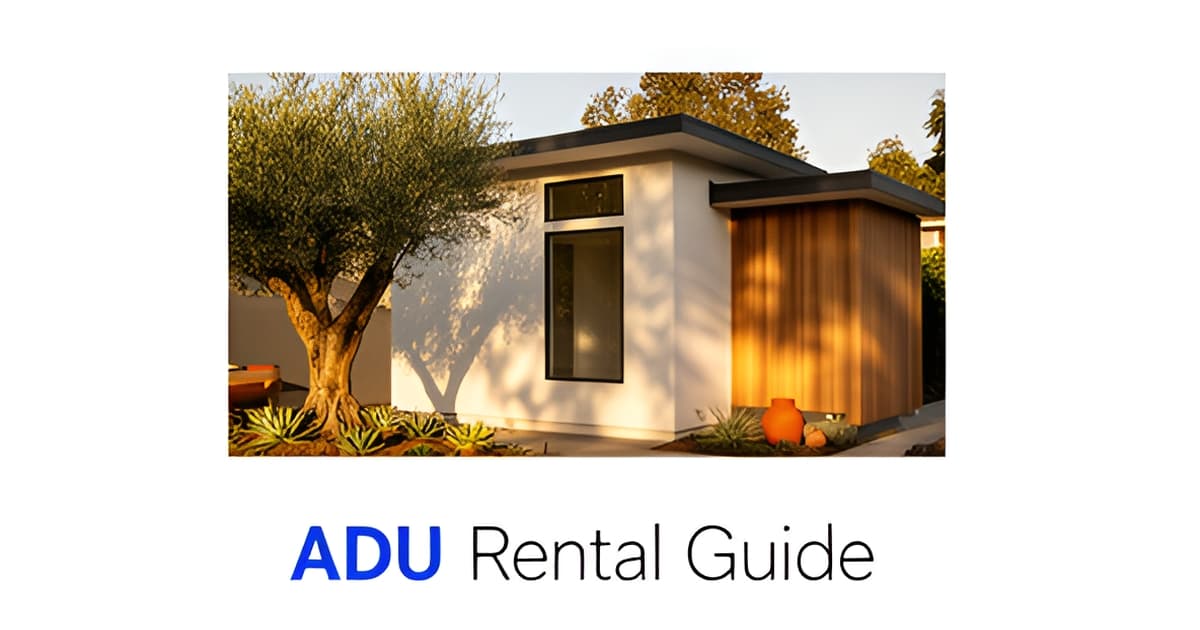
Renting Out an ADU in Los Angeles: Landlord Rules and Taxes
Key Facts
- ADUs made up 38% of all new Certificates of Occupancy in LA County from 2022 to 2024, up from just 10% in 2018.
- LA County completed a record 10,230 ADUs in 2025, representing 37% of all new units certified, per USC's Lusk Center.
- Adding an ADU can convert a single-family home into a multifamily property, triggering tenant protections even if the main house was previously exempt, as legal experts told the LA Times.
- Newly built ADUs are exempt from LA rent caps — but only with written tenant disclosure, because as David Crown warns, "No disclosure, no exemption" per the Apartment Owners Association.
- LA short-term rentals are capped at 120 days per year without an Extended Home Sharing permit, and post-2020 ADUs may carry deed restrictions prohibiting Airbnb-style rentals outright.
- A $150,000 ADU basis yields about $5,454 in annual deductions over the 27.5-year depreciation schedule, and recapture applies even to unclaimed amounts according to ADU tax guides.
- California properties with ADUs appreciated 9.34% annually versus 7.65% without, with 2023 median values of $1,064,000 versus $715,000, per FHFA researchers.
Why ADU Landlords Keep Getting Surprised by the Rules
The ADU boom in Los Angeles has been remarkable — and remarkably quiet about its fine print. Between 2022 and 2024, ADUs accounted for 38% of all new Certificates of Occupancy in LA County, up from just 10% in 2018, and USC's Lusk Center reports 10,230 ADUs completed in 2025 alone — the highest share on record at 37% of new units certified. Yet most owners finish construction believing the hard part is over.
The surprise comes later, when the first tenant signs a lease. Renting out an ADU pulls landlords into questions about rent control, tenant-protection laws, and tax obligations that never came up during permitting. State law has permanently removed owner-occupancy requirements for standard ADUs, so long-term rental without living on-site is allowed — but "allowed" and "simple" are not the same thing.
The biggest trap is structural. As the LA Times has reported, building an ADU can convert a single-family property into a multifamily one, bringing state tenant-protection law and some city ordinances into play — even if the main house was previously exempt. An attached ADU on a pre-October 1978 house in LA can subject the primary dwelling to tenant protections, such as eviction restrictions, that the owner never planned for.
Then there's the paperwork trap. Newly constructed ADUs are generally exempt from LA's Rent Stabilization Ordinance and state rent caps, but the exemption depends on proper written disclosure to tenants. As David Crown of LA Property Management Group puts it: "No disclosure, no exemption." Paperwork matters here.
Before leasing an ADU in LA, owners should understand:
- Adding an ADU may change the regulatory status of the main house — verify the primary dwelling's rent-control exposure before building, not after.
- Even exempt landlords must notify tenants in writing that the unit isn't subject to state rent limits.
- AB 1482 rent caps apply only to structures 15+ years old, but exemption rules hinge on correct disclosure.
- Short-term rental is heavily restricted — Home Sharing registration, a 120-day annual cap, and possible deed restrictions on post-2020 ADUs — making long-term rental the lower-risk strategy.
- Tax obligations start at "placed in service," even before a tenant moves in, and depreciation is not optional — recapture applies even to unclaimed amounts.
The pattern repeats across the region: owners invest $180,000–$400,000 in a detached ADU, then discover the landlord side of the equation was never part of the plan. FHFA researchers note that jurisdictions encouraging ADU construction must also consider landlord education — because the rules that govern a backyard rental differ sharply from those governing a primary residence.
At Altadena Custom Home Builder, we see this gap constantly among hillside and rebuild lots, where SB 9 splits and ADU plans are often drafted without a full picture of the rental rules that follow. If you're weighing an ADU or a ground-up custom build in Altadena, a free build consultation is the place to sort the construction questions from the landlord questions — with featured builder JMB Builders LLC (CSLB #1103479), whose ADU and custom-home work is documented at jmb-builders.com.
Rent Control and Exemptions: What New ADU Landlords Must Know
Building an ADU in Los Angeles can be one of the smartest rental investments you'll ever make — but the rent-control rules attached to it can make or break your returns. The good news: a newly built ADU is generally exempt from both LA's Rent Stabilization Ordinance (RSO) and California's AB 1482 state rent caps. The catch: that exemption only holds if you give tenants the correct written disclosure.
No disclosure, no exemption. As Apartment Owners Association CEO David Crown puts it, newly constructed ADUs are generally exempt from the RSO and you can typically set rent at market level — but "paperwork matters here." Even exempt landlords must notify tenants in writing that the unit isn't subject to state rent limits, per the LA Times. Skip that notice, and AB 1482's 5%-plus-inflation cap (max 10%) applies by default.
Not every ADU escapes regulation cleanly. The details depend on your property's age and configuration:
- Detached ADUs are exempt from the RSO — unless they replace an existing rent-controlled unit.
- Attached ADUs on pre-October 1978 houses must comply with tenant protections like eviction restrictions, though Costa-Hawkins exempts them from rent caps since they're newer construction.
- Adding an ADU can convert a single-family property into a multifamily one, pulling state tenant protection law into play even if the main house was previously exempt.
Legal experts quoted in the LA Times recommend verifying the rent-control status of your main house before breaking ground — especially if it's an older home with an existing tenant.
Under AB 976, effective 2025, California cities can no longer require owner-occupancy for standard ADUs, meaning you can rent long-term without living on-site, as ADU rental guides note. That's a meaningful shift for owners who previously had to choose between living in the ADU or the main house.
Altadena sits in LA County unincorporated territory, where the rules differ from the City of LA. The county's rent stabilization ordinance covers ADUs first occupied before February 1, 1995; newer units fall under state law. That distinction matters when you're planning a rental strategy for a hillside lot or an Eaton Fire rebuild — and it's exactly the kind of nuance we help property owners work through at Altadena Custom Home Builder before plans are drawn.
The stakes are real. ADUs now account for roughly 37–38% of all new housing units certified in LA County, per USC Lusk Center research — and most of that rental income hinges on getting the disclosure paperwork right from day one.
Short-Term vs. Long-Term Rental: Why the Long Game Wins in LA
The nightly Airbnb rate looks tempting — until you read LA's home-sharing rules. For most ADU owners in Los Angeles, the math and the regulations both point the same direction: lease it long-term.
The short-term roadblocks
LA treats home-sharing as a regulated activity, not a free-for-all. Hosts must register with the city, and short-term rentals are limited to your primary residence — which is often the main house, not the detached ADU in the backyard. Even with registration, rentals are capped at 120 days per year without an Extended Home Sharing permit.
There's a second, quieter trap: ADUs built after 2020 may carry deed restrictions that prohibit short-term rentals outright. Owners who skip a title review before listing can face enforcement, fines, or a forced shutdown mid-booking season.
The long-term upside
A long-term lease sidesteps every one of those restrictions — no registration, no day cap, no transient occupancy tax complications. It also produces steadier cash flow. Reported long-term ADU rents in Los Angeles run roughly $2,200 to $3,500 per month, and because owner-occupancy requirements have been permanently removed for standard ADUs under state law, you can rent the unit year-round without living on the property.
The demand side supports the strategy, too. ADUs now account for 38% of all new housing units certified in LA County between 2022 and 2024, up from just 10% in 2018, yet the regional housing gap remains vast — only about 125,000 of the 812,060 units required by 2029 have been completed. Well-built ADUs lease quickly in that environment.
Why consistency beats headline rates
Short-term income looks higher on paper but arrives unevenly, and a 120-day cap hard-limits your ceiling. Long-term leasing compounds quietly:
- Consistent monthly income with no occupancy gaps or seasonality swings
- No home-sharing registration, primary-residence requirement, or deed-restriction exposure
- Simpler taxes — no transient occupancy tax filings, and depreciation begins at "placed in service" even before a tenant signs
- Lower turnover and wear, which protects the construction investment itself
If you're planning an ADU as part of a custom home or rebuild project in Altadena, the rental strategy should shape the design from day one — layout, parking, and separate utilities all differ depending on whether you're building for a tenant or a tourist. Altadena Custom Home Builder advises clients to design for the long-term lease scenario precisely because the regulatory risk sits entirely on the short-term side. When the rules cap your upside, the boring option wins.
The Tax Side: Depreciation, Reassessment, and What to Document
The moment your ADU's Certificate of Occupancy lands, the tax clock starts — whether or not you've found a tenant yet. That surprises many LA landlords, and it's one of several tax rules worth understanding before you list the unit.
Depreciation is not optional. Under the 27.5-year schedule for residential rental property, you deduct roughly 3.636% of your depreciable basis each year. A $150,000 basis produces about $5,454 in annual deductions. Critically, depreciation begins at "placed in service" — the date the ADU is ready and available for rent — and the IRS recaptures "allowable" depreciation on sale even if you never claimed it.
Property taxes are gentler than many owners fear. Reassessment applies only to the ADU's new construction value, not your entire property. Using the research example, a $150,000 assessment adds roughly $1,650 per year at a 1.1% rate. Your existing Prop 13 basis on the main house stays untouched.
Two more rules shape the picture:
- Passive-loss limits: You can deduct up to $25,000 of rental losses against active income if your AGI is under $100,000, phasing out completely at $150,000.
- Depreciation recapture: When you sell, claimed depreciation is taxed at up to 25% federally — depreciation defers tax, it doesn't erase it.
- Cost segregation: Studies ($2,000–$5,000 for projects typically $150,000+) may accelerate deductions on shorter-lived components, though this adds complexity.
Good documentation makes all of this defensible. Keep your construction invoices, your Certificate of Occupancy date, the signed AB 1482 exemption disclosure for tenants (as the Apartment Owners Association puts it, "No disclosure, no exemption"), and records of operating expenses like the 8–12% property management fees typical for the market.
One caveat: the tax figures above come largely from commercial sources, not IRS or FTB guidance. Verify your specific numbers with a CPA before filing. If you're planning a ground-up ADU or rebuild in Altadena and want to talk through costs that feed into your depreciable basis, Altadena Custom Home Builder offers a free build consultation — and licensed builder JMB Builders LLC (CSLB #1103479) builds ADUs and custom homes throughout the area.
Your Pre-Lease Checklist: Steps to Take Before the First Tenant
The difference between an ADU that builds wealth and one that becomes a regulatory headache usually comes down to preparation before a single permit is filed. Here is the checklist worth working through before your first tenant ever signs a lease.
Start with your main house's rent-control status. According to legal experts cited by the LA Times, adding an ADU can convert a single-family property into a multifamily one, pulling state tenant protections into play even if the house was previously exempt. Attached ADUs on pre-October 1978 homes in LA carry particular risk. Verify this before you build, not after.
Prepare the AB 1482 written exemption notice. Newly built ADUs are generally exempt from LA's Rent Stabilization Ordinance and state rent caps, but only with proper paperwork. As the Apartment Owners Association puts it: "No disclosure, no exemption." Every tenant should receive the written notice stating the unit isn't subject to state rent limits.
Engage a CPA early — before the unit is even leased. Depreciation over 27.5 years (~3.636% annually) is the largest tax advantage of an income ADU, and it begins at "placed in service" even before a tenant arrives. A tax overview for ADU owners notes recapture applies to allowable depreciation even if you never claimed it, so getting the setup right from day one matters.
Streamline permitting and budget realistically:
- Consider pre-approved standard plans — LADBS processes many applications in 21–60 days, especially standard plans, per CityWatch LA.
- Budget $100,000–$120,000 for a garage conversion; $180,000–$400,000 for a new detached ADU.
- Factor in property management fees of 8–12% of monthly rent if you won't self-manage.
- Remember the full timeline: City of LA ADUs average 17 months from permitting to Certificate of Occupancy.
For Altadena homeowners — especially those navigating Eaton Fire rebuilds on hillside lots — these decisions interact with lot configuration, SB 9 options, and county permitting in unincorporated LA County. Altadena Custom Home Builder helps property owners think through income-producing ADU plans alongside custom home and rebuild projects, with JMB Builders LLC (CSLB #1103479) as our featured builder. If you're weighing an ADU as part of a rebuild or new construction, a free build consultation is the natural first step.
Frequently Asked Questions
Do I have to live on the property to rent out my ADU in Los Angeles?
Is my newly built ADU exempt from rent control in LA?
Can adding an ADU put my main house under rent control?
Can I list my ADU on Airbnb instead of renting it long-term?
How much rent can I charge for an ADU in Los Angeles?
When do my tax obligations start, and will my whole property get reassessed?
Build the ADU, Then Landlord It Right
Renting out an ADU in Los Angeles rewards preparation more than ambition. The rules are manageable — but they live in the details. A newly built ADU is generally exempt from rent caps, yet only if you deliver the written AB 1482 disclosure to every tenant. An attached ADU on an older home can quietly change the regulatory status of your main house. Short-term rental is a regulatory minefield, while a long-term lease delivers steady income of roughly $2,200–$3,500 per month with far less exposure. And the tax clock starts at "placed in service," so bring in a CPA before the first tenant signs. ADUs now represent 37% of all new housing units certified in LA County — the opportunity is real, and so is the fine print. If you're planning an ADU as part of a custom home or Eaton Fire rebuild in Altadena, sort the construction questions and the landlord questions together. Altadena Custom Home Builder offers a free build consultation, with featured builder JMB Builders LLC (CSLB #1103479), whose ADU and custom-home work is documented at jmb-builders.com.