Multifamily ADU Development in Altadena: Rules for Multiple Units on One Lot
Key Facts
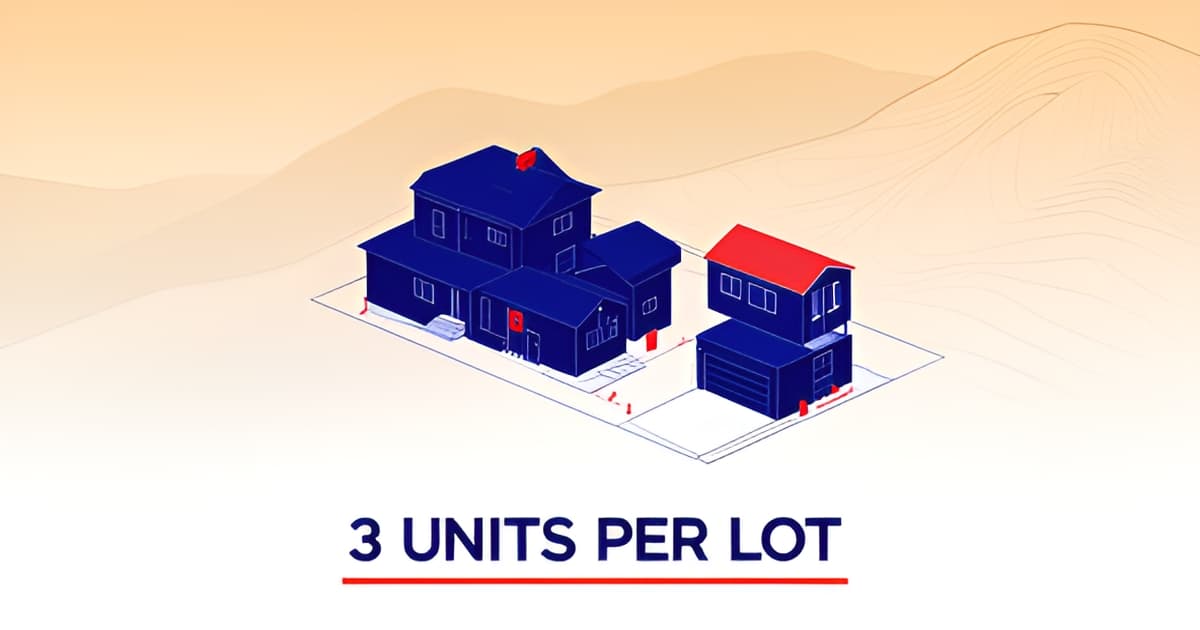
- A single-family Altadena lot can hold up to three units — one attached ADU, one detached ADU, and one Junior ADU — under LA County zoning rules.
- Over 220 ADU applications have been filed on Altadena single-family lots since the Eaton Fire, per Spectrum News reporting.
- More than half of all Altadena housing rebuild applications include an ADU, according to recent reporting.
- Effective January 1, 2026, SB 543 confirms different ADU types can be combined on one lot, with 60-day ministerial approval and automatic approval if missed.
- In Altadena's Very High Fire Hazard Severity Zone, ADUs need two 24-foot-wide access routes or must stay 800 square feet or less, per county ADU guidance.
- SB 9 allows splitting a single-family lot into two lots of at least 1,200 square feet each, according to LA County Planning.
- LA County permitted a record 10,230 ADUs in 2025 — 37% of all new housing units certified that year — per county ADU data.
How Many Units Can One Altadena Lot Actually Hold?
On most single-family lots in Altadena, the answer is up to three units: one attached ADU, one detached ADU, and one Junior ADU (JADU). Because Altadena is an unincorporated community, LA County Code Title 22 (§22.140.640) governs what's allowed, and county zoning guidelines permit all three ADU types on a single-family lot simultaneously — though lot size, setbacks, and existing structures usually determine what's actually feasible (county rules summary).
SB 9 raises the ceiling in a different way. It allows up to two main units on a single-family zoned lot, and it permits an urban lot split into two lots — each at least 1,200 square feet and generally equal in size, up to a 40-60 split. The split itself is a separate process: a final map must be recorded before construction, and any new residences or ADUs are reviewed afterward through Ministerial Site Plan Review (LA County Planning).
One source of confusion for Altadena homeowners is how ADU law stacks with pending state density legislation — and the numbers you see in headlines aren't the same rules. A Spectrum News report describes a state bill allowing a split single-family lot to hold up to 4 units, and another bill that would allow a previously single-family lot up to 10 units (Spectrum News). Those figures reflect separate, still-pending bills — not the current three-unit ADU baseline on an unsplit lot.
What is settled is SB 543, effective January 1, 2026. It resolves prior legal uncertainty in the affirmative: different ADU types can be combined on one lot. On a single-family lot, that means a converted ADU and JADU can pair with a detached ADU, formalizing the three-unit configuration many Altadena homeowners are already pursuing (legal analysis).
Before planning a multi-unit project, keep these constraints in mind:
- Much of Altadena sits in a Very High Fire Hazard Severity Zone, requiring either two separate 24-foot-wide vehicular routes to a highway or an ADU that qualifies as state-exempt (800 sq ft or less with 4-foot setbacks).
- ADUs in any fire zone must sit at least 200 feet from publicly dedicated open space.
- SB 9 eligibility excludes areas with fire, earthquake, and flood hazard constraints — a significant hurdle for many Altadena lots.
- Pending 2026 legislation could pause multi-unit development in Altadena until 2030, so verify current rules before committing to a design.
The demand is already evident: more than 220 ADU applications have been submitted on single-family lots since the Eaton Fire, and over half of all housing rebuild applications include ADUs. For homeowners weighing a rebuild or a ground-up project on a hillside lot, Altadena Custom Home Builder offers a free build consultation to help map out what configuration — from a single detached ADU to a full three-unit plan — fits your specific parcel.
The Fire Zone Rules That Decide What's Really Buildable
On paper, an Altadena lot can hold up to three units — one attached ADU, one detached ADU, and one Junior ADU under LA County's ADU rules. But on the ground, a different set of rules usually decides what actually gets built: fire zone requirements.
Much of Altadena sits in a Very High Fire Hazard Severity Zone (VHFHSZ), and that designation carries real design consequences. According to LA County ADU guidance for unincorporated areas, a lot in the VHFHSZ must offer two separate 24-foot-wide vehicular routes to a highway — or the ADU must qualify as state-exempt, meaning 800 square feet or less with 4-foot setbacks.
That fork in the road is the single most Altadena-specific constraint homeowners face. Most residential lots in the community simply cannot accommodate two independent 24-foot-wide access routes, which means the practical path for many properties is the state-exempt ADU. If you were planning a 1,200-square-foot detached unit at the county's maximum size, the fire rules may quietly take it off the table.
The fire zone adds two more requirements worth knowing before you draw a single plan:
- 200-foot open-space buffer — ADUs in any Fire Hazard Severity Zone must sit at least 200 feet from publicly dedicated open space, a meaningful constraint near Altadena's canyon edges.
- Parking — no parking is required for ADUs outside the VHFHSZ, but inside it one uncovered space is required, with exemptions for no-bedroom units, sites within a half mile of transit, and historic districts.
- SB 9 eligibility — per LA County Planning, lot-split eligibility excludes areas with fire, earthquake, and flood hazard constraints, so the VHFHSZ can also limit SB 9 options.
These rules explain why fire-zone feasibility should be the first question, not the last. A hillside lot with a single narrow access road and canyon-adjacent open space may support a modest exempt ADU but not a full-size detached unit — a determination better made before committing to plans.
At Altadena Custom Home Builder, we evaluate these constraints as part of our free build consultation, reading each lot's access, slope, and open-space proximity against current county rules. Given that over 220 ADU applications have been submitted since the Eaton Fire and more than half of rebuild applications include ADUs, knowing your lot's fire-zone posture early is the difference between a plan that permits and one that stalls.
2026 Legislative Uncertainty: What Could Change Before You Build
The rules governing multi-unit development in Altadena are moving targets, and the next eighteen months could reshape everything on this page. If you are planning an ADU-plus-rebuild project, you need to know what is pending in Sacramento before you commit to a floor plan.
The biggest wildcard is a proposal from State Senator Sasha Renee Perez to pause multi-unit development in Altadena until 2030, which was headed to a Senate floor vote in August 2026. The same legislative package includes two density bills with direct consequences for local lots: one allowing a split single-family lot to hold up to 4 units, and another allowing a previously single-family lot to hold up to 10 housing units. Both Pacific Palisades and Altadena agreed to drop bans against the 4-unit lot-split bill, but the ban against the 10-unit bill remains on the table — meaning the final landscape could look very different depending on how votes land.
This matters acutely in a community already embracing density on its own terms. Over 220 ADU applications have been submitted on single-family lots since the Eaton Fire, and over half of all housing rebuild applications include ADUs. As Sen. Perez put it, that shows "just how committed the community is and really wanting to address the affordable housing needs of the region."
Meanwhile, state law is also moving in the pro-ADU direction. Effective January 1, 2026, SB 543 resolves prior legal uncertainty by confirming that different ADU types can be combined on one lot — a single-family lot may pair a converted ADU and JADU with a detached ADU. The bill also tightens the permitting clock: counties must make a completeness determination within 15 business days, and ADU applications now face a 60-day ministerial approval deadline, with automatic approval if the county misses it.
The practical takeaways for anyone planning a multifamily ADU project right now:
- The 2030 pause proposal could freeze new multi-unit approvals in Altadena — verify its status before finalizing plans.
- The 4-unit and 10-unit bills could dramatically expand per-lot capacity, but neither outcome is guaranteed.
- SB 543's combination rules and 60-day approval deadline are already in effect as of January 1, 2026.
- Local ADU ordinances must be updated to conform with state law, or risk becoming "null and void in their entirety," as legal analysts have warned.
The bottom line: any unit count you read today — including the three-unit baseline described earlier — could shift before your plans reach the county counter. Altadena Custom Home Builder tracks these legislative changes as part of our ground-up home and Eaton Fire rebuild guidance, and we always recommend confirming current rules with LA County Planning before committing capital to a design. No builder or guide can promise a permit outcome under rules that are still being rewritten.
Planning a Multi-Unit ADU Project: Sizes, Setbacks, Costs, and Grants
Getting the unit count right is only half the equation — the other half is knowing what each unit can physically be and what it will cost you to build. Under LA County rules, new detached ADUs in Altadena are capped at 1,200 square feet and 25 feet in height, while a Junior ADU must stay within the existing home, max out at 500 square feet, and include an efficiency kitchen and separate exterior entrance, according to local ADU guidance.
Setbacks shape your site plan just as much as size caps do. New construction requires 4-foot side and rear setbacks, though conversions of existing structures are typically exempt. Eaves must stay 2.5 feet from lot lines, and if no other buildable space exists on the lot, an ADU of 800 square feet or less may encroach into the front setback.
On the money side, expect a base permit fee of roughly $1,496 — rising to $1,995 in hillside or special districts — under the March 1, 2026 fee schedule. Construction costs are builder estimates worth verifying directly with LA County: a new-build ADU typically runs $170,000 to $350,000 ($280–$450 per square foot), while a garage conversion ranges from $80,000 to $180,000. Potential rental income offsets that investment, with one-bedroom units fetching an estimated $1,900–$2,900 per month and two-bedroom units $2,300–$3,600.
Several funding paths can meaningfully reduce your out-of-pocket cost:
- CalHFA grants of up to $40,000 to cover pre-development costs like design and permitting
- $3.8 million in state ADU construction grants approved March 3, 2026 for 35–50 unincorporated-area homeowners, with units kept affordable to middle-income households for 10 years and completed by end of 2030
- Free pre-approved Standard ADU Plans — Plan A (1,200 sq ft, 3bd/1ba), Plan B (1,200 sq ft, 2bd/1ba), and Plan C (800 sq ft, 1bd/1ba) — which can trim design time and fees
- Development impact fee exemptions for units of 750 square feet or less, and school fee exemptions under 500 square feet
For Eaton Fire rebuilders, the math gets more favorable still. More than 220 ADU applications have been filed since the fire, and over half of all rebuild applications now include one — a signal, as Senator Sasha Renee Perez has noted, of how committed the community is to adding housing. Supervisor Kathryn Barger has similarly emphasized that ADUs can house displaced family members and offset rebuilding costs with rental income.
Because these figures — especially the construction and rental estimates — come from contractor-published data, treat them as starting points and confirm current fees with LA County before committing to a budget. At Altadena Custom Home Builder, we help homeowners pressure-test these numbers on hillside and slope lots during a free build consultation, so a multi-unit plan is grounded in real site conditions, not just code allowances.
Your Next Step: Mapping Units to Your Lot Before You Design
Rules on paper don't tell you what your specific lot can hold. A 7,500-square-foot parcel on a flat street near Lincoln and a hillside lot off Fair Oaks face completely different constraints — and the difference between three units and one often comes down to fire access, not zoning. That's why the smartest first move for Eaton Fire rebuilders and lot owners is a structured lot assessment before any design work begins.
Start by sequencing four questions in this order:
- Fire zone status. Much of Altadena sits in a Very High Fire Hazard Severity Zone, which requires either two separate 24-foot-wide vehicular routes to a highway or a state-exempt ADU of 800 square feet or less with 4-foot setbacks, plus a 200-foot buffer from publicly dedicated open space.
- Access and lot dimensions. Wide rear yards with shallow depth favor certain configurations, and setbacks of 4 feet on side and rear lot lines — with eaves held 2.5 feet from lines — shape what physically fits.
- Existing structures. A garage conversion runs $80,000–$180,000 versus $170,000–$350,000 for a new build, so what survived the fire materially changes your math.
- Split potential. SB 9 allows a lot split into two lots of at least 1,200 square feet each, generally equal in size up to a 40-60 split — but the split process is separate from housing approval, and a final map must be recorded before construction.
Timing matters right now. Over 220 ADU applications have been submitted on single-family lots since the Eaton Fire, and more than half of all housing rebuild applications include ADUs, according to recent reporting. But pending 2026 legislation could pause multi-unit development in Altadena until 2030, so verify current rules before committing to a multi-unit plan. Combining your rebuild and ADU planning in a single design pass — as county guidance reflects — can also capture the 60-day ministerial approval clock and fee thresholds more efficiently than sequencing projects separately.
This is where a build consultation earns its keep. A lot-level feasibility review — mapping fire access routes, setback envelopes, and whether an attached ADU, detached ADU, and JADU can actually coexist on your parcel — turns abstract rules into a buildable site plan. At Altadena Custom Home Builder, we connect owners with experienced local builders who know LA County's unincorporated permitting process and the realities of hillside and fire-zone lots.
Thinking about rebuilding with an ADU on your Altadena lot? Request a free build consultation to walk your parcel's constraints, unit potential, and sequencing options with a local expert.
Featured builder: JMB Builders LLC (CSLB #1103479), an Altadena-based licensed general contractor building custom homes, ADUs, and Eaton Fire rebuilds — its work and service areas are documented at jmb-builders.com. This is a disclosed paid placement.
Frequently Asked Questions
How many ADUs can I legally build on one single-family lot in Altadena?
Can I combine an attached ADU and a detached ADU on the same lot, or do I have to pick one?
Does the fire zone stop me from building a full-size ADU in Altadena?
Can I split my Altadena lot and build more units with SB 9?
How much does it cost to build an ADU in Altadena, and are there grants to help?
Is the rules landscape changing in 2026 — should I wait or build now?
Your Lot, Three Units, and a Moving Rulebook: Where to Begin
Altadena's rules allow up to three units on a single-family lot — an attached ADU, a detached ADU, and a JADU — with SB 9 lot splits offering a path beyond that. But as this guide has shown, the paper answer is only the starting point. Fire zone access requirements, setback envelopes, and the 200-foot open-space buffer often decide what's actually buildable, and pending 2026 legislation could reshape the landscape before your plans reach the county counter. The momentum is real, though: over 220 ADU applications have been submitted since the Eaton Fire, and more than half of all rebuild applications now include an ADU, according to Spectrum News. The smartest move is sequencing your decisions in the right order — fire access first, then unit configuration, then design. A free build consultation with Altadena Custom Home Builder can map your parcel's constraints and unit potential against current county rules, so you invest in plans that permit rather than plans that stall. Request yours before the rules shift again.