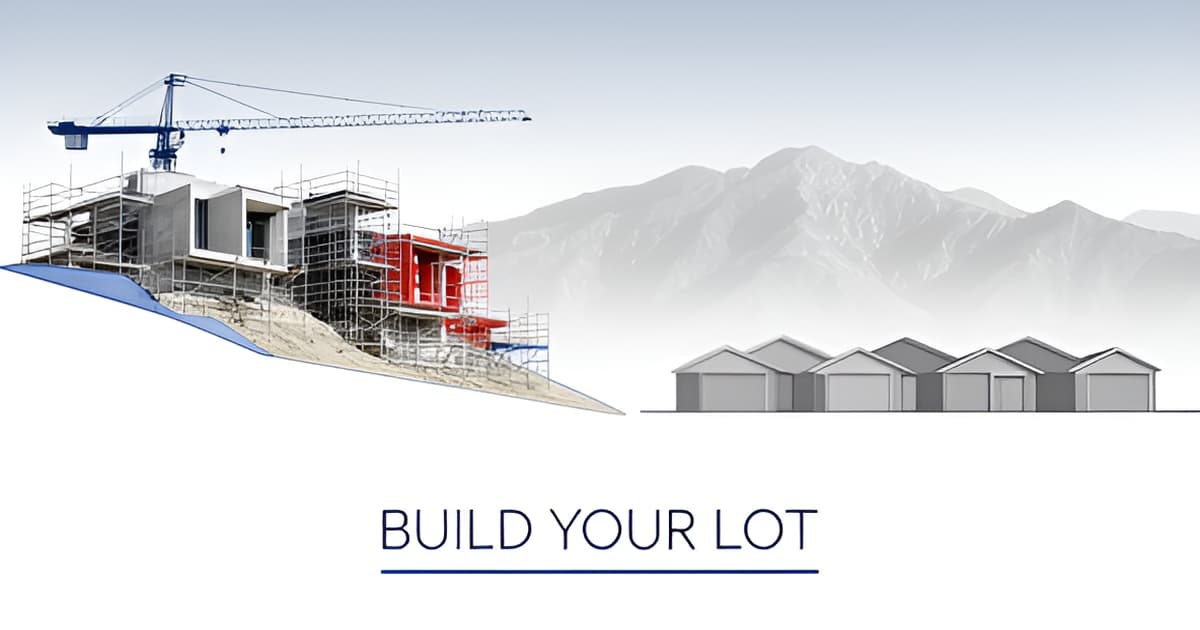
Los Angeles Custom Home Builder: On-Your-Lot vs Tract Alternatives
Key Facts
- Custom homes in Los Angeles run $400–$700 per square foot versus California's $225 tract average, per JMB Builders' Altadena analysis.
- Contractor-built homes on an owner's land average 10.5 months versus 6.1 months for spec homes, Census data cited by Green Design and Build shows.
- Hillside building in LA carries a 15–30% premium, with steep sites hitting $1,300–$1,800 per square foot, according to Blackbriar's hillside report.
- Two identical 6,000-square-foot homes — flat versus canyon lot — can differ by millions in construction cost alone, per LA hillside research.
- A 2021 survey found 94% of custom projects came in over budget by 30–40%, per JMB Builders.
- LA residential construction costs climbed 44% over five years, with a 6% jump in Q1 2025 alone, per JDJ Consulting's 2025 cost tiers.
- Owner-building is legal under California B&P Code §7044 but requires occupying the home 12 months before selling, per JDJ Consulting's county guide.
The Real Price Gap: Why Custom Costs $400–$700/Sq Ft When Tract Averages $225
The price gap between a tract home and a custom build comes down to one word: repetition. Production builders run the same floor plan dozens of times, amortizing design, engineering, and trade efficiencies across every unit. A one-of-a-kind custom home enjoys none of that — which is why custom construction in Los Angeles runs $400–$700 per square foot against California's $225 per square foot tract average, according to JMB Builders' Altadena cost analysis.
That premium buys real things. Custom building delivers full design control, site-specific engineering matched to your actual lot, and finishes selected by the owner rather than a builder's procurement team. It also buys time: Census Bureau data shows contractor-built homes on an owner's land average 10.5 months to complete, versus 6.1 months for spec homes — and 26% of contractor-built homes stretch past 13 months.
Before anchoring to any single number, treat published figures as directional benchmarks. Cost ranges conflict meaningfully across LA sources:
- $200–$300 basic to $450–$650+ luxury, per JDJ Consulting's 2025 cost tiers
- $475–$815 per square foot in hard costs for LA County on-your-lot builds, with soft costs adding 15–25%
- $300–$600 per square foot all-in, excluding land, for a new LA house
- $1,000–$1,800+ per square foot on hillside parcels, where slope and access dominate the budget
The spread exists because no two projects share the same starting point. Site conditions — especially slope — are the single biggest cost variable, often dwarfing finish selections. On a steep canyon lot, grading, caissons, retaining walls, and deeper footings can push foundation work to 25–40% of total hard cost. Two identical 6,000-square-foot homes on flat versus hillside lots can differ by millions, and almost none of that gap is finishes.
For Altadena readers weighing a ground-up build or rebuild on their own lot, the practical takeaway is that the per-square-foot number is where the budget starts, not where it ends. Context matters too: LA residential construction costs have climbed 44% over five years, with a 6% jump in Q1 2025 alone. At Altadena Custom Home Builder, we help owners benchmark realistic numbers for their specific lot — whether it's a flat infill parcel, a slope-lot challenge, or an Eaton Fire rebuild — before committing to a design. A free build consultation is the cleanest way to replace generic ranges with a site-specific estimate.
The Site Writes the Budget: Altadena's Hillside Premium Explained
Ask two Altadena builders to bid on the same house plans and you may get two wildly different numbers — and the difference usually isn't the finishes. It's the ground. In hillside custom construction, one industry analysis put it bluntly: the site writes the budget.
That's the single most important cost truth for Altadena's slope and canyon lots. Hillside building in Los Angeles carries a 15–30% construction premium over flat-lot work, according to LA cost analyses, driven by grading, retaining walls, soil engineering, and difficult access. At the high end, steep-site custom builds have been reported at $1,300–$1,800 per square foot, versus $850–$1,100 for comparable flat-lot projects.
The reason isn't mysterious. On a slope, the foundation does enormous work. A hillside foundation system can consume 25–40% of total hard costs, with caissons running $15,000–$50,000+ per pier and typical hillside foundations ranging from $200,000 to $600,000 or more. Retaining walls add $200–$600 per linear foot, and tiered systems can exceed $200,000–$500,000. Grading and drainage alone may run $50,000–$200,000+.
Why the range is so wide comes down to a design decision made early:
- A design that steps with the land is almost always cheaper than one that flattens it.
- Terracing a floor plan to follow the slope reduces excavation, wall height, and caisson counts.
- Flattening a pad maximizes usable area but multiplies grading, haul-route, and structural costs.
- Two slopes are never the same project — no credible hillside estimate comes from a per-square-foot shortcut.
Consider two identical 6,000-square-foot homes, one on a flat lot and one in a steep canyon. Research on LA hillside construction found they can differ by millions in construction cost alone, and almost none of that gap is finishes. Even lot slope on its own adds roughly 15% to a whole project, while retaining walls, caissons, and deeper footings can add 10–30% to foundation costs.
For Altadena homeowners — especially those rebuilding after the Eaton Fire on sloped parcels — this reframes budgeting entirely. The per-square-foot number is where your budget starts, not where it ends, and site conditions are often the most impactful cost factor before a single finish is selected. It's also why contingency matters more here: hillside projects warrant a 10–15% reserve, and some advisors recommend 15–20% overall.
At Altadena Custom Home Builder, we encourage evaluating slope, soils, and foundation strategy before committing to a floor plan — a free build consultation can surface those site-driven costs early, when design choices can still absorb them rather than fight them.
Permits, Jurisdiction, and Timeline: What On-Your-Lot Building Actually Involves
If you're building on your own lot in Altadena, the first thing to understand is that you won't be dealing with Los Angeles City's building department at all. Altadena is unincorporated, so permits run through LA County Public Works via the EPIC-LA portal — a different process, different reviewers, and different timelines than LADBS.
The numbers are sobering. Single-family permits in LA typically take 4 to 8 months, and realistic end-to-end custom builds run 12 to 20+ months, according to Altadena-area builder analysis. Census Bureau data backs up the custom-vs-spec gap: contractor-built homes on an owner's land averaged 10.5 months from start to completion nationally, versus 6.1 months for spec homes — and 26% of contractor-built homes took 13 months or longer. Custom homes simply take longer because every plan is a first build.
Several factors shape where your project lands in that range:
- Plan-check complexity — hillside lots add grading review, geology review, and haul-route approvals that can run six to sixteen-plus weeks on their own
- Site conditions — "the site writes the budget," as one LA hillside construction report puts it; a design that steps with the land avoids costly flattening
- Permit and plan-check fees, typically $15,000–$40,000+, plus utility connections of $20,000–$50,000
- For fire-rebuild projects, added site work of $25,000–$60,000 for soil testing, certified debris removal, and utility reconnection
One caution we emphasize in every consultation at Altadena Custom Home Builder: anyone quoting you a firm move-in date before permits are filed is guessing. Post-Eaton Fire, traditional Altadena rebuilds are estimated at 2 to 2.5 years start to finish given stretched permitting queues and contractor availability.
Should you act as your own general contractor? Owner-building is legal in California under B&P Code §7044, provided you own the property, intend to occupy it, and live in the home for at least 12 months before selling. Building for resale or investment disqualifies the exemption.
But legal and practical are different questions. A general contractor adds a 15–20% fee to the budget, yet industry analysis of LA on-your-lot builds concludes that markup is typically returned through trade pricing, schedule efficiency, and avoided rework. Owner-built homes also averaged 12.8 months in Census data — longer than contractor builds — reflecting the coordination burden of managing a dozen trades solo. With freedom comes accountability: as owner-builder, every inspection, correction, and scheduling slip lands on you.
The honest takeaway: expect roughly a year of design and permitting before construction even begins, budget contingency accordingly, and treat any timeline promise made before plan submittal with skepticism.
Eaton Fire Rebuilds, Teardowns, and the Modular Question
For Altadena property owners sorting through what comes after the Eaton Fire, three distinct paths exist — and each carries very different costs, timelines, and paperwork. Understanding the differences early can save months of frustration later.
Fire rebuilds carry site work most owners don't anticipate. Beyond construction itself, a rebuild on a burned lot typically adds $25,000–$60,000 in site work, including certified debris removal, soil testing, utility reconnection, and temporary power, according to build-cost research. Code-required upgrades — driven by how old the lost home was — have ranged from roughly $30,000 to over $200,000.
There is one recent piece of relief: an Executive Order signed July 7, 2025 suspended rooftop solar and battery requirements for qualifying fire rebuilds. Homes must still be designed solar-ready, but the immediate installation mandate is lifted for eligible projects.
Teardowns follow a different rulebook. If you're demolishing an older home rather than rebuilding after fire, expect a second permit, an asbestos survey and abatement process under AQMD Rule 1403, and a 30-day neighbor-notice period for houses whose original permits are more than 45 years old, per custom-build guidance. You also lose any nonconforming allowances the old structure held — a detail that surprises owners of legacy Altadena homes.
Modular construction compresses the schedule, not the permitting. Factory-built modules craned onto your lot can significantly shorten the build phase — one Altadena modular project reached completion in about 21 months, compared with an estimated 2–2.5 years for a traditional rebuild given post-fire permitting queues and contractor availability. But there's no permitting shortcut: modular goes through the same LA County review as any site-built home, with no separate or reduced approval path.
A few practical checkpoints before committing to a path:
- Confirm whether your lot qualifies for the solar-requirement suspension under the July 2025 Executive Order.
- Budget site work separately — debris, soils, and utilities are real line items, not padding.
- For teardowns, schedule the Rule 1403 asbestos process early; it gates your demolition permit.
- Treat modular as a schedule strategy, not a regulatory one.
No one can promise you a firm move-in date before permits are filed — anyone who does is guessing. What you can control is choosing the right path for your lot and budget. Altadena Custom Home Builder maintains a free build consultation to help owners weigh fire rebuilds, teardowns, and modular options against their specific site, and our Altadena cost and timeline guide walks through what each path typically involves. For official recovery programs and requirements, always rely on LA County's published fire recovery resources as your source of record.
Building a Realistic Budget: Contingency, Cost Drivers, and Next Steps
The five numbers that move your budget most, according to Go Home Builders' cost modeling, are square footage, finish level, lot slope, ceiling height, and your contingency reserve — bedroom and bathroom count barely register. Notice that two of the five are site decisions, not design decisions. In Altadena, where slope lots are common, that matters.
Why budgets balloon
A 2021 survey of custom projects between $280,000 and $1.8 million found that 94% came in initially over budget by 30–40%. The per-square-foot number is where your budget starts, not where it ends — and cutting just 200 square feet can save $95,000–$163,000.
How much contingency is enough
Guidance conflicts. Some sources recommend 5–10%; others recommend 15–20%; hillside-specific guidance lands at 10–15%. For Altadena's hillside parcels, we resolve toward the higher end. Slope alone adds roughly 15% to a whole project, and foundation systems can represent 25–40% of total hard cost on hillside builds.
Key contingency planning steps:
- Budget 15–20% contingency on hillside or fire-rebuild lots, where soil, grading, and utility surprises cluster
- Get a soils report ($3,000–$8,000) and geology report ($5,000–$15,000) before finalizing your design
- Design that steps with the land rather than flattening it — this can avoid costs like a $60,000 retaining wall
- Remember that permits alone run 4–8 months, so anyone quoting a firm move-in date before permits are filed is guessing
Your next steps
Start with a realistic site assessment, then a line-item budget built from your lot's actual conditions. Altadena Custom Home Builder offers a free build consultation to help ground-up, tear-down, and Eaton Fire rebuild projects in realistic numbers before you commit.
Disclosure: JMB Builders LLC (CSLB #1103479), an Altadena-based licensed general contractor featured on this site through paid placement, builds custom homes, ADUs, and whole-home remodels, including Eaton Fire rebuilds. No permit approvals or timelines are guaranteed by this guide or any builder.
Frequently Asked Questions
How much more does a custom home cost per square foot than a tract home in Los Angeles?
Does building on a hillside or slope lot really cost that much more?
How long does it take to build a custom home on your own lot in Altadena?
Can I act as my own general contractor to save money in California?
What extra costs should Eaton Fire rebuild owners expect beyond construction?
How much contingency should I budget for a custom build in Altadena?
Your Lot, Your Budget, Your Next Move
The through-line of everything above is simple: in Altadena, the site writes the budget. Custom construction runs $400–$700 per square foot against the $225 tract average because a one-of-a-kind home enjoys none of a production builder's repetition — and on a slope lot, foundations, grading, and retaining work can add millions before you've picked a single finish. Permits run through LA County's EPIC-LA portal, realistic timelines stretch 12–20+ months, and 94% of surveyed custom projects came in initially over budget by 30–40%, per JMB Builders' Altadena analysis. That's why the per-square-foot number is where your budget starts, not where it ends — and why a 15–20% contingency, a soils report before design, and a floor plan that steps with the land matter more than any finish selection. Whether you're planning a ground-up build, a teardown, or an Eaton Fire rebuild, the next step is the same: replace generic ranges with numbers grounded in your actual lot. Altadena Custom Home Builder offers a free build consultation to do exactly that — no guesswork, no obligations, just a site-specific starting point.