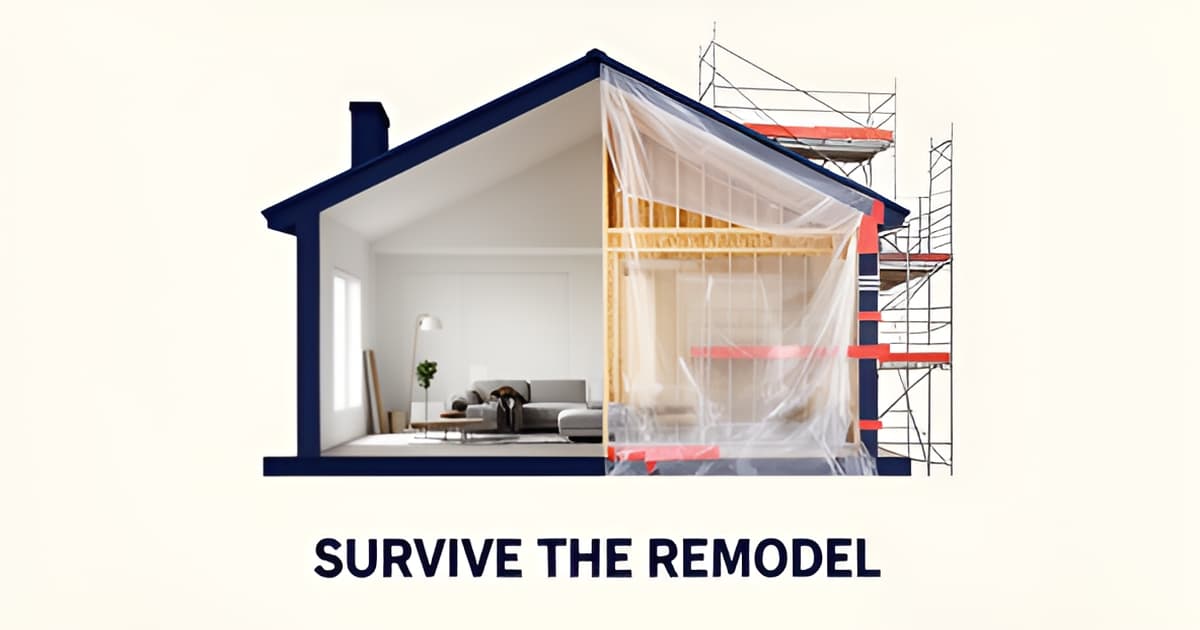
Living Through a Whole-House Remodel in Altadena: A Survival Plan
Key Facts
- Whole-house remodels are the hardest projects to live through, and moving out is safer when removing walls or roofing per renovation guidance.
- Projects lasting 3–4 months or more warrant serious consideration of moving out, per renovation planning guidance.
- Utility shutoffs during plumbing, electrical, or HVAC work can last several days at a stretch according to contractor guidance.
- Phasing that keeps one bathroom and a minimal cooking area operational at all times makes staying through a remodel feasible reports 215 Build.
- Renovation dust can be fine enough to pass through a typical vacuum filter, warns environmental expert Robert Weitz via Sweeten.
- Lead-based paint was banned in 1978, so pre-1978 homes may contain it and require contractor testing notes Sweeten.
- Communication with your contractor is the single most decisive success factor for living through a remodel according to Houzz.
The Whole-House Remodel Reality: Why Staying Put Is the Hardest Option
Let's be honest about the hard part first: a true whole-house remodel — the kind that touches your kitchen, bathrooms, flooring, or structure — is widely acknowledged as the most difficult project to live through. Remodeling industry guidance is blunt on this point: while phased or limited-scope projects can be livable, whole-home remodels "are difficult to live through," and when you're removing walls or roofing, moving out is generally considered the safer call.
That reality lands differently in Altadena. Much of the town's housing stock predates 1978, meaning lead-based paint may be present and contractors are required to test for it — and older hillside homes often have single-entry layouts that make dust containment far harder than a multistory home where work zones can be separated from living space. For Eaton Fire rebuild households, the question is even sharper: is on-site living during reconstruction realistic, or is it a health and sanity risk?
The decision comes down to three options, and there's no one-size-fits-all answer:
- Stay throughout — feasible only for phased projects where one bathroom and a minimal cooking area stay operational at all times
- Partial relocation — stay during lower-impact phases, leave during heavy demolition, plumbing shutoffs, or intensive workdays
- Full move-out — the default for gut renovations, which take over the home for weeks or months
The most useful decision rule comes down to duration. According to renovation planning guidance, projects lasting 3–4 months or more warrant serious consideration of moving out. Utility shutoffs during plumbing, electrical, or HVAC work can last several days at a stretch — a stretch that's miserable in a single-entry hillside home and genuinely unsafe for children, asthmatics, or immunocompromised household members.
There's also a timeline argument most homeowners miss. Vacated homes let crews work without navigating occupied spaces, which helps keep schedules on track — while duplicate expenses like meals, utilities, and storage are often overlooked when families budget a relocation. Deciding stay-versus-go early, so temporary housing costs fit the initial budget, is one of the simplest ways to protect both your project and your household.
At Altadena Custom Home Builder, we walk homeowners through this decision before demolition day ever arrives — because the right answer depends on your floor plan, your household, and your project's phasing, not on a generic rule. If you're weighing a whole-house remodel or an Eaton Fire rebuild, a free build consultation is the place to map your stay-vs-move plan against the realities of your site.
The Stay-vs-Move Decision: A Framework for Altadena Homeowners
The hardest decision in a whole house remodel isn't about countertops or floor plans — it's whether you and your family will still be living there when the walls come open. For Altadena homeowners, especially those weighing a remodel or Eaton Fire rebuild, this choice shapes everything: budget, timeline, and sanity.
Industry guidance consistently frames this as three paths: stay throughout, partially relocate, or move out entirely — and there's no one-size-fits-all answer, according to remodeling decision frameworks. But whole-house scope changes the math. If you're removing the roof or walls, "it is generally considered safer to move out," as renovation survival guidance puts it.
Use duration as a concrete rule: projects lasting 3–4 months or more warrant serious consideration of moving out. Whole-house remodels typically run "several weeks to months," so most Altadena projects cross that threshold quickly.
Beyond scope, specific conditions tip the decision toward relocation. Utility shutoffs during plumbing, electrical, or HVAC work can last "several days," per contractor guidance. Watch for these compounding factors:
- Young children or pets, who face higher exposure to construction dust and disruption
- Work-from-home schedules that can't absorb daily demolition noise
- Dust sensitivities, asthma, or immunocompromised household members
- Pre-1978 homes, which may contain lead-based paint requiring contractor testing
Environmental expert Robert Weitz is blunt about sensitive individuals: being near that work environment is "a big 'no'" — fine particles can pass straight through typical vacuum filters, per Sweeten's reporting.
Many families land on a middle path: stay during lower-impact phases, then leave during heavy demolition, plumbing shutoffs, or intensive workdays. This is where phasing earns its keep. If your contractor sequences work so one bathroom and a minimal cooking area stay operational, staying becomes genuinely feasible. Additions built largely outside the existing structure and joined at the end minimize interior disruption further.
Moving out isn't free, and the "duplicate expenses (meals, utilities, storage) are often overlooked" when families budget relocation. Decide stay-vs-go as early as possible so temporary housing costs fit the initial budget rather than arriving as a surprise mid-project.
Home architecture affects containment feasibility. Multistory homes let crews separate work zones from living space; single-entry layouts make dust containment far harder, since workers and debris pass through the same door your family uses.
Planning a whole house remodel or rebuild in Altadena? At Altadena Custom Home Builder, we offer a free build consultation to map phasing, dust control, and your stay-vs-move plan before demolition day.
Phasing and Dust Control: The Two Systems That Make Survival Possible
If plastic sheeting is your entire dust strategy, you've already lost. On a whole house remodel, dust doesn't respect barriers — it travels, settles in untouched rooms, and finds its way into lungs, which is why survival depends on two systems working together: a smart phase-by-phase schedule and a layered dust-control protocol.
Start with phasing. Before demolition begins, demand a detailed plan from your contractor showing which parts of the home are affected at each stage, sequenced so that one bathroom and a minimal cooking area stay operational at all times. This is the single strategy that makes staying feasible, according to remodeling guidance on living through construction. The hybrid approach works well for many Altadena families: stay during lower-impact phases, and relocate temporarily during heavy demolition or plumbing shutoffs, which can leave you without water for several days.
Then build your dust system — and raise it proactively. Dust control is often not a contractor's top priority, so homeowners need to bring it up from day one. Barriers alone fail; experts recommend layering multiple defenses instead:
- Heavy-duty plastic zip barriers separating work zones from living space
- HEPA air scrubbers running continuously, since dust can be too fine to see
- HVAC registers sealed with painter's tape and the system shut down during dusty work
- All cutting and sanding done outside the living envelope
- Daily wet-wipe and vacuum cleanup of surfaces near the work zone
Take the health risks seriously. Remodeling dust can carry chemicals found in paint, fiberglass insulation, and cement particulates — and it's fine enough to pass through a typical vacuum filter. In Altadena's older housing stock, any home built before 1978 may contain lead-based paint, which was banned that year and releases toxins when sanded; contractors are required to test for it in older homes. Children, asthmatics, and immunocompromised household members face elevated risk, and environmental experts advise sensitive individuals to stay well away from active work zones entirely.
The good news: when phasing and dust control are planned together — ideally during a free build consultation with an experienced local contractor like JMB Builders LLC (CSLB #1103479), whose whole-home remodel and Eaton Fire rebuild work is documented at jmb-builders.com — living through a remodel becomes manageable rather than miserable. At Altadena Custom Home Builder, we tell every homeowner the same thing: put these two systems in writing before the first wall comes down.
Your Pre-Demolition Survival Checklist: Communication, Logistics, and Backup Plans
If your whole house remodel is going to succeed while you're still living in it, the battle is won or lost before the first wall comes down. The most experienced remodelers agree that communication with your contractor is the single most decisive success factor — and that means locking down logistics now, not mid-demolition.
Start with design decisions. Make all design selections before demolition begins; last-minute choices cause delivery delays and pile decision fatigue onto an already stressful season, according to renovation survival guidance.
Then negotiate the social contract with your crew. Remodeling veterans recommend agreeing on "sacred" off-limits zones the crew never enters, plus firm daily end times for work. Ask for a written phase-by-phase plan showing which parts of the home are affected at each stage — because the success of living at home during a remodel often depends on your contractor's professionalism.
Your physical setup checklist should include:
- A temporary kitchenette: microwave, toaster oven, mini-fridge, and hot plate — plus a realistic budget for takeout
- Showering alternatives, such as a neighbor's home or gym membership, while keeping at least one toilet accessible as long as possible
- A quiet zone farthest from the construction, with household routines kept as normal as possible
- A pet plan — a designated zone away from the work, or temporary relocation during the loudest phases
Even the best plan needs an escape valve. Contractors advise keeping a backup plan even when you're staying — lined-up nights with family during the noisiest phases, when demolition dust and utility shutoffs that can last several days make the house genuinely unlivable. If you have young children, pets, or anyone with asthma or dust sensitivity, treat those nights away as scheduled, not optional.
This is where the right local partner matters. JMB Builders LLC (CSLB #1103479), an Altadena-based licensed general contractor building custom homes, ADUs, and whole-home remodels — including Eaton Fire rebuilds — documents its work and service areas at jmb-builders.com. As the team behind Altadena Custom Home Builder often reminds readers: dust control is rarely a contractor's top priority unless you raise it from day one, so put it in writing before demolition day.
Planning a whole house remodel or Eaton Fire rebuild in Altadena? Book a free build consultation to map out phasing, dust control, and your stay-vs-move plan before the first hammer swings.
Frequently Asked Questions
Can I actually live in my house during a whole-house remodel?
How long does a remodel need to run before I should seriously consider moving out?
Is construction dust during a remodel really a health risk, or just a nuisance?
My Altadena home was built before 1978 — does that change anything?
Is hanging plastic sheeting enough to keep remodel dust out of my living space?
What should I set up before demolition starts if my family is staying?
The Survival Plan, Summed Up: Decide Early, Phase Everything, Put Dust Control in Writing
Living through a whole-house remodel in Altadena isn't about toughing it out — it's about making three decisions before the first hammer swings. First, settle stay-vs-move early, using the 3–4 month threshold as your decision rule, and budgeting temporary housing upfront so duplicate expenses don't ambush you mid-project. Second, demand a phase-by-phase plan that keeps one bathroom and a minimal cooking area operational at all times — the hybrid approach of staying during quiet phases and leaving during heavy demolition fits most households. Third, get your dust-control protocol in writing: zip barriers, HEPA air scrubbers, sealed HVAC registers, and outside cutting, especially critical in pre-1978 hillside homes where lead testing and single-entry layouts complicate containment. Whether you're planning a remodel or an Eaton Fire rebuild, the pattern is the same: the households that thrive are the ones who mapped logistics before demolition day. A free build consultation with Altadena Custom Home Builder is the place to turn this survival plan into one tailored to your floor plan, your household, and your timeline — before the dust starts flying.