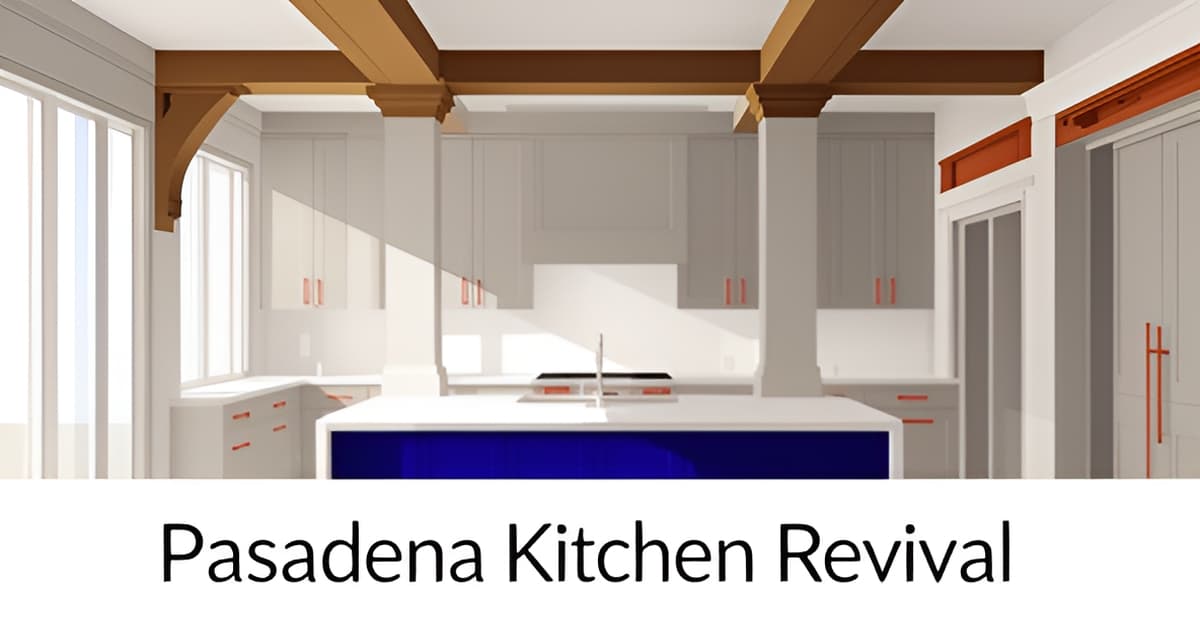
Kitchen Remodel in Pasadena: Permit and Design Notes for Older Homes
Key Facts
- Pasadena runs its own plan check separate from LA County, with structural kitchen plan check taking 6–10 weeks per local permit guides.
- Full Pasadena kitchen remodels typically span 5–8 months from first call to final inspection according to permit research.
- Costs range roughly $45,000–$160,000+, with a 10–20% contingency recommended for pre-1980 homes per cost guidance.
- Opening walls in older homes triggers a 'domino effect': knob-and-tube wiring, galvanized plumbing, asbestos, and lead paint must come to code per local permit guidance.
- HPOZ historic districts like Bungalow Heaven add 2–6 weeks of design review when exterior windows or doors change per Pasadena field guides.
- A 1912 Craftsman kitchen was expanded 186 square feet while preserving character with cherry cabinetry and Motawi Tile per the project spotlight.
- Title 24's newest energy code applies to projects permitted on or after January 1, 2026, requiring JA8 high-efficacy fixtures with dimming controls per permit guides.
Why Older Pasadena Kitchens Are a Different Permitting Game
If your kitchen remodel in Pasadena moves a single pipe, wire, or wall, you're in a different permitting universe than most of Los Angeles County. Pasadena runs its own plan check through its Planning and Community Development Department, separate from LA County, and the city is known for thorough plan check — meaning complete submittals matter from day one.
The permit triggers are broad. Anything touching plumbing, gas, electrical, or structure requires a permit: moving a sink or gas line, adding or relocating outlets, demolishing a wall (even non-load-bearing in most cases), changing window or door openings, or venting a range hood. Only cosmetic work — countertop swaps, cabinet repainting, or appliance replacement in the same footprint — typically avoids permitting, though one remodeling guide warns against assuming an exemption for one cosmetic task covers the whole remodel.
What makes older Pasadena homes — Craftsman Bungalows, Spanish Colonial Revival, Tudor Revival — a different game is what happens once the walls open. Inspectors don't just review your new work; they also look at existing conditions that affect safety. That's where the domino effect begins:
- Knob-and-tube wiring and outdated electrical panels that must be brought to modern code
- Galvanized steel plumbing requiring replacement or correction
- Asbestos and lead paint that surface during demolition
- Past unpermitted additions and ungrounded outlets that complicate sign-off
Because these hidden conditions surface unpredictably, cost guidance for Pasadena remodels recommends budgeting a 10–20% contingency, especially for pre-1980 homes. Structural plan check alone runs 6–10 weeks, and a full remodel from first call to final inspection typically takes 5–8 months.
One more jurisdictional note: if you're reading this from Altadena rather than Pasadena proper, your property falls under LA County unincorporated rules, which differ from the city's process. At Altadena Custom Home Builder, we cover both jurisdictions in our guides to custom builds and rebuilds, because assuming one set of rules applies across the metro is a common and costly mistake. The practical takeaway for any older-home kitchen project: confirm the permitting scope with the building department responsible for your specific address before design work begins, not after the drywall is already patched.
Permit Triggers, Plan Check Timelines, and What Historic Districts Add
The moment your kitchen remodel starts moving pipes, wires, or walls, Pasadena expects a permit application before work begins — not after the drywall is patched. That's the reality of remodeling in a city that runs its own thorough plan check through the Planning and Community Development Department, entirely separate from Los Angeles County processes, as local permit guides make clear.
The good news: the city publishes a dedicated Residential Kitchen Remodel handout (2025), along with separate Building, Electrical, Mechanical, and Plumbing permit applications. Knowing which category your project falls into saves weeks.
What triggers a permit — and what doesn't:
- Layout changes: moving a sink, relocating a gas line, or removing walls (even non-load-bearing ones in most cases) — all require permits, per Pasadena permitting breakdowns.
- Electrical additions: new or relocated outlets, range hood venting, and panel work.
- Window or door opening changes, which matter even more in historic districts.
- Cosmetic-only work — countertop swaps, cabinet repainting, appliance replacement in the same footprint — typically does not require a permit. Just don't assume one exemption covers the whole remodel.
Timelines depend heavily on scope. Structural plan check runs 6–10 weeks, while non-structural work takes a few weeks; a full remodel from first call to final inspection spans 5–8 months, according to Pasadena kitchen permit research. Custom cabinets can add a month or more.
If your home sits in an HPOZ district like Bungalow Heaven or Madison Heights, add another layer. Interior-only kitchen work usually gets lighter review, but changes to exterior windows, doors, or trim trigger design review that adds 2–6 weeks, with preservation committee review and materials matched to the home's original style, as Pasadena field guides note.
Two code items deserve attention. Title 24 requires JA8-compliant high-efficacy fixtures with dimming controls in kitchens, and the older "Tailored Method" workaround has been removed. The newest energy code applies to projects permitted on or after January 1, 2026 — so submit before or after that date knowingly, not accidentally.
One red flag worth repeating: if a contractor asks you to pull your own permit, walk away. Licensed contractors should pull permits and hold a Pasadena business license. At Altadena Custom Home Builder, we advise readers to verify permit scope with the city for their specific address before finalizing design — the same discipline we apply to custom home and rebuild projects across the region.
Designing for a Craftsman: Modern Function, Original Character
The best Craftsman kitchen remodels often change the least. One telling example: a 1912 Craftsman near Pasadena whose 1950s kitchen — described as dated and disconnected from the home's style — was gutted and expanded by 186 square feet, with a kitchen/dining wall demolished and character preserved through cherry cabinetry, handmade Motawi Tile, and Arroyo Craftsman pendants.
That project succeeded because the design honored the house while solving real function problems. But the smarter first move for most Craftsman owners is restraint: keep the existing sink, range, and wall layout. Retaining these locations is the top cost-saver in an older home, and it avoids triggering what remodelers call the "domino effect" of code upgrades.
Here's why layout discipline matters so much in a 1912-era house. Once walls open, inspectors review existing conditions — not just new work — and outdated systems must come up to modern code. Pasadena-area older homes commonly carry knob-and-tube wiring, galvanized steel plumbing, asbestos, and lead paint, plus outdated panels and ungrounded outlets. According to local permit guidance, required updates can include electrical protections, smoke and carbon monoxide detectors, plumbing corrections, and structural or seismic reinforcement.
If a wall must move — as in the 1912 Craftsman case — have the structure and utility routes assessed before treating it as a cosmetic change. Removing even a non-structural wall typically triggers permits in Pasadena, and the city runs its own thorough plan check, so complete submittals matter.
When budgeting, treat published figures as planning ranges, not quotes. Sources place Pasadena kitchen remodels at roughly $45,000–$160,000+, with tiered estimates running from an $18,000–$35,000 small refresh up to $140,000–$250,000+ for high-end custom work. For pre-1980 homes, a 10–20% contingency is the standard recommendation to absorb hidden conditions.
A few design principles that hold up in Craftsman homes:
- Choose materials that echo the era — the case study's cherry cabinetry, artisan tile, and period-style pendants read as original rather than bolted-on.
- Protect what can't be replaced; that project brought in an arborist to safeguard a Coast Live Oak during construction.
- Confirm whether your address sits in an HPOZ district like Bungalow Heaven — interior-only work usually gets lighter review, but exterior window or door changes add 2–6 weeks.
- Remember that fixtures permitted on or after January 1, 2026 must meet the newest Title 24 energy code, with high-efficacy lighting and dimming controls in kitchens.
The reward for this care is real: homeowners who act as stewards of historic homes face more involved permitting, but thoughtful renovations are rewarded with lasting value. At Altadena Custom Home Builder, we see the same dynamic in Altadena's own Craftsman and hillside-lot traditions — and a free build consultation can help you weigh which changes your kitchen truly needs before any walls come down.
Your Pre-Construction Checklist: Five Steps Before Demo Day
Demo day in a century-old Pasadena kitchen rewards preparation. The moment a remodel starts moving pipes, wires, or walls, the city expects a permit application before work begins — not after the drywall is patched, as local permitting guidance puts it.
Run through these five steps before any demolition starts:
- Verify permit scope for your specific address. Pasadena runs its own plan check through its Planning and Community Development Department, separate from LA County. The city publishes a dedicated Residential Kitchen Remodel handout plus separate Building, Electrical, Mechanical, and Plumbing permit applications on its Building & Safety forms page. Confirm what your project triggers before design work begins.
- Check HPOZ status early. If your home sits in a district like Bungalow Heaven or Madison Heights, design review comes before standard plan check. Interior-only kitchen work usually gets lighter review, but changing exterior windows, doors, or trim can add 2–6 weeks to your timeline.
- Assess structure and utility routes before opening any wall. Inspections review existing conditions, not just new work — outdated panels, ungrounded outlets, and past unpermitted additions are common in older Pasadena homes and can trigger code upgrades.
- Budget the hidden-conditions contingency. Plan for 10–20% of your budget, especially in pre-1980 homes, where knob-and-tube wiring, galvanized plumbing, asbestos, and lead paint surface once walls open.
- Hire a licensed contractor who pulls permits. A contractor asking you to pull your own permit is a red flag — it shifts legal responsibility onto you. Contractors pulling permits in Pasadena must also hold a city business license.
Skipping permits risks fines and resale problems down the line. Structural plan check alone runs 6–10 weeks, so building these steps into your schedule now protects the 5–8 month total timeline a full remodel typically takes.
One jurisdiction note before you plan: this guidance applies to homes inside Pasadena city limits. Altadena properties — including Eaton Fire rebuild projects — permit through LA County unincorporated instead, a different process with different requirements. At Altadena Custom Home Builder, our field guide covers that county process in detail, and our featured builder, JMB Builders LLC (CSLB #1103479), works across both jurisdictions on custom homes, whole-home remodels, and fire rebuilds.
If you're weighing a remodel or rebuild and want a grounded read on your property's permitting path, book a free build consultation. Expect honest ranges, not guarantees — no one can promise a permit outcome or timeline, but the right preparation keeps surprises to a minimum.
Frequently Asked Questions
Do I need a permit to remodel my kitchen in Pasadena?
How long does a kitchen remodel take in Pasadena?
What hidden costs should I expect remodeling an older Pasadena home?
How much does a kitchen remodel cost in Pasadena?
Does living in a historic district like Bungalow Heaven change my kitchen remodel?
Can I pull the permit myself to save money on my kitchen remodel?
Older Home, Smarter Start: The Real Secret to a Smooth Pasadena Kitchen Remodel
Remodeling a kitchen in a century-old Pasadena home isn't really about the countertops — it's about what happens when the walls open. The projects that go well share three habits: confirming permit scope with the city before design work begins, keeping the sink, range, and wall layout wherever possible, and budgeting a 10–20% contingency for the knob-and-tube wiring, galvanized plumbing, and other hidden conditions that older homes reveal on standard pre-1980 remodeling advice. Add an HPOZ check if you're in Bungalow Heaven or Madison Heights, and work only with a licensed contractor who pulls the permits personally. The reward for that discipline is a kitchen that functions like new while reading as original — and a project that survives plan check without costly surprises. If your address falls in Altadena rather than Pasadena proper, remember the rules change: LA County unincorporated permitting is a different process entirely. Wherever your property sits, Altadena Custom Home Builder offers a free build consultation to help you map your permitting path and weigh which changes your kitchen truly needs — honest ranges, no guarantees, before the first wall comes down.