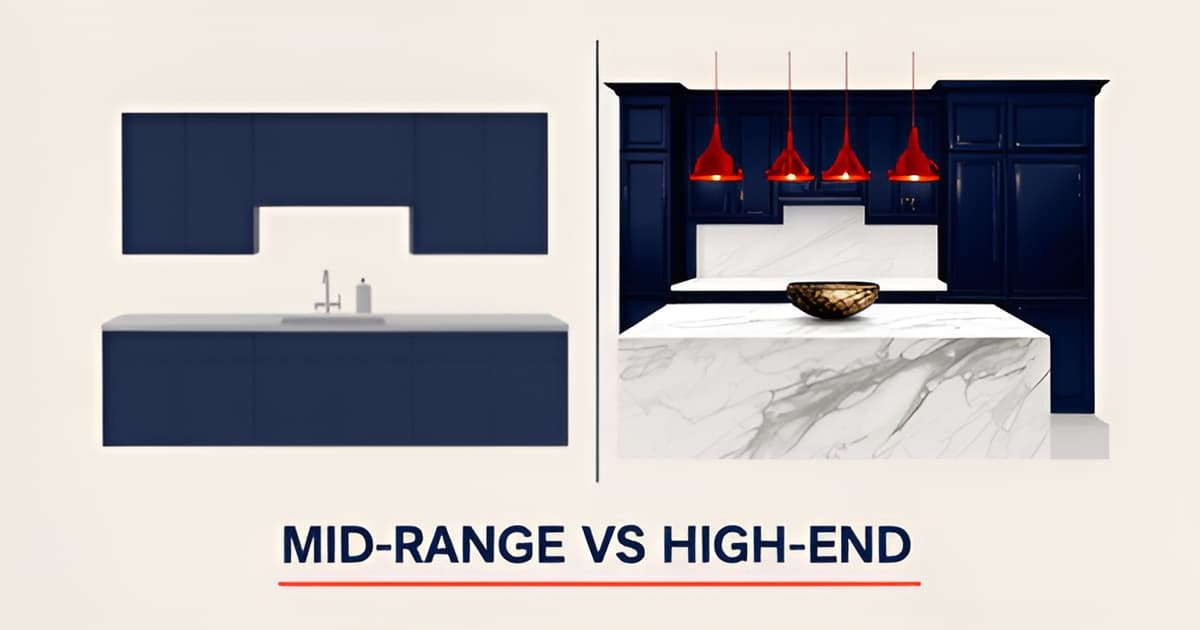
Kitchen Remodel Cost in Los Angeles: Mid-Range vs High-End Breakdown
Key Facts
- LA mid-range kitchen remodels run $66,000–$110,000 with a median near $88,000 per Renology's 2026 analysis.
- High-end LA designer kitchens span $75,000 to $500,000+, with most clients landing between $150K and $350K according to designer Joelle Uzyel.
- Labor beats cabinets as the biggest kitchen budget line item — 28% versus 24% per Design Onn Point's project data.
- Title 24 energy and seismic compliance adds $5,000–$15,000 to LA kitchen remodels, often unitemized in initial estimates per Renology's cost data.
- Cosmetic kitchen refreshes recoup 95–110% at resale, while $120k+ custom kitchens return only 55–75% according to Design Onn Point.
- A $285,000 Bel Air gut renovation added $600,000 to the home's appraised value per Joelle Uzyel's case study.
- Southern California labor and materials run 20–30% above national averages per Bay Cities Construction.
What a Kitchen Remodel Actually Costs in LA — and Why Bids Vary So Widely
Collect three bids for the same LA kitchen and you might see numbers spanning from $24,500 to well past $500,000 — for what sounds like the identical project. The gap isn't usually dishonesty; it's that the bids describe fundamentally different tiers of work, and most homeowners have no way to tell which tier they're actually being quoted.
Here's the honest map of the LA market. Mid-range full remodels cluster around $66,000–$110,000, with a median near $88,000 for a roughly 200-square-foot kitchen, according to Renology's 2026 cost analysis. High-end designer kitchens live in a different universe entirely: Beverly Hills designer Joelle Uzyel tiers that work from a "Refined Refresh" at $75K–$150K up to estate kitchens at $300K–$500K+, with most of her clients landing between $150K and $350K.
One caution before you anchor a budget to any of these figures: sources genuinely disagree on where the tier boundaries sit. Dacotah Studio's "basic" range of $50,000–$70,000 overlaps with what other contractors call mid-range, and Bay Cities Construction draws its upscale line at $100,000+. Treat every dollar band as directional, not gospel.
- Mid-range full remodel: $66,000–$110,000, median ~$88,000
- High-end designer kitchens: $75,000 to $500,000+
- Upscale/structural projects: typically start at $100,000–$150,000+
Part of what inflates every LA number is regional: Southern California labor and materials run 20–30% above national averages, so a kitchen that costs $50,000 elsewhere commonly lands at $70,000–$90,000 here. Coastal markets run higher still.
The other reason bids scatter so widely is scope — not square footage or zip code. As Sweeten's LA cost guide puts it, what matters most isn't the footprint, it's the fixtures and finishes, and whether the layout moves at all. A bid that keeps the sink where it is and a bid that opens the slab for a new island can differ by tens of thousands of dollars while sounding identical in a sales conversation.
At Altadena Custom Home Builder, we see this confusion constantly with local projects — older hillside homes and post-Eaton Fire rebuilds add their own compliance layers that generic estimates never capture. The rest of this breakdown will show you where the money shows, where it disappears, and how to read a bid for what it actually covers.
Where the Money Shows: Cabinetry, Counters, and Appliances by Tier
Ask ten homeowners where a kitchen budget goes and most will point at the cabinets. They're often right — but only barely, and sometimes not at all.
On a median $88,000 mid-range remodel in Los Angeles, cabinetry and hardware take the largest single share at 35% (about $30,800), followed by labor at 25%, appliances at 15%, and countertops at 10%, according to cost modeling from Renology. But that ordering isn't universal. Design Onn Point, which tracked 27 completed LA kitchens, found labor plus installation actually beats cabinets — 28% versus 24% — on nearly every project.
The finish ladder explains much of the spread between tiers. Sweeten's LA benchmarks run from IKEA cabinets and Wilsonart counters at the budget level, through Diamond or Kemper cabinetry with Caesarstone at mid-grade, up to bespoke millwork and statement appliances like La Cornue at the high end (Sweeten's cost guide).
At $300,000, the allocation shifts. Beverly Hills designer Joelle Uzyel breaks down a high-end kitchen as roughly 35% cabinetry and millwork ($105,000) and 30% labor ($90,000), with countertops and appliances splitting the remainder (her luxury cost report). Appliance packages alone can run $25,000 to $120,000+, with La Cornue ranges starting around $25K.
What the two budgets share is more revealing than what separates them:
- Scope drives cost more than finish level. Gut renovations run 15–25% more than rip-and-replace for the same kitchen.
- Moving plumbing, gas, or walls — not the cabinet brand — is what moves the number. As Design Onn Point puts it, cost tracks "the room size, whether the layout moves, and level of finish — almost never the cabinet brand."
- Linear feet of cabinetry and countertop matter more than square footage, since a long galley can out-cost a compact L.
That last point matters for older hillside homes like Altadena's, where layouts often can't simply be swapped. If you're weighing a kitchen remodel against a larger rebuild or whole-home project, a conversation with Altadena Custom Home Builder about scope — before finishes — is the cheapest planning step you'll take.
Where the Money Disappears: Labor, Title 24, and the Hidden Costs That Blow Up LA Budgets
Ask any Los Angeles homeowner what eats the biggest chunk of a kitchen budget, and they'll say cabinets. The data says otherwise: labor and installation is usually the single largest line item — bigger than the cabinetry everyone obsesses over. That's where the money quietly disappears.
According to one LA design-build firm's project data, labor and installation averaged 28% of budget versus 24% for cabinets — a reversal that surprises nearly every homeowner. Sweeten's LA cost guide puts labor at 25–35% of total project cost, and LA County rates explain why: journeyman electricians run $90–$140/hour and licensed plumbers $100–$160/hour, per 2026 remodeling data.
Then come the compliance costs nobody budgets for. Title 24 energy standards and seismic requirements add $5,000–$15,000, often not itemized in initial estimates. In older homes — and Altadena's housing stock includes plenty of pre-1970s builds — electrical code compliance alone runs $6,000–$12,000, covering dedicated circuits, GFCI protection, and Title 24 lighting.
The hidden line items stack up fast:
- Permits and plan-check: $1,500–$3,500 for a $75k–$120k kitchen, adding 3–6 weeks
- Hillside geotech: $3,000–$6,000 on slope lots common in Altadena's foothill neighborhoods
- Island slab work: $5,000–$15,000 when plumbing, gas, or electrical requires opening the slab
- Unpermitted prior work: must be corrected once a new permit is pulled
That last item deserves emphasis. If a previous owner moved plumbing or added circuits without permits, pulling a new permit surfaces it — and correcting it becomes your cost. In a town like Altadena, where many homes have changed hands multiple times over decades, this is a routine discovery, not an exception.
Older homes hide more. Knob-and-tube wiring, dry rot, and undocumented plumbing are the classic pre-1970s discoveries, and LA contractors recommend a $5,000–$12,000 reserve for them. Between that and the 10–20% contingency that budgeting guides advise, a "realistic" budget may need 20% more than the headline quote.
One contractor observation worth taping to your fridge: honest bids carry a documented reserve line. Lowball bids that omit one are, in effect, converting future surprises into change orders priced under duress. Altadena Custom Home Builder advises rebuild and remodel clients to compare bids on identical scopes — wide swings between bids usually mean the scopes aren't actually the same, and that's the single most important thing to verify before signing.
Mid-Range vs. High-End: ROI Reality and Choosing the Right Scope
Here's the uncomfortable math: a cosmetic kitchen refresh can recoup 95–110% of its cost at resale, while a $120,000+ custom kitchen typically returns only 55–75%. The difference, according to Design Onn Point's cost analysis, is that "much of the money goes into things a buyer never sees" — the re-routed plumbing, the Title 24 lighting compliance, the structural work behind the walls.
That ROI cliff is the single most important factor in choosing your tier. If you're remodeling to sell within a few years, the data argues for restraint. Nationally, Zonda's 2025 Cost vs. Value report found a midrange minor kitchen remodel recouped 112.9% of a $28,458 job. Scale, finishes, and layout changes all push returns downward.
But the rule has a famous exception. Beverly Hills designer Joelle Uzyel documents a Bel Air project where a 480-square-foot gut renovation costing $285,000 added $600,000 to the home's appraised value — "That is the return I design for." In neighborhoods where buyers expect estate-grade kitchens, a high-end build can be an investment rather than an expense.
The practical question is which describes you:
- Staying forever: Build for how you actually cook and live. Recoup percentages matter less than daily use, and premium finishes you enjoy for 15 years amortize differently than ones bought for a listing photo.
- Resale-driven: Stay mid-range or lighter. Refresh counters, hardware, and lighting; keep the layout intact. The 95–110% recoup on cosmetic work is the strongest return in the data.
- Somewhere between: Spend where buyers look — cabinetry, which consumes 30–40% of a typical budget — and resist scope creep like relocating plumbing.
Whatever tier you choose, one decision outweighs almost every other: keep the existing layout. Moving plumbing, gas lines, or walls multiplies labor — which runs 25–35% of project cost in LA — and triggers compliance work. An island added where none exists can cost $5,000–$15,000 once you open the slab for new connections. For owners of Altadena's older homes, keeping utilities in place also avoids the $6,000–$12,000 electrical upgrades that Renology's 2026 Los Angeles analysis flags as the biggest surprise line item.
This same logic scales up. On ground-up custom homes and fire rebuilds, we advise Altadena homeowners to fix the layout early, because every later move compounds across the whole project. If you're weighing scope on a rebuild or major remodel, a free build consultation is a sensible first step — and the featured builder, JMB Builders LLC (CSLB #1103479), can walk through layout and tier trade-offs with you before contracts are signed.
How to Protect Your Budget: Bids, Contracts, and Next Steps in Altadena
The cheapest bid on your kitchen remodel is rarely the cheapest project. Most budget disasters in Los Angeles trace back to two paperwork failures: bids that weren't apples-to-apples, and contracts that left the details to "allowances."
Contractors who work the LA market put it bluntly: wide swings between bids usually mean the scopes are not actually the same, which is the single most important thing to check before signing anything, according to Bay Cities Construction. One bid may include flooring, lighting, and trim; another may exclude them entirely — omissions that can add $15,000–$25,000 later, per budget guidance from Inch by Inch.
Line up each bid against the same checklist before you judge the number:
- Does it include demolition, disposal, and permits — or just construction?
- Are electrical, Title 24 lighting, and code upgrades itemized, or bundled into one vague number?
- Is the cabinet spec a brand and model, or a dollar allowance?
- Is there a written contingency line, and how large?
A contract that relies on broad allowances — say, "$5,000 for tile" — instead of specifying the exact make, model, and quantity of every material is, in Renology's assessment, a recipe for conflict and extra charges. Allowances convert into change orders once real prices surface mid-project.
Honest quotes carry a documented reserve line — a point made by Design Onn Point, whose principal observes that lowball bids without one are simply converting future change orders into "under duress pricing." For pre-1970s homes, which describes much of Altadena's housing stock, plan on a $5,000–$12,000 reserve for discovered conditions like knob-and-tube wiring or unpermitted plumbing, and a contingency of 10–15% overall.
Expect roughly 2–4 months of planning and permitting before demo day, then 6–16 weeks of construction for a typical remodel — longer for high-end work, which can run 12–24 weeks. Altadena sits in LA County unincorporated territory, so permits route through the county rather than LADBS; hillside lots should also budget for geotechnical review, which can add $3,000–$6,000.
If you're weighing a kitchen remodel as part of a larger rebuild — especially an Eaton Fire rebuild — a free build consultation with Altadena Custom Home Builder can help you scope the project realistically before you collect bids. Our featured builder, JMB Builders LLC (CSLB #1103479), is an Altadena-based licensed general contractor whose custom home, ADU, and whole-home remodel work is documented at jmb-builders.com.
Frequently Asked Questions
How much does a mid-range kitchen remodel actually cost in Los Angeles?
Why do kitchen remodel bids in LA vary so much for the same project?
Is it really labor — not cabinets — that costs the most in a kitchen remodel?
What hidden costs should I budget for in an older Altadena home?
Will a high-end kitchen remodel pay off when I sell?
What's the single best way to keep my kitchen remodel budget under control?
The Number That Matters Is the One You Verify
A kitchen remodel in Los Angeles isn't one price — it's a ladder of tiers, from mid-range full remodels clustering around $66,000–$110,000 to estate kitchens well past $300,000. What separates a smart budget from a painful one isn't the cabinet brand; it's scope discipline, honest labor accounting, and a contract that itemizes compliance work like Title 24 and electrical upgrades instead of hiding them in allowances. Keep the layout where the plumbing already is, compare bids on identical scopes, and demand a documented reserve line — the lowball bid without one is the one that costs you most. For Altadena homeowners, these questions compound: hillside lots, pre-1970s wiring, and Eaton Fire rebuilds add layers generic estimates never capture. That's exactly where a free build consultation with Altadena Custom Home Builder earns its keep — scoping tier and layout trade-offs before you collect a single bid. Our featured builder, JMB Builders LLC (CSLB #1103479), walks clients through these decisions on custom homes and whole-home remodels across Altadena. Before you sign anything, verify the scope. Then let the numbers follow. Renology's 2026 analysis is a good benchmark to bring to that first conversation.