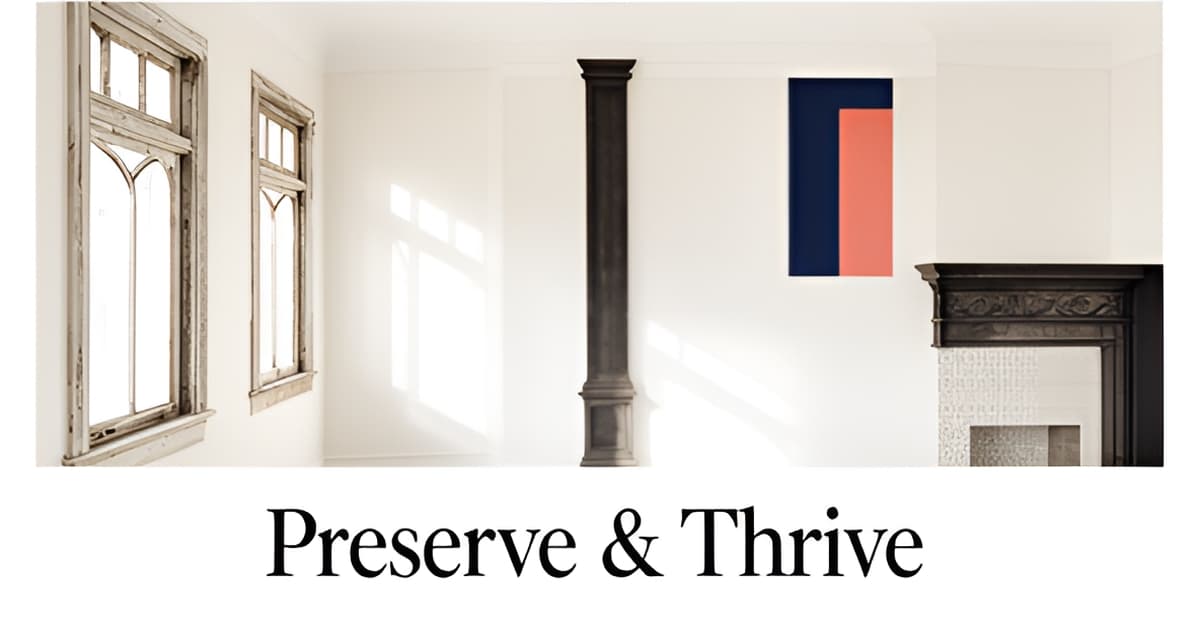
Historic Home Renovation in Pasadena: Working Within Preservation Rules
Key Facts
- Pasadena's Certificate of Appropriateness review costs $0 — free applications go to Window 4 at the Permit Center, per the Bungalow Heaven Landmark FAQ.
- Mills Act contracts cut property taxes roughly 20–75%, averaging about 50%, according to local real estate guidance.
- Major projects before Pasadena's nine-member Historic Preservation Commission can take 6–8 weeks or more per local guidance.
- Interior changes, paint colors, landscaping, and mechanical upgrades are all exempt from CoA review, per the Bungalow Heaven FAQ.
- Only two major U.S. manufacturers of architectural terra cotta remain, complicating in-kind restoration, according to Hoffmann Architects.
- The National Trust recommends hiring contractors with about five years' experience on similar scope-and-budget projects.
- The 20% federal rehabilitation tax credit excludes owner-occupied single-family homes, applying only to income-producing properties per local real estate guidance.
The Certificate of Appropriateness: Pasadena's Gatekeeper for Exterior Work
If you own a home in one of Pasadena's landmark districts, you can't simply swap out windows or add a porch on a whim. Any demolition, exterior alteration, or new construction visible from the street requires a Certificate of Appropriateness (CoA) before the city will issue a building permit — a design review confirming your project complies with the Secretary of the Interior's Standards and the Design Guidelines for Historic Districts.
The good news: the review is free, and plenty of common projects never trigger it. Interior alterations, paint colors, landscaping, routine maintenance, and mechanical system upgrades all proceed without CoA review, as does any work not visible from the street. What does get scrutinized are the changes that shape a home's public face:
- Replacement of windows and doors
- Reconstruction of front porches
- Changes to exterior siding
- Additions to the primary structure
- New garages and other accessory structures
Solar arrays are often exempt when they don't materially change a home's street-visible appearance, though prominent installations on character-defining roof planes should be discussed with city preservation staff early, according to local real estate guidance on Pasadena's historic districts.
Review operates on a two-tier system. City staff handle minor projects at the Design and Historic Preservation Counter (Window 4) in the Permit Center, where applications with drawings, photos, and material samples can win approval in a matter of weeks. Major projects — large additions, demolitions, and other complex cases — go before the nine-member Historic Preservation Commission, which meets twice monthly. Realistic scheduling matters here: commission-level review can take 6 to 8 weeks or more, and any decision may be appealed.
The process rewards preparation. Applications that document how proposed changes match the home's historic character move faster than those requiring revisions and resubmittal. Before design work begins, homeowners should confirm their property's historic status by calling the City's Design and Historic Preservation section at (626) 744-4009, as Pasadena Heritage recommends — designation rules can also evolve, as Madison Heights' ongoing landmark-district petition shows.
One clarification worth internalizing: designation restricts exterior changes only. It does not affect how you use or sell the property. And for contributing properties, the Mills Act can offset the added effort with property tax savings of roughly 20–75%, averaging about 50%, in exchange for a long-term maintenance commitment.
For homeowners weighing a renovation in a designated district, the CoA is best understood as a planning milestone rather than an obstacle — one that shapes your timeline, your material choices, and your contractor selection from day one. At Altadena Custom Home Builder, we advise readers planning work near designated Pasadena districts to build preservation review into the project schedule from the start, and to confirm with the city whether their specific property falls under CoA jurisdiction before committing to a design.
Repair First, Substitute Wisely: Materials That Pass Preservation Review
When a porch column rots or a window sash fails in a Pasadena landmark district, the instinct to swap in something new can stall a project fast. The preservation review process rewards a different instinct: repair what you have, replace in kind when you must, and document everything if you substitute.
Under the Secretary of the Interior's Standards — the benchmark Pasadena's Certificate of Appropriateness review applies — repairing and salvaging existing fabric is "generally regarded as the first choice" in exterior restoration, according to Hoffmann Architects. Any replacement should begin with an investigation into why the original material failed in the first place. Fix the moisture problem, and the new material lasts.
When replacement is unavoidable, in-kind materials remain the preservationist's preference. Old-growth wood is no longer harvested, some quarries have closed, and only two major U.S. manufacturers of architectural terra cotta remain — realities that affect lead time, cost, and sometimes force the substitution conversation. Vendors of modern composites argue these materials solve that problem: fiberglass, glass-fiber-reinforced concrete (GFRC), cellular PVC, and high-density polyurethane can replicate historic details while resisting rot and weathering, and digital scanning with CNC fabrication can reproduce deteriorated pieces down to the millimeter. Treat those marketing claims with a degree of skepticism — but the underlying point, that substitutes are increasingly accepted with documented justification, holds.
The technical risk is compatibility. Hoffmann Architects warns that differing coefficients of thermal expansion, vapor permeability, porosity, and dimensional stability can cause cracking, displacement, and trapped moisture — particularly in historic masonry walls, which manage moisture differently than modern cavity walls or rainscreens. The firm also cautions against over-reliance on the phrase "in-kind" without detailed, project-specific criteria and thorough technical specifications.
Before you commit to any substitute material, build your justification around:
- A documented failure analysis of the original material, not just its condition
- Evidence that matching material is genuinely unavailable or impractical
- Compatibility testing for thermal movement and vapor permeability against the existing wall assembly
- Detail drawings showing how the new material sheds water and interfaces with historic fabric
Sourcing matters too. The Bungalow Heaven Landmark District FAQ points owners toward lumber yards, woodworking shops, and architectural salvage yards for period-appropriate replacements — often the fastest path to a staff-level approval. For Craftsman-era details, Pasadena Heritage's referral list includes specialists in historic wood refinishing and custom stain matching.
At Altadena Custom Home Builder, we see this materials discipline pay off most clearly on rebuild and remodel projects near Pasadena's designated districts, where early coordination with preservation staff prevents costly redesigns mid-permit. If you're planning work that borders a landmark district, a free build consultation is a sensible first step — and remember that CoA review applies only within designated Pasadena districts, not to Altadena properties generally.
Funding the Restoration: Mills Act Savings and Realistic Budgets
Restoring a historic Pasadena home rewards patience — but it also rewards smart financial planning. The good news: preservation rules come with real incentives, and the biggest one can cut your property tax bill in half.
The Mills Act is the centerpiece. According to local real estate guidance, these contracts deliver property tax savings of roughly 20–75%, averaging around 50%, in exchange for long-term maintenance obligations. In Washington Square — roughly 250 contributing homes built between 1910 and 1940 — properties are typically eligible, subject to city approval.
The trade-off matters. A Mills Act contract binds you to a maintenance schedule for your home's historic fabric, so it suits owners genuinely committed to stewardship. If you're planning a restoration anyway, the tax savings can meaningfully offset the higher cost of period-appropriate materials and skilled trades.
Don't count on the federal credit, though. The 20% federal rehabilitation tax credit applies only to income-producing historic properties with certified work — owner-occupied single-family homes generally do not qualify. Many homeowners assume it applies to them and budget around a discount that never arrives.
Here's the pleasant surprise: the review process itself costs nothing. Per the Bungalow Heaven Landmark FAQ, Certificate of Appropriateness review is free — applications with drawings, photos, or material samples go to the Design and Historic Preservation Counter at no charge.
So where does the money actually go? Realistic budgeting for a historic renovation should account for:
- Specialized trades — repair-first restoration of original materials typically costs more than wholesale replacement
- Vintage systems — knob-and-tube wiring, galvanized plumbing, and pre-1978 lead paint remediation often surface mid-project
- Review timelines — major projects before the Historic Preservation Commission can take 6–8 weeks or more, which affects carrying costs
- Vetted professionals — Pasadena Heritage's Referral List is a starting point for preservation-experienced contractors and consultants
Build your team early: a historic-home inspector, a preservation-aware designer, and a contractor fluent in traditional materials. The National Trust recommends requesting roughly five years' experience on similar scope-and-budget projects before hiring.
For Altadena homeowners weighing a full restoration against a rebuild, the economics deserve a clear-eyed comparison. Altadena Custom Home Builder — featuring Altadena-based JMB Builders LLC (CSLB #1103479) — offers a free build consultation to help you scope the numbers honestly, whether that path leads to restoration or a ground-up custom home.
Your Step-by-Step Approval Path: From Status Check to Building Permit
Before a single shingle comes off, your project needs a green light from the city — and the path to that light is more predictable than most homeowners expect. Here is the sequence, from first phone call to building permit.
Step 1: Confirm your designation status. Call Pasadena's Design & Historic Preservation section at (626) 744-4009 before starting any work to verify whether your property sits in a landmark district and what permits apply, as Pasadena Heritage advises. This one call determines whether the Certificate of Appropriateness process governs your project.
Step 2: Sort exempt work from reviewed work. Interior alterations, paint colors, landscaping, and mechanical upgrades proceed without review. Expect scrutiny on windows, doors, front porches, siding, additions, and new garages.
Step 3: Assemble and submit your CoA application. Applications with drawings, photos, and material samples go to Window 4 at the Permit Center — and review costs $0. Staff handle minor projects; the nine-member Historic Preservation Commission reviews major ones like large additions and demolitions.
Step 4: Budget the timeline honestly. Staff-level approvals can come in weeks, but complex Commission cases take 6–8 weeks or more. Build that buffer into your schedule before committing to contractors.
Step 5: Plan vintage-system upgrades in parallel. Older Pasadena homes commonly carry knob-and-tube wiring, galvanized or cast-iron plumbing, pre-1978 lead paint, and possible asbestos. Because mechanical upgrades are typically exempt from design review, coordinate these with your building permit rather than the CoA.
Step 6: Source period-appropriate materials. Lumber yards, woodworking shops, and architectural salvage yards are the recommended starting points for replacement fabric. When originals are unavailable, substitutes like fiberglass or cellular PVC can satisfy review — but document compatibility with thermal expansion and vapor permeability, since historic walls manage moisture differently than modern cavity walls.
While your CoA is pending, it's worth pursuing the Mills Act, which offers property tax savings of roughly 20–75% (averaging ~50%) in exchange for maintenance obligations. And if you're rebuilding or renovating in Altadena rather than within a designated Pasadena district, the rules differ — LA County permits govern there, and our Altadena field guide covers that terrain, including a free build consultation with featured licensed contractor JMB Builders LLC (CSLB #1103479).
ctaText: Planning an Eaton Fire rebuild or ground-up custom home in Altadena? Get a free build consultation with a licensed contractor. socialProofText: Featured builder: JMB Builders LLC (CSLB #1103479), Altadena-based custom home and fire-rebuild contractor — paid placement, disclosed.
Building the Right Team: Vetting Preservation-Savvy Contractors
The difference between a smooth historic renovation and a stalled one usually comes down to one thing: whether your team has actually worked on period homes before. A contractor who nails modern tract construction can still fumble a 1912 bungalow's millwork, moisture behavior, or knob-and-tube wiring.
Start with the right core team. Preservation advisors consistently recommend assembling a historic-home inspector, a preservation-aware architect or designer, and a contractor fluent in traditional materials — plus a structural engineer when vintage framing or foundations raise questions. Older Pasadena homes often hide galvanized plumbing, lead paint, and asbestos, so your inspector should know what era-specific problems to hunt for.
For sourcing contractors, Pasadena Heritage maintains an annually updated Referral List of preservation contractors, tradespeople, and consultants — including firms with decades of period-specific work, like Craftsman specialists with 35+ years in the field. One caveat worth knowing: listings cost about $120 per year, and the organization explicitly does not guarantee listees' work. Treat the list as a starting point, not an endorsement.
Vetting is where most homeowners under-invest. Follow the list's own advice and the National Trust's guidance:
- Verify the contractor's license and insurance directly — never take a referral listing as proof.
- Get multiple estimates so you can compare both price and each team's understanding of period construction.
- Request roughly five years of experience on similar scope-and-budget projects — a standard benchmark from the National Trust for Historic Preservation.
- Ask how the contractor handles repair-first approaches and in-kind material replacement, which preservationists consider the preferred strategy for historically significant buildings.
Ask candidates specific questions: How do you match historic wood windows? Have you worked through a Certificate of Appropriateness review? A contractor who has never navigated the city's Design and Historic Preservation process may design something that gets sent back, costing you weeks. Major projects reviewed by the Historic Preservation Commission can take 6–8 weeks or more — your team should know how to build that into the schedule rather than discover it mid-project.
Altadena readers planning a renovation or rebuild on their own lot face a different regulatory picture — LA County unincorporated permitting rather than Pasadena's landmark-district CoA process — but the vetting fundamentals are identical. If you're weighing a whole-home remodel, ADU, or ground-up build in the Altadena area, Altadena Custom Home Builder offers a free build consultation to scope your project honestly, and you can verify any California contractor's license (CSLB #1103479 for the featured builder, JMB Builders LLC) through the state license board before signing anything.
Frequently Asked Questions
Do I need a Certificate of Appropriateness to replace windows or repaint my Pasadena historic home?
How long does historic preservation review take in Pasadena?
Can I use modern materials like fiberglass or PVC to replace historic wood details?
Does the Mills Act really lower property taxes on historic homes?
How do I find a contractor who actually knows historic homes in the Pasadena area?
Does living in a Pasadena landmark district restrict what I can do with my home?
Preservation Rules as a Roadmap, Not a Roadblock
Renovating a historic Pasadena home comes down to three disciplines: confirm your Certificate of Appropriateness requirements before design work begins, favor repair-first material strategies with documented justification for any substitutes, and build a team that has actually navigated period construction. None of it needs to be intimidating — CoA review is free, staff-level approvals can come in weeks, and the Mills Act can offset costs with property tax savings averaging around 50%. The homeowners who succeed treat preservation review as a planning milestone, not an obstacle. If your project sits in Altadena rather than a designated Pasadena district, the rules shift to LA County permitting — a different terrain, but the same fundamentals of honest scoping and careful vetting apply. Altadena Custom Home Builder covers that ground in depth, from hillside lots to Eaton Fire rebuilds. When you're ready to talk numbers on a ground-up build, tear-down, or whole-home remodel, a free build consultation with a licensed contractor is a sensible first step. Featured builder: JMB Builders LLC (CSLB #1103479), Altadena-based — paid placement, disclosed.