Full Gut Renovation Cost in Altadena: A Line-Item Look
Key Facts
- A true gut-to-studs remodel costs $100,000–$300,000 nationally, per NerdWallet's benchmark.
- Construction labor and rough materials consume roughly 70% of gut renovation budgets, while finishes get only 30%, per NYC budget analysis.
- 78% of renovation projects go over budget, and about two-thirds of homeowners take on debt to cover the gap, industry research finds.
- A gut remodel typically runs 20–50% cheaper than a teardown rebuild, according to NerdWallet.
- Removing a load-bearing wall costs $25,000–$40,000+, versus $6,000–$12,000 for non-load-bearing, per Gallery KBNY project data.
- Older homes commonly add 10–25% in surprise costs once walls come open, contractors report.
- A real 3,750 sq ft gut totaled $133,691 — with plumbing at $26,500 dwarfing kitchen cabinets at $6,550, per a documented HomeLight proposal.
What a Gut Renovation Really Costs: Benchmarks Before Local Numbers
Ask five sources what a gut renovation costs per square foot and you'll get answers spanning $15 to more than $500. That spread isn't sloppy research — it reflects a genuine problem: no reliable Altadena-specific pricing exists, and the published figures conflict because they measure different scopes.
The most credible national benchmark comes from NerdWallet, which puts a true gut-to-studs remodel with full rebuilding at $100,000–$300,000. Other aggregators land nearby — HomeGuide estimates $100,000–$200,000, and Angi's high-end average runs around $190,000. The lowball figures you'll see ($15–$60 per square foot) typically describe lighter cosmetic remodels, not gut work.
California runs higher. Bay Area 2025 data shows full renovations at $150–$500+ per square foot, meaning a 1,500-square-foot full gut there runs $225,000–$500,000. Altadena sits in a high-cost Los Angeles County market, so the honest expectation is somewhere between the national benchmark and the Bay Area ceiling.
Why can't anyone give you one number? Because scope definition drives the cost. As one renovation expert put it, "arriving at a universal cost per square foot number is nearly impossible." The same 2,000-square-foot house could need $150,000 or $400,000 depending on what's behind the walls. The variables that swing the budget most include:
- Whether plumbing, electrical, and HVAC systems get replaced or left in place
- Structural repairs discovered after demolition — often unknowable until walls are open
- Kitchen and bathroom scope, which typically dominates the line-item budget
- Load-bearing wall removal versus simple layout refreshes
- Finish level, from builder-grade to luxury
The data backs this up: Bay Area structural and mechanical rough-in work alone runs $40,000–$100,000, and kitchens range from $60,000–$150,000 as the single largest line item. Finishes get the attention, but the systems get the money.
Here's the honest caveat: these are benchmarks, not Altadena quotes. No published source provides LA County unincorporated-specific gut renovation pricing, and hillside lots, older housing stock, and post-fire conditions all add variables that national data can't capture. What this article offers instead is a line-item framework — real project breakdowns you can adapt to your own scope — so you can walk into contractor conversations knowing which numbers matter and which questions to ask.
For actual local numbers, a free build consultation with a licensed Altadena contractor like JMB Builders LLC (CSLB #1103479) remains the only reliable path. Budget benchmarks get you oriented; a site walk on your specific lot gets you a number you can bank on.
Where the Money Actually Goes: Behind-the-Walls Systems, Kitchens, and Baths
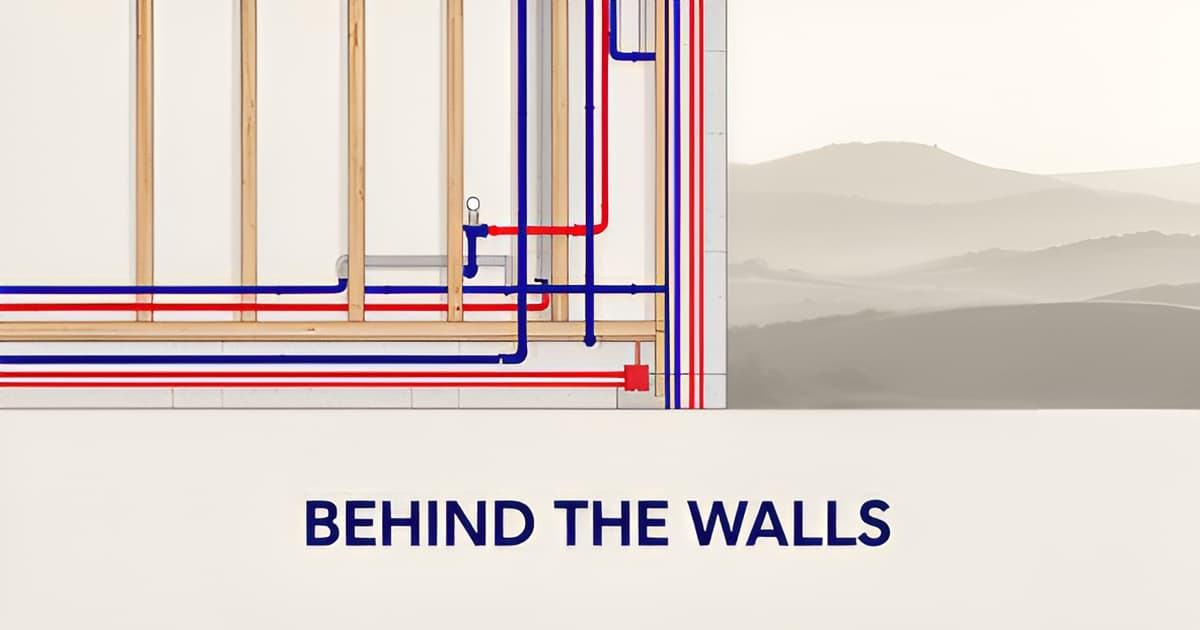
When homeowners imagine a gut renovation budget, they picture countertops and tile. The actual money goes somewhere far less photogenic: inside the walls, into pipes, wiring, ducts, and framing.
A real proposal makes this concrete. HomeLight documents a 3,750 sq ft full-gut project from Blockhouse Residential totaling $133,691 — and the line items tell the story. Plumbing alone ran $26,500, electrical $14,400, structural repair $14,725, and HVAC $11,500. Add drywall and primer at $25,143.50, and the "invisible" work dwarfed the visible finishes: kitchen cabinets came in at just $6,550 and bath vanities at $3,000.
This matches what contractors report across high-cost California markets. Bay Area line-item data puts structural and MEP rough-in — the 200A panel, supply and drain lines, HVAC ductwork — at $40,000 to $100,000 before a single finish is installed. As one NYC design-build firm bluntly puts it, the biggest cost bump comes from what lies behind the walls, not what you see.
The proportions hold up across markets. Budget analysis from Mammoth New York finds that construction labor plus rough materials consume roughly 70% of a gut renovation budget, while finishes, fixtures, and equipment account for only about 30%. That 70/30 split explains why two renovations with identical tile and cabinetry can differ by six figures.
The big finish line items still matter, of course. Kitchens and baths dominate what remains:
- Full kitchen gut and rebuild: $60,000–$150,000 in Bay Area benchmarks — typically the single largest line item
- Bathrooms: $25,000–$65,000 each
- Flooring: $20,000–$60,000 whole-home
- Interior finish work (Level 5 drywall, trim, paint): $20,000–$50,000
One line item deserves special caution: opening up the floor plan. Removing a non-load-bearing wall runs $6,000–$12,000, but a load-bearing removal — steel beam, engineering, permits — climbs to $25,000–$40,000 or more, per Gallery KBNY's project data. In Altadena's older housing stock, where mid-century layouts often hide surprises, that open-concept dream can carry a structural price tag.
This behind-the-walls reality is why we at Altadena Custom Home Builder encourage homeowners to evaluate systems condition before fixating on finishes — especially for fire-affected properties weighing a gut remodel against a rebuild. If you're mapping that decision for your own property, a free build consultation can help you sort rough-in costs from finish costs before you commit to either path.
Gut Renovation or Tear-Down Rebuild? The Structural-Condition Decision
Before you price a single cabinet pull, Altadena homeowners face a bigger fork in the road: keep the bones and gut, or clear the lot and start over. The answer hinges almost entirely on what an inspection reveals behind the walls — and in a community full of 1940s–50s housing stock, plus Eaton Fire–affected properties, that question is rarely academic.
The headline math favors renovation. According to NerdWallet's cost analysis, a gut remodel typically runs 20–50% less expensive than a teardown and rebuild. That gap holds as long as the foundation, framing, plumbing, electrical, and HVAC are fundamentally sound.
But the same analysis flags the exception that matters most here: major foundation, structural, or systems problems can flip the math entirely toward a rebuild. A cost comparison from Crafthaus Remodeling puts new construction at $150–$500+ per square foot, while HomeGuide benchmarks place a full new build at $350,000–$800,000 before land and site prep. When structural repairs stack on top of a full gut — say, $14,000 in structural work plus $26,500 in plumbing, as one real 3,750-square-foot gut proposal documented by HomeLight showed — the renovation discount erodes fast.
For Altadena owners weighing the two paths, the deciding factors cluster around a few conditions:
- Foundation integrity — cracks, settling, or hillside slope movement that require major repair rather than patching
- Structural framing — fire, water, or termite damage extensive enough to compromise the skeleton
- Systems age — cloth wiring from the 1940s–50s that no longer passes inspection, or plumbing at end of life
- Layout limitations — walls and ceiling heights that fight every modern floor plan
Renovation also carries a financial advantage unique to California. A Bay Area renovation analysis notes that a major remodel typically adds 60–80% of its cost in appraised value while retaining the original Prop 13 tax base — a teardown triggers reassessment at current market value, which in Altadena can mean a permanently higher tax bill.
Remodeling ROI data supports the keep-the-bones path when it works. A minor kitchen remodel recoups about 113% of cost, and a bathroom remodel returns roughly 80%, per industry ROI figures. Those returns assume the underlying structure is worth keeping.
The honest caveat: you often can't know which side of the line you're on until walls come open. As one construction executive quoted by HomeLight puts it, demo the entire project first, then build the budget — otherwise you might open a wall and discover $30,000 in structural repairs that blow the plan. That's why Altadena Custom Home Builder recommends a structural assessment before committing to either path, and why a free build consultation with a licensed local contractor like JMB Builders LLC (CSLB #1103479) is the cheapest insurance you'll buy in this process.
Budgeting for the Inevitable: Overruns, Contingency, and Hidden Costs
The most honest line in any gut renovation budget is the one nobody wants to write: the number for what you can't see yet. In Altadena, where much of the housing stock predates modern code and fire-damaged properties add another layer of uncertainty, that number matters more than the finish schedule.
The data backs this up. Industry research finds that 78% of renovation projects go over budget, and roughly two-thirds of homeowners take on debt to cover the gap. In older homes specifically, contractor guidance puts the surprise premium at 10–25% or more above original estimates.
Some surprises are simply unknowable in advance. Prior patchwork repairs, code violations, hazardous materials, and damaged framing often can't be identified until demolition is complete — even opening a single wall can reveal problems in an older building. Asbestos, common in pre-1980 materials, runs $1,200–$3,300 to remediate, while hidden mold typically costs $1,200–$3,750, per national cost data.
Andrew Holmes, VP of Construction at Blockhouse Residential, offers a sequencing strategy that addresses this directly: demo the entire project first, then build the scope and budget. Otherwise, he warns, you can spend months planning, open the walls, and discover $30,000 in structural repairs — at which point "your budget is blown." For Altadena's mid-century and older homes, this approach can save a painful re-planning cycle.
Beyond demo surprises, hold a 10–20% contingency reserve as a matter of course. Then account for the soft costs that rarely make the initial spreadsheet:
- Permits — $500–$2,500 nationally, and $5,000–$15,000 for full-gut scope in high-cost California markets
- Architectural and design fees — $15,000–$40,000 for a whole-home project
- Temporary housing — $3,000–$6,000 per month, often for a year or more
- Timeline carry costs across a 12–24 month design-to-move-in window
That last point deserves emphasis: a full gut isn't a three-month project. Design, permitting, and construction together commonly stretch to 12–24 months, and every one of those months carries housing costs on top of the renovation budget.
If you're weighing a gut remodel against a teardown on an older or fire-affected Altadena property, these hidden-condition risks change the math — major structural or systems problems can erase the usual 20–50% cost advantage of remodeling over rebuilding. Altadena Custom Home Builder offers a free build consultation to help you assess which path fits your lot, your budget, and your tolerance for the unknown.
Your Altadena Action Plan: Bids, Sequencing, and Getting Local Numbers
National benchmarks tell you what a gut renovation usually costs — but your Altadena house has its own walls, its own slope, and its own surprises waiting behind the drywall. Here's how to turn those ranges into a plan you can actually act on.
Start with bids. Renovation budgeting experts recommend getting at least three detailed, scope-comparable contractor estimates — and treating a suspiciously low outlier as a red flag, not a bargain. Make sure each bid covers the same line items: demo, structural, plumbing, electrical, HVAC, drywall, flooring, kitchen, baths. Remember that the biggest money goes behind the walls, not into finishes, so a bid that skimps on MEP detail is the one that will bite you later.
Then sequence the work demo-first. Andrew Holmes, VP of Construction at Blockhouse Residential, puts it bluntly: demo the entire project first, then build the scope and budget — otherwise you can spend months planning, open the walls, and find yourself staring at $30,000 in structural repairs with the budget already blown (HomeLight). That advice matters double in Altadena, where mid-century housing stock, hillside lots, and fire-affected properties make hidden conditions the rule, not the exception.
Your budget structure should look like this:
- 10% contingency minimum — 78% of renovation projects go over budget, and older homes commonly add 10–25% in surprise costs once walls come open.
- A must-have vs. nice-to-have list — when mid-project additions appear, offset them with downgrades rather than new debt.
- Temporary housing — comparable California markets run $3,000–$6,000/month, and full guts take a year or more.
- Permitting and design soft costs — budget these as real line items, not afterthoughts.
Local reality shapes all of this. Altadena sits in LA County unincorporated territory, so permitting runs through the county — and hillside and slope lots add engineering and access considerations that flat-lot national averages never capture. If you're weighing a gut remodel against a tear-down after Eaton Fire damage, the decision hinges on structural condition: a gut typically runs 20–50% less than a rebuild, but major foundation or systems damage can flip that math toward starting fresh.
That's exactly where a local conversation beats a national benchmark. Altadena Custom Home Builder offers a free build consultation to translate these ranges into a line-item estimate for your actual property — your lot, your structure, your scope — with JMB Builders LLC (CSLB #1103479), an Altadena-based licensed general contractor experienced in whole-home remodels and Eaton Fire rebuilds. Bring your address and your must-have list, and leave with real numbers.
Frequently Asked Questions
How much does a full gut renovation cost per square foot?
Where does most of the money go in a gut remodel — is it really the kitchen?
Is it cheaper to gut renovate or tear down and rebuild in Altadena?
How much contingency should I budget for a gut renovation?
What hidden costs do homeowners usually forget to budget for?
How long does a full gut renovation take from start to finish?
From Benchmarks to Your Backyard: Turning Numbers Into a Plan
The numbers in this article won't tell you what your Altadena gut renovation will cost — no published source can, because no Altadena-specific pricing exists. What they will tell you is where the money actually goes: behind the walls, where plumbing, electrical, HVAC, and structural work consume roughly 70% of a typical budget, and where 78% of projects run over without a proper contingency. You now have a line-item framework, the demo-first sequencing strategy, and the gut-vs-rebuild decision criteria to walk into contractor conversations prepared. The next step is simple: get at least three scope-comparable bids, hold a 10–20% reserve, and get real numbers for your actual lot. That last part is where a national benchmark ends and local expertise begins. Altadena Custom Home Builder offers a free build consultation with JMB Builders LLC (CSLB #1103479) — bring your address and must-have list, and leave with a line-item estimate grounded in your walls, your slope, and your scope, not someone else's average.