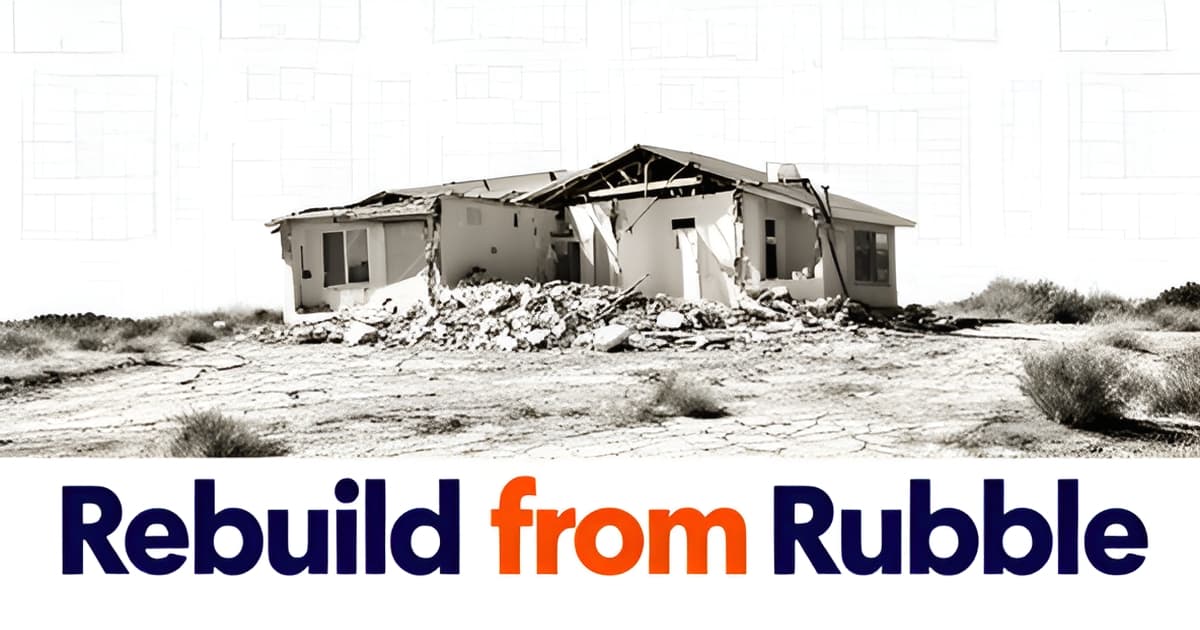
Demolish and Rebuild in Altadena: Knock-Down Rebuild Process and Cost
Key Facts
- Only 23 of nearly 6,000 significantly damaged Altadena properties had completed rebuilding as of December 2025, per Catalyst California tracking.
- 62% of surveyed 2025 LA fire survivors reported being underinsured, according to United Policyholders.
- Pre-construction costs like debris removal, hazmat, and permits commonly consume $75,000–$200,000 before construction even begins, per wildfire rebuild guides.
- Altadena's average insurance coverage of $607,000 falls roughly $140,000 short of a $750,000 rebuild estimate, Catalyst California found.
- California construction costs have climbed roughly 44% since December 2020, per the state DGS index.
- LA County charges a flat $1,404 permit fee for like-for-like fire rebuilds with 10-business-day initial review, according to rebuild guides.
- Lead contamination persisted above acceptable residential levels in Altadena even after debris removal, county soil testing showed.
Why Altadena Rebuilds Stall: The Real Budget and Permitting Traps
Nearly a year after the Eaton Fire, Altadena's rebuild numbers tell a sobering story: as of December 2025, only 23 of nearly 6,000 significantly damaged residential properties had completed rebuilding, according to tracking by Catalyst California. The problem isn't a lack of will. It's that most homeowners budget for the wrong things and get blindsided by costs that arrive before a single wall goes up.
The insurance gap comes first. A United Policyholders survey of 2025 LA fire survivors found that 62% reported being underinsured — and another 33% didn't yet know their status. In Altadena specifically, average insurance coverage of $607,000 falls roughly $140,000 short of a $750,000 rebuild estimate for a modest 1,500 sq ft home, per the same Catalyst California analysis.
Then comes the trap that catches even well-insured owners: pre-construction spending. Debris removal, hazmat remediation, soil testing, permits, and engineering commonly consume $75,000–$200,000 before construction begins. As one rebuild practitioner puts it, most cost overruns happen because homeowners budget for the construction phase while earlier phases quietly drain the insurance payout.
The pre-construction money pit typically includes:
- Debris removal — standard policies cap this at just 5% of dwelling coverage, while the private benchmark runs near $100,000 per parcel
- Hazmat and asbestos work — an AHERA survey is mandatory before demolition under SCAQMD Rule 1403, with abatement adding $1,500–$8,000+
- Soil testing — LA County testing found lead remained above acceptable residential levels even after debris removal
- Permits and engineering — roughly $12,000 for a 1,500 sq ft rebuild, plus compaction and soils reports where foundations are disturbed
Post-fire demand surge compounds everything. After a major fire, labor and material prices can spike 20–40% within months and stay elevated for a year or more — and waiting doesn't protect you from it. California's construction cost index has already climbed roughly 44% since December 2020, per the state DGS index.
This is why Altadena Custom Home Builder recommends budgeting all five rebuild phases — not just construction — and carrying a 20–30% contingency. The good news: LA County's accelerated fire-rebuild review (10 business days initial, 5-day rechecks) and the $1,404 like-for-like permit fee remove some friction. The budget discipline, though, is entirely on the homeowner.
The Demolition Phase: Hazmat Surveys, Permits, and Debris Removal in LA County
Demolition in Altadena follows a strict sequence, and skipping a step can cost you months — or tens of thousands of dollars. Because Altadena sits in unincorporated Los Angeles County, your demolition permit comes from LA County Public Works Building and Safety, not a city department.
Step one is the asbestos survey. Under SCAQMD Rule 1403, an AHERA-certified asbestos survey is required before any demolition, even for single-family homes. Asbestos was common in older Southern California homes — floor tiles, popcorn ceilings, pipe insulation, and roofing — with materials containing it up to roughly 1980, and as late as 1990 in some cases. A typical survey runs $200–$600 with 3–7 business days for lab analysis; abatement, if required, adds $1,500–$8,000 or more.
Never demolish before your permit is issued. Practitioners warn that starting demolition with an application still pending is a permit violation that can trigger stop-work orders and doubled fees — a mistake described as the most common one in Southern California. LA County has accelerated fire-rebuild timelines for Eaton Fire properties: 10 business days for initial review and 5 business days for rechecks.
Once the structure is down, debris removal presents two paths:
- Army Corps Phase II government removal, at no direct cost to eligible owners who assign their insurance debris-removal proceeds
- Private removal, benchmarked at roughly $100,000 per parcel based on CalRecycle's Camp Fire contract
- Either way, note that standard insurance policies cap debris removal at just 5% of dwelling coverage
The phase doesn't end when the lot is cleared. LA County soil testing contracted through DPH found that lead levels dropped after debris removal but still remained above acceptable residential levels — and of 50 intact, remedified homes tested by residents' groups, 6 of 10 sampled homes remained uninhabitable due to elevated lead or asbestos. Post-debris soil testing is not optional due diligence; it's how you protect your family and your future foundation.
Altadena Custom Home Builder helps Eaton Fire rebuild households map this sequence against LA County's actual requirements before heavy equipment ever arrives. A free build consultation can help you confirm your hazmat, permitting, and soil-testing plan — the pre-construction phases that commonly consume $75,000–$200,000 before construction begins.
What a Knock-Down Rebuild Actually Costs in Altadena
The sticker price of a knock-down rebuild in Altadena is rarely the real number. Most homeowners who budget only for construction run out of money mid-project — because the phases before and after the build quietly drain the account first.
Demolition typically runs $5,000–$25,000 for a 1,500–2,500 sq ft home and $25,000–$50,000 for larger structures, with hazmat removal adding $5,000–$30,000 on top, per national teardown benchmarks. In Southern California, an AHERA-certified asbestos survey ($200–$600) is legally required before any demolition under SCAQMD Rule 1403, and abatement, if asbestos is found, can add $1,500–$8,000 or more.
Rebuild costs in the Eaton Fire area are running roughly $570 per square foot for mid-market homes, with high-end custom builds approaching $800 per square foot — figures that rebuild guides flag as owner-reported estimates rather than cost-database pricing. California construction costs have climbed about 44% cumulatively since December 2020, according to the state's construction cost index, and post-disaster demand surge can spike contractor and material prices 20–40% for a year or longer.
Permit fees vary sharply depending on your pathway. LA County charges a flat $1,404 for like-for-like fire rebuilds, but larger new builds run roughly $12,000 for a 1,500 sq ft home and $22,000 at 3,000 sq ft.
The line items that surprise Altadena homeowners most:
- Pre-construction costs — debris removal, hazmat remediation, soil testing, permits, and engineering commonly consume $75,000–$200,000 before construction begins.
- Temporary housing — a 24-month rebuild can add $60,000–$120,000 in living costs while you wait.
- Utility reconnections — $15,000–$50,000 in comparable California markets when meters and laterals need replacement.
- Soil and geotech reports — $5,000–$15,000, and LA County requires a compaction report if the foundation is removed and soil is disturbed more than 12 inches.
Add it up and non-construction items typically add 40–60% on top of the base contract. That's why Altadena Custom Home Builder recommends a 20–30% contingency buffer rather than the traditional 10–20% — especially with documented post-fire demand surge. If you're weighing a teardown against a remodel, a free build consultation can help you pressure-test the full budget, not just the contractor's bid.
Rebuild Rules That Shape Your New Home: Zoning, WUI Code, and Insurance
Before you swing a wrecking ball, three sets of rules determine what you can actually build: zoning, fire code, and your insurance policy. Altadena homeowners who skip this homework often discover constraints only after the lot is cleared.
Start with LA County Regional Planning. Because Altadena is unincorporated, current setback, lot coverage, and floor-area-ratio rules apply to any new build — and they can shrink your rebuild footprint. One Bay Area contractor documented a case where owners tore down a 2,800-square-foot home only to learn zoning limited the rebuild to 2,400 square feet. The upside: LA County offers accelerated fire-rebuild permitting, with a $1,404 like-for-like rebuild permit fee and two-week Regional Planning review.
Fire-resilient building is the second gate. Most of Altadena sits in CAL FIRE High Fire Hazard Severity Zones, so new construction must meet WUI code requirements (Title 24, Part 7, effective January 1, 2026):
- Class A roofing and ember-resistant vents
- Noncombustible exterior walls and tempered dual-pane glazing
- Fire sprinklers, required statewide for new 1–2 family dwellings
- Defensible space, including noncombustible Zone 0 landscaping
These upgrades aren't free, but they're modest relative to the protection. Modeled WUI upgrades on a 1,750 sq ft Altadena home added $13,070, while the stricter IBHS Wildfire Prepared Home Plus standard added $15,242 — under 10% of construction cost — yet reduced modeled home destruction by up to 43%. Zone 0 noncombustible landscaping runs about $3,742 versus $1,106 for traditional bark mulch and wood fencing.
Finally, audit your policy before demolition day. Insurance gaps are the norm, not the exception: 62% of surveyed 2025 LA fire survivors reported being underinsured, and Altadena's average $607,000 coverage falls roughly $140,000 short of a $750,000 rebuild benchmark. Three provisions deserve close attention:
- Ordinance or Law coverage, which funds code-required upgrades like sprinklers and WUI compliance
- Debris removal caps — standard policies limit this to 5% of dwelling coverage, while private debris removal benchmarks run near $100,000 per parcel
- The 36-month Additional Living Expenses window, with possible 6-month extensions
Altadena Custom Home Builder helps owners map these constraints early — verifying buildable area, WUI scope, and coverage gaps — so a free build consultation happens before the teardown, not after.
Your Step-by-Step Altadena Rebuild Roadmap
Rebuilding after the Eaton Fire is a marathon of paperwork before it's ever a construction project — and the order in which you tackle the steps determines whether your budget survives. Here is the sequence we recommend to Altadena homeowners.
Step 1: Audit your insurance first. According to survey data from 2025 fire survivors, 62% reported being underinsured, and Altadena's average coverage of $607,000 falls roughly $140,000 short of a typical rebuild. Check your Ordinance or Law coverage, debris removal caps, and your 36-month ALE window before spending anything.
Step 2: Verify zoning with LA County Regional Planning. Altadena is unincorporated, so permits flow through the county, not a city. Current setback and coverage rules apply to new builds — one documented teardown case saw a 2,800 sq ft home rebuilt at only 2,400 sq ft because of zoning limits. Confirm your buildable footprint before the excavator arrives.
Step 3: Complete the hazmat survey. SCAQMD Rule 1403 requires an AHERA-certified asbestos survey before any demolition. Never start work before permit issuance — practitioners warn it risks stop-work orders and doubled fees.
Step 4–5: Demolish, remove debris, then test the soil. Lead contamination persisted above residential levels even after debris removal, so soil testing is not optional.
Step 6: Design and permit. LA County offers accelerated fire-rebuild review — 10 business days for initial review and a $1,404 like-for-like permit fee. Steps 7 and 8 are construction and occupancy, typically 18–36 months from lot clearance.
Before committing, confirm demolition is actually the right call:
- Foundation failure, where replacement alone runs $100,000–$250,000
- Hazmat remediation exceeding $50,000
- Remodel costs exceeding roughly 60% of new-build cost — new construction typically wins past that threshold
- Plans to more than double square footage, where clean-sheet design is 15–20% more efficient per square foot
Budget for all phases, not just construction: pre-construction alone commonly consumes $75,000–$200,000 before framing begins. For official guidance, start with the county's Eaton Fire recovery resources and UCLA's housing recovery research on Altadena.
If you're weighing demolish-versus-remodel on your lot, Altadena Custom Home Builder offers a free build consultation to map your site, budget, and permitting path — including hillside lots and SB 9 considerations — before you commit to either direction.
Frequently Asked Questions
How much does it actually cost to demolish and rebuild a home in Altadena?
Why do so many Altadena rebuilds stall or run out of money?
Do I need an asbestos survey before demolishing my house in Altadena?
Who issues demolition permits in Altadena, and how long does permitting take?
Is the soil safe to rebuild on after the Eaton Fire debris was removed?
Should I remodel my fire-damaged house or tear it down and rebuild?
Rebuild Altadena Right: Budget the Whole Journey, Not Just the Build
The numbers tell the story: with only 23 of nearly 6,000 significantly damaged Altadena properties fully rebuilt as of December 2025, the families who succeed are the ones who budget for all five phases — not just construction. That means auditing your insurance before spending anything, verifying your buildable footprint with LA County Regional Planning, sequencing the AHERA survey before demolition, testing soil after debris removal, and carrying a 20–30% contingency to absorb the pre-construction costs that commonly consume $75,000–$200,000 before framing begins. Waiting doesn't protect you, either: California construction costs have climbed roughly 44% since December 2020, per the state's construction cost index, and post-fire demand surge can push prices higher still. The county's accelerated fire-rebuild review and $1,404 like-for-like permit fee remove some friction — the budget discipline is on you. If you're weighing a teardown against a remodel on your lot, Altadena Custom Home Builder offers a free build consultation to map your site, budget, and permitting path before you commit to either direction.