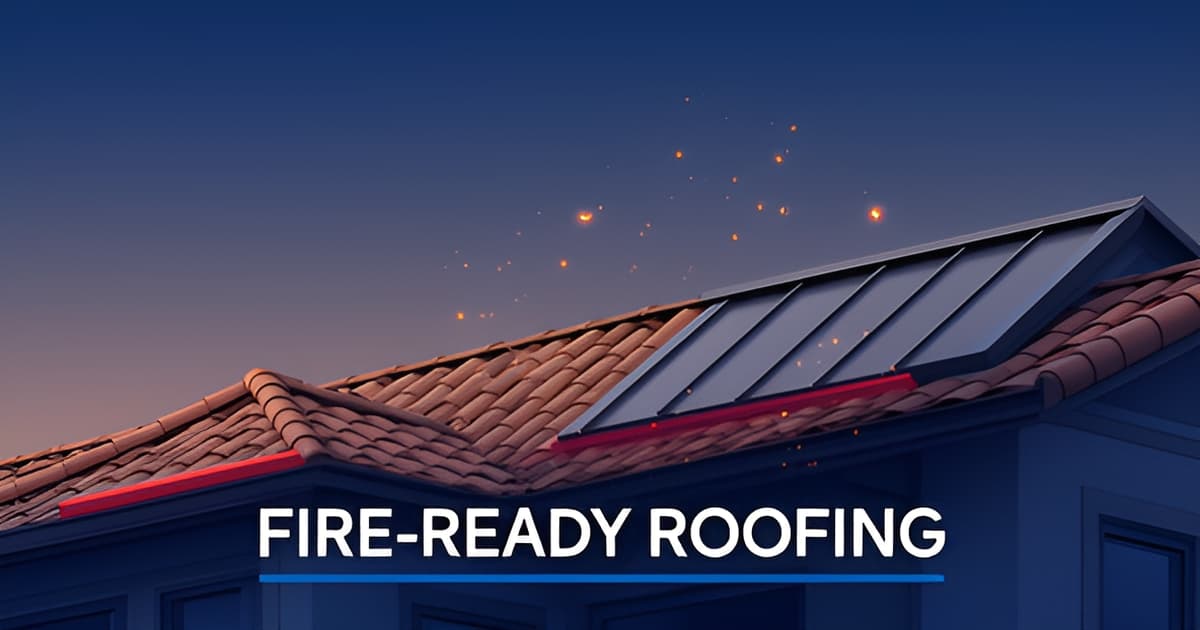
Custom Roofing in Altadena: Materials That Meet WUI Fire Standards
Key Facts
- Wind-blown embers can travel over a mile from a fire front and cause most home ignitions, per fire-code analysis.
- The January 2025 Eaton Fire destroyed 9,413 structures across 14,000 acres, recovery tracking shows.
- Only 23 of nearly 6,000 significantly damaged Altadena homes had completed rebuilding as of December 2025, Catalyst California reports.
- FAIR Plan policies in Altadena and Palisades ZIP codes more than doubled between 2021 and 2024, industry data shows.
- Class A roofing upgrades typically add $3,000–$15,000 over standard asphalt, per contractor estimates.
- Only 23% of significantly damaged Altadena homes sat in designated very-high fire hazard zones, recovery data found.
- The 2026 CAL FIRE zone expansion pulls roughly 1,000 more Eaton Fire-area properties into mandatory Chapter 7A compliance, county guidance notes.
Why Your Roof Is the First Thing Altadena's Fire Rules — and Insurers — Look At
When the Eaton Fire swept through Altadena in January 2025, it burned 14,000 acres, destroyed 9,413 structures, and became the second most destructive wildfire in California history, according to recovery tracking data. What many homeowners don't realize is that most of those homes weren't touched by flames directly — they were ignited by embers.
Wind-blown embers can travel over a mile from an active fire front, and ember accumulation on combustible roof materials is the dominant ignition path for structures, per fire-code analysis. That's why your roof is the single most scrutinized component of any Altadena rebuild — by county plan checkers and by your insurance carrier alike.
Class A roofing is now code, not a preference. Under California Building Code Chapter 7A, Class A roof assemblies are required for new construction and major re-roofing in Fire Hazard Severity Zones, tested to ASTM E108 or UL 790 standards. LA County plan check requires every Chapter 7A element — roofing assembly, vents, glazing — to be explicitly called out in your architectural plans, and county guidance is clear that like-for-like rebuild status applies only to size and configuration. You cannot restore a pre-existing wood shake or Class C roof when a new permit is required.
The insurance market has hardened in parallel. FAIR Plan policies in Altadena and Palisades ZIP codes more than doubled between 2021 and 2024, and under California's Safer from Wildfires framework, insurers must offer discounts for documented Class A roofing — while some carriers now require it as a condition of coverage. For Eaton Fire rebuilders weighing material choices, the math has changed:
- Class A roofing upgrades typically add $3,000–$15,000 over standard asphalt, per contractor estimates.
- Documented Class A assemblies can unlock premium discounts and keep coverage options open.
- Wood shake is prohibited outright in Fire Hazard Severity Zones, regardless of fire treatment.
One more wrinkle matters for Altadena specifically. Only 23% of significantly damaged homes sat in designated "very high" fire hazard zones — but new CAL FIRE maps and the 2026 zone expansion are pulling previously unmapped properties into mandatory Chapter 7A compliance, with LA County required to adopt the new zones by late July 2026. The Eaton Fire burned through areas no map had flagged.
At Altadena Custom Home Builder, we treat Chapter 7A-compliant roofing as the default specification on every ground-up custom home and rebuild we guide, mapped zone or not. The county itself now encourages voluntary compliance outside designated zones — a sensible posture when the next fire won't check the map first.
Planning an Eaton Fire rebuild or custom home in Altadena? Get a free build consultation to talk through roofing assemblies, permits, and Chapter 7A compliance for your lot.
The Materials That Qualify — and the One That's Off the Table
When an ember lands on your roof, the material under it determines whether your home survives. In Altadena's fire environment, California Building Code Chapter 7A makes Class A the minimum rating for new construction and major re-roofing — and the good news is that several attractive, architecturally traditional materials qualify.
The materials that earn a stand-alone Class A rating include:
- Concrete and clay tile — flat or barrel profiles both qualify, and they suit Altadena's Spanish Colonial and Craftsman traditions
- Slate, a premium natural stone option with strong fire performance
- Class A fiberglass-mat asphalt composition shingles, the most budget-friendly compliant choice
- Metal roofing, which is non-combustible, lightweight, and doesn't catch and hold wind-blown embers
One nuance matters with metal: aluminum's low melting point means it can't earn Class A on its own. It requires a fire-rated underlayment as part of the tested assembly — a distinction Fire Safe Marin emphasizes for homeowners comparing metal options.
That assembly point applies across every material. The Class A rating belongs to the complete roof system — covering, underlayment, and deck tested together — not the surface covering alone. Substituting any component invalidates the rating, and industry analysis finds that installation deviation, not material combustion, is the most common compliance failure.
Fiberglass-mat shingles deserve special mention because the difference between otherwise similar asphalt products is significant. Most fiberglass-mat asphalt shingles carry a Class A rating, while most organic-mat versions rate only Class C — a grade that falls short of Chapter 7A requirements in fire hazard zones. When reviewing shingle options for a custom build or Eaton Fire rebuild, confirm the mat type and the tested assembly, not just the product label.
Wood is simply off the table. Wood shakes and shingles are prohibited in any Fire Hazard Severity Zone under LA County rebuilding guidance, regardless of fire-retardant treatment or classification. This matters for homeowners hoping a like-for-like rebuild will let them restore a pre-existing shake roof — it won't. Untreated wood shake is described by fire safety experts as the greatest roof fire threat, because embers accumulate in the gaps and ignite the material directly. Even setting code aside, shake roofs are increasingly difficult to insure in fire-prone areas.
Finally, be skeptical of spray-on shingle "rejuvenation" coatings marketed as fire protection. These products do not provide fireproofing — real fire resistance comes from the tested materials and installation details, not a coating applied years into a roof's life.
At Altadena Custom Home Builder, we recommend specifying the full Class A assembly — covering, underlayment, deck, and ember-resistant details — in your architectural plans from day one, since LA County plan check requires each Chapter 7A element to be explicitly called out. If you're weighing materials for a custom home or rebuild, a free build consultation can help you match code requirements to the architectural character you want.
The Rating Covers the Assembly, Not Just the Shingle
Buy a Class A shingle, install it over the wrong underlayment, and you no longer have a Class A roof. That single misunderstanding trips up more Altadena rebuild projects than any material choice, and it's the detail most homeowners never hear about until plan check.
The rating is assigned to the complete assembly — covering, fire-rated underlayment, deck, and fasteners — tested together under ASTM E108/UL 790, which includes a 10-minute spread-of-flame test and a burning-brand exposure using dry Douglas fir brands, per industry testing documentation. As fire-resistance testing guidance puts it, when comparing roofs, always ask which assembly was tested. Substitute any component on the job site and the certification no longer applies to your roof.
Installation deviation, not material failure, is the most common cause of failed Class A compliance — wrong underlayment, substituted components, flashing gaps, improper fastening. For LA County Public Works plan check, each Chapter 7A element must be explicitly called out in architectural plans, and like-for-like rebuild status applies only to size and configuration, never to materials, according to LA County rebuilding guidance.
Inspectors in WUI zones look past the shingles to the details that embers actually exploit:
- Bird stops and mudded or closed hip-ridge caps on tile roofs — a frequently overlooked failure point, since open gaps at eaves and ridges let embers reach the underlayment
- 1/8-inch metal mesh vent screening, required under Chapter 7A for ember resistance
- Non-combustible gutters and guards — metal gutters stay in place while burning, while vinyl melts and detaches onto the structure below
- Skylights: no common configuration, flat tempered glass or domed plastic, could pass a standard Class A fire exposure test, so operable skylights must be closed during wildfire events
Embers can travel over a mile from an active fire front, and wind-blown embers cause the majority of building ignitions — which is why these small openings matter as much as the roofing surface itself, per fire safe council guidance.
Specify the assembly, not the product. When Altadena Custom Home Builder reviews roofing specifications for a custom home or Eaton Fire rebuild, the covering, underlayment, and deck are named together as a tested system, because that's how the county reviews them — and how a real fire tests them.
Getting It Through Plan Check — and Onto Your Insurance File
A beautiful set of plans can still get bounced at plan check if the fire details are missing. For Eaton Fire rebuilds, LA County Public Works plan check requires every Chapter 7A element — roof assembly, vents, glazing, siding, and decking — to be explicitly called out in the architectural drawings before approval.
That means your roofer's product spec sheet isn't enough. Because a Class A rating applies to the complete assembly — covering, fire-rated underlayment, and deck together — your plans need to name each component, not just "tile roof." Like-for-like rebuild status doesn't help here: it applies only to size and configuration, and material requirements still apply in fire hazard zones. Even outside currently mapped zones, the county encourages voluntary Chapter 7A compliance, and new CAL FIRE maps are pulling roughly 1,000 additional Eaton Fire-area properties into mandatory zones by 2026.
Then there's the insurance side, which is often the bigger financial lever. Under California's Safer from Wildfires framework, insurers must offer discounts for documented Class A roofing — and in a market where FAIR Plan policies in Altadena and Palisades ZIP codes more than doubled between 2021 and 2024, that documentation matters. Many policies also cover rebuilding to current code, including Class A materials, but coverage hinges on proper roofer documentation of what was installed.
To capture both benefits, keep a paper trail that includes:
- Product listings showing the tested Class A assembly, including underlayment and deck type
- Approved plans with each Chapter 7A element explicitly specified
- Inspection sign-offs and final permit closure from LA County
- Contractor invoices itemizing ember-resistant vents, bird stops, and gutter details
Budget realistically. Commercial estimates put the Class A upgrade at $3,000–$15,000 over standard asphalt, with ember-resistant vents running $50–$150 each — figures that vary by home size and material and should be treated as ballpark, not quotes. The full Chapter 7A compliance premium across a rebuild can reach $15,000–$80,000+ above standard construction.
Given that only 23 of nearly 6,000 significantly damaged Altadena properties had completed rebuilding as of December 2025, per Catalyst California's recovery tracking, getting these details right the first time matters. At Altadena Custom Home Builder, we fold Chapter 7A specifications into plans from day one so plan check, inspection, and your insurance file all tell the same story.
Planning an Eaton Fire rebuild or a custom home on your Altadena lot? Request a free build consultation to talk through materials, permits, and documentation before you submit.
Planning a Class A Roof for Your Altadena Build: A Field Checklist
By the time your plans reach LA County Public Works plan check, your roof assembly decisions are already locked in — so make them early, and make them complete. Each Chapter 7A element, from the roofing assembly down to the vents and glazing, must be explicitly called out in architectural plans for approval, and like-for-like rebuild status exempts only size and configuration, never materials.
Specify Class A as a full assembly from day one — covering, fire-rated underlayment, and deck together. The rating applies to the complete system, and substituting any component invalidates it. LA County Public Works encourages voluntary Chapter 7A compliance even outside mapped zones, because the Eaton Fire burned through previously unmapped areas. That guidance is worth taking seriously: new CAL FIRE maps and the 2026 expansion are pulling roughly 1,000 additional Eaton Fire-area properties into mandatory zones, and the county must adopt the new maps by late July 2026.
Here is the field checklist we use at Altadena Custom Home Builder when planning a fire-resilient roof for a ground-up build or rebuild:
- Name the tested assembly — covering, underlayment, deck, and fasteners — in the plans, not just the shingle or tile product.
- Build in the details inspectors actually look for: bird stops and mudded hip-ridge caps on tile, 1/8-inch metal mesh vent screening, and non-combustible gutters.
- Rule out wood shake entirely — it is prohibited in Fire Hazard Severity Zones regardless of fire treatment.
- Document everything: product listings, assembly test references, and installer records, kept for your insurance carrier.
Choose a contractor who is already fluent in WUI requirements. As one industry voice put it, rebuilding after a fire is not the time for a contractor learning the fire code on your house. Installation deviation — wrong underlayment, substituted components, flashing gaps — is the most common Class A failure, not material combustion, so craft fluency matters as much as product selection.
Documentation also pays financially. Under California's Safer from Wildfires framework, insurers must offer discounts for documented Class A roofing, and some carriers now require it as a condition of coverage in high-risk zones. With FAIR Plan policies in Altadena and Palisades ZIP codes more than doubling between 2021 and 2024, the insurance market is tightening fast, and a paper trail is your leverage.
The recovery context underscores why planning discipline matters: only 23 of nearly 6,000 significantly damaged Altadena properties had completed rebuilding as of December 2025. Careful, code-forward planning is how you avoid joining that backlog.
If you are planning a custom home, tear-down, or Eaton Fire rebuild in Altadena, book a free build consultation with our featured builder, JMB Builders LLC (CSLB #1103479), an Altadena-based licensed general contractor experienced with fire-zone rebuilds. For official guidance, start with LA County's Eaton Fire recovery resources through Public Works.
Frequently Asked Questions
Can I rebuild my Altadena home with the same wood shake roof it had before the Eaton Fire?
Isn't a Class A shingle enough, or does the whole roof system matter?
How much more does a Class A roof cost compared to standard asphalt?
Will a Class A roof actually lower my insurance in Altadena?
My property isn't in a mapped fire hazard zone — do I still need Chapter 7A roofing?
Do fire-rated spray-on roof coatings count as fire protection?
Your Roof, Your Rebuild, Your Leverage
The lesson from Altadena's fire is that embers, not flames, decide which homes survive — and your roof is where that battle is won or lost. Class A isn't a preference anymore: it's code in mapped zones, it's increasingly an insurance requirement, and with new CAL FIRE maps pulling roughly 1,000 more Eaton Fire-area properties into mandatory compliance by 2026, the smart move is specifying a full Class A assembly — covering, underlayment, and deck together — from day one, whether your lot is mapped or not. Remember the details that trip up plan check and real fires alike: bird stops, 1/8-inch mesh vents, non-combustible gutters, and a documented paper trail for your carrier. With only 23 of nearly 6,000 damaged Altadena homes completed rebuilding as of December 2025, careful planning is what keeps you out of the backlog. If you're planning an Eaton Fire rebuild or custom home, Altadena Custom Home Builder offers a free build consultation to walk through roofing assemblies, permits, and Chapter 7A compliance for your lot — no pressure, just a clear path forward.