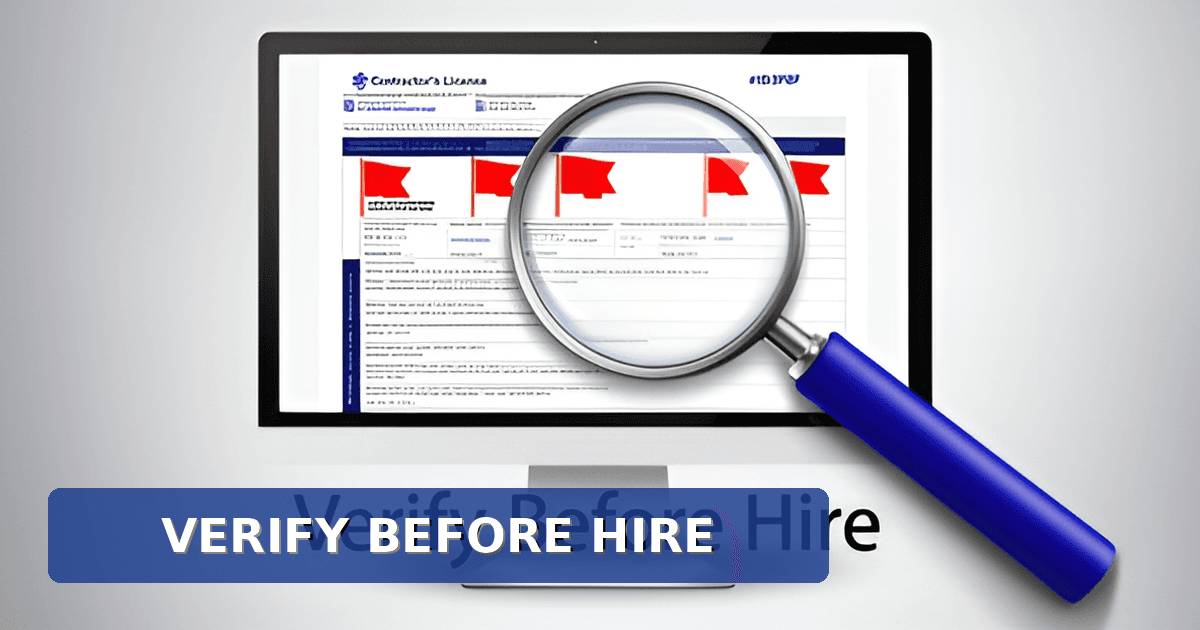
CSLB License Lookup: Reading Between the Lines of a Contractor's Record
Key Facts
- The CSLB lookup publicly showed just 10 complaints against Anchored Tiny Homes despite 259 total filed per an NBC Bay Area investigation.
- More than 10,000 California contractor complaints were closed 'prior to investigation' and kept secret over five years NBC Bay Area found.
- Contracting without a license in a declared disaster zone is a felony punishable by up to 3 years in prison and a $10,000 fine per the LA County DA.
- LA County prosecutors charged eleven unlicensed contractors across the Eaton and Palisades fire zones, with bids reaching $1.27 million in joint DA-CSLB operations.
- California law caps contractor down payments at $1,000 or 10% of the contract price, whichever is less per contractor verification guidance.
- An unlicensed contractor cannot sue you for payment in California civil court, and you may recover amounts already paid according to CSLB.
- CSLB complaint records only cover a four-year window from the date of the act, so older contractor problems may never surface per CSLB guidance.
The Five-Minute Check That Isn't the Whole Story
Every Altadena homeowner rebuilding after the Eaton Fire hears the same advice: run the free license lookup at cslb.ca.gov before you hire anyone. It takes about five minutes, it's free, and the CSLB's official Check a License tool shows license status, classification, bond, and complaint history. The advice is correct — and dangerously incomplete.
Here's the problem: the lookup only displays complaints the board investigated and found a "probable violation" of state law. According to an NBC Bay Area investigation, more than 10,000 consumer complaints were closed "prior to investigation" and kept secret over five years. Settled complaints typically stay hidden entirely, because CSLB doesn't investigate when a contractor settles privately with a customer.
The Anchored Tiny Homes case shows how far the gap can run. CSLB's public record disclosed just 10 complaints — while the board confirmed 259 total complaints had been filed against the company. The license was eventually revoked, and the co-founders now face a 35-count felony complaint. One family who signed in December 2023 saw a complaint-free license page; CSLB later confirmed three undisclosed complaints already existed at that time. They reportedly lost $200,000.
For Altadena homeowners, the stakes are compounded by the enforcement environment. The LA County DA and CSLB have charged eleven unlicensed contractors across two joint operations in the Eaton and Palisades fire zones, and contracting without a license in a declared disaster area is a felony carrying up to three years in prison and a $10,000 fine. A clean lookup result doesn't rule out any of these risks on its own.
So treat the lookup as a floor, not a ceiling:
- Confirm the license is "Active" and the classification fits your project — Class B for a ground-up rebuild, not B-2.
- Ask for references from recent customers and actually call them, since settled complaints never appear on the record.
- Visit a job site or finished project firsthand before signing anything.
- Cap your deposit at $1,000 or 10% of the contract, whichever is less — California's legal maximum.
At Altadena Custom Home Builder, we tell homeowners the same thing we'd want told to us: the license record is a starting point, not a green light. Verify the seven fields on the lookup, then do the legwork the tool can't do for you. If you'd like a second set of eyes on a rebuild contractor or want to talk through your Eaton Fire rebuild plans, our free build consultation is a good place to start.
The Seven-Field Health Check: Reading a License Record in Order
When you pull up a contractor's record on the CSLB "Check a License" tool, the page hands you seven fields — and each one tells you something different about whether this person should touch your Altadena build. Read them in order, like a health check: Status, Classification, Expiration, Bond, Workers' Comp, Personnel, and Complaint History.
Status comes first, and it is binary in practice. Only "Active" counts. Any other status — Expired, Inactive, Suspended, Revoked, or Pending Citation — means the contractor cannot legally perform work at or above the $1,000 threshold under Business & Professions Code §7028, a limit AB 2622 raised from $500 effective January 1, 2025. Do not sign anything.
Classification tells you whether the license even fits your project. For a ground-up custom home or tear-down rebuild, Class B is required — the newer B-2 classification, in effect since January 1, 2021, covers residential remodeling of existing wood-frame structures but can never be used for new construction. A B-2 holder pitching you a hillside new build is a mismatch, full stop.
Expiration matters more than it looks. Licenses renew on a two-year cycle, and an expiration date landing mid-project creates contractual and lien-rights complications. Then check the bond: the minimum contractor license bond is $25,000 under §7071.6, raised from $15,000 by SB 607 in 2023. A disciplinary bond above that floor signals a past suspension.
Workers' compensation is the field most homeowners skim past. Under SB 216's Phase 2, effective January 1, 2026, every licensed contractor must carry coverage — so an "Exempt" notation in 2026 signals either non-compliance or a narrow joint-venture exception. If exempt workers or subcontractors show up on your job, stop. Personnel of record matters too: if an entity name changed after discipline, search by the qualifier's name, which is harder to hide.
Complaint history is last — and the most misleading field of all. The CSLB lookup only shows complaints where the board investigated and found a "probable violation." An NBC Bay Area investigation found more than 10,000 complaints closed "prior to investigation" over five years, and in the Anchored Tiny Homes case, only 10 of 259 total complaints were publicly disclosed. Complaints also carry a four-year lookback window, so older issues vanish.
The lesson: a clean record is a starting point, not a clearance. At Altadena Custom Home Builder, we tell every Eaton Fire rebuild family to pair the seven-field check with references and a look at finished work — and to verify the license number on any bid matches the lookup, since the DA and CSLB have already charged five unlicensed contractors in the Eaton Fire zone. For help evaluating rebuild bids, request a free build consultation.
Red Flags Between the Lines: Disciplinary History, Name Changes, and Hidden Complaints
A spotless complaint record can be the most misleading field on a CSLB license lookup — because the board only displays complaints it investigated and found a "probable violation." An NBC Bay Area investigation found more than 10,000 consumer complaints were closed "prior to investigation" over five years and never appeared publicly.
When a contractor settles privately with a customer, CSLB typically does not investigate, so the complaint stays invisible. The case of Anchored Tiny Homes shows how far that gap can stretch: the license page publicly showed 10 complaints while CSLB confirmed 259 total. One family signed in December 2023 when the record appeared clean — three undisclosed complaints already existed — and reportedly lost $200,000.
Disciplinary history, when it does appear, should be read as a severity ladder:
- A single resolved complaint is a minor mark; context matters more than the entry itself.
- Citations and stop orders escalate concern — multiple stop orders are a strong red flag.
- A disciplinary bond above the $25,000 minimum signals the license was previously suspended.
- Revocation with reinstatement, or a pending accusation, sits at the top of the ladder.
The bond field rewards careful reading. California's minimum contractor license bond is $25,000, but disciplinary bonds can run up to ten times that amount — so an unusually large bond is evidence of past trouble, not extra protection. CSLB can also suspend any contractor who fails to satisfy final judgments related to construction, and complaints are only actionable for four years from the date of the act, so older problems may not surface at all.
Name changes deserve equal suspicion. Contractors sometimes form a new entity after discipline to escape the record. If the business name looks unfamiliar or the record seems manipulated, contractor-published guidance recommends searching the CSLB lookup by the personnel or qualifier's name — as the guidance puts it, the qualifier's name is harder to hide.
For Altadena homeowners — especially those planning Eaton Fire rebuilds — this interpretive layer matters more than ever. Unlicensed contracting in a declared disaster zone is a felony carrying up to three years in prison and a $10,000 fine, and the LA County DA and CSLB have already charged eleven unlicensed contractors across the Eaton and Palisades fire zones. At Altadena Custom Home Builder, we tell every homeowner the same thing: verify the license, then verify the person behind it. Any builder you consider — whether that's a firm like JMB Builders LLC (CSLB #1103479) or anyone else — should hold up under both checks.
Because settled complaints stay hidden, supplement the lookup with references, conversations with past clients, and a firsthand look at finished work. A clean-looking license page is the starting point, never the finish line.
Eaton Fire Rebuilds: Why Verification Is Non-Negotiable in Altadena
Rebuilding after the Eaton Fire is hard enough without discovering your builder was never licensed to begin with. In Altadena, license verification isn't a formality — it's the single most consequential check you'll make before signing anything.
The legal stakes are dramatically higher inside a declared disaster zone. Contracting without a license on structures damaged or destroyed in a Governor-proclaimed disaster is a felony carrying up to 3 years imprisonment and a $10,000 fine, according to the LA County District Attorney's Office. That's a steep escalation from the standard misdemeanor penalties that apply elsewhere.
Enforcement is already active in our own community. In December 2025, joint DA and CSLB operations charged five unlicensed contractors in the Eaton Fire zone and six more in the Palisades zone — eleven cases total, including defendants whose bids reached $1.27 million. CSLB Registrar David Fogt has said plainly that protecting wildfire survivors from unlicensed contractors is a top priority.
The January 2025 wildfires destroyed more than 16,000 homes and structures, and that scale of loss attracts operators who see rebuilds as opportunity. Here's what Altadena homeowners should hold firm on:
- Confirm the license number is Active in the official CSLB lookup before any contract or deposit — and confirm it's displayed on bids and advertising.
- Cap your down payment at $1,000 or 10% of the contract price, whichever is less. A larger deposit demand is itself a red flag.
- Verify the classification fits a ground-up rebuild — Class B is required for new construction.
There's also meaningful legal leverage if things go wrong. Under B&P Code §7031, an unlicensed contractor cannot sue for payment in California civil court, and homeowners may recover amounts already paid. CSLB confirms consumers aren't legally required to pay an unlicensed contractor at all.
One caveat from the DA's office is worth internalizing: homeowners remain victims of a crime even if they knowingly hired someone unlicensed. And as LA County DA Nathan Hochman has warned, unlicensed work leaves you exposed to illegal down payments, fraud, unsafe construction, and difficulty selling your home later.
At Altadena Custom Home Builder, we treat verification as step one of every Eaton Fire rebuild conversation — before hillside engineering, before SB 9 lot splits, before design. If you're weighing a ground-up rebuild or tear-down on your lot, a free build consultation is the easiest way to start that conversation with a licensed builder standing behind the work.
Your Pre-Hire Checklist Before Signing a Rebuild Contract
Before you sign anything, run the lookup yourself — don't rely on a business card or a photocopy. The CSLB's free Check a License tool takes about five minutes, and searching by license number is the most reliable way to confirm you're looking at the right record.
Then read the record in order: status, classification, expiration, bond, workers' comp, personnel, and complaint history. Any status other than "Active" means the contractor cannot legally perform work at or above the $1,000 threshold — walk away. For a ground-up rebuild or custom home, you need Class B, not B-2, since the B-2 classification (effective January 1, 2021) covers residential remodeling but cannot be used for new construction.
A few checks homeowners routinely skip:
- Confirm the license number appears on bids, ads, and contracts. Undercover investigators specifically target contractors who advertise without displaying one.
- Never pay more than $1,000 up front — that's California's legal cap on down payments, regardless of contract size.
- Check references and inspect completed work firsthand. This matters more than ever because the lookup only shows complaints CSLB investigated and found a probable violation; an NBC Bay Area investigation found more than 10,000 complaints were closed before investigation over five years.
- If workers' comp shows "Exempt" on the record and the contractor is using crews on your job, stop.
In the Eaton Fire zone, this diligence is non-negotiable. The LA County DA and CSLB have charged eleven unlicensed contractors across two joint operations, and contracting without a license in a declared disaster area is a felony carrying up to three years imprisonment and a $10,000 fine. Notably, you're a victim of a crime even if you knowingly hired an unlicensed contractor.
If something goes wrong, know your escalation routes. File a complaint with CSLB — though CSLB's own guidance notes investigations are not designed to obtain restitution, so small claims court is the route for money damages. Report suspected unlicensed activity through CSLB's SWIFT program, and remember that under B&P §7031, an unlicensed contractor cannot sue you for payment.
At Altadena Custom Home Builder, we recommend completing every step above before any rebuild contract. If you're evaluating builders, JMB Builders LLC (CSLB #1103479) is a licensed Altadena general contractor whose fire-rebuild work is documented at jmb-builders.com — a paid featured placement we disclose for transparency. For a second opinion on your rebuild plans, schedule a free build consultation with our team.
Frequently Asked Questions
Does a clean complaint record on the CSLB lookup mean the contractor is safe to hire?
What should I actually check on a contractor's CSLB license page?
Why does the classification matter so much for an Eaton Fire rebuild?
How much can a contractor legally ask for as a down payment in California?
What happens if I hire an unlicensed contractor in a fire disaster zone?
If I already paid an unlicensed contractor, can I get my money back?
The Lookup Is Step One, Not the Last Word
A five-minute CSLB lookup tells you whether a license is Active, whether the classification fits a ground-up rebuild, and what the board has formally found — but it can't tell you about the complaints that were settled privately or closed before investigation. That's the gap this article has been about: more than 10,000 complaints were kept off the public record over five years, and one revoked contractor's page showed just 10 complaints out of 259 filed. In the Eaton Fire zone, where eleven unlicensed contractors have already been charged across two DA/CSLB operations, the margin for error is even thinner. So finish the job the lookup starts: call references, walk a finished job site, cap your deposit at $1,000, and verify the license number on every bid. At Altadena Custom Home Builder, this is how we approach every rebuild conversation — verification before design, always. If you'd like a second set of eyes on a builder or your rebuild plans, our free build consultation is a straightforward place to begin.