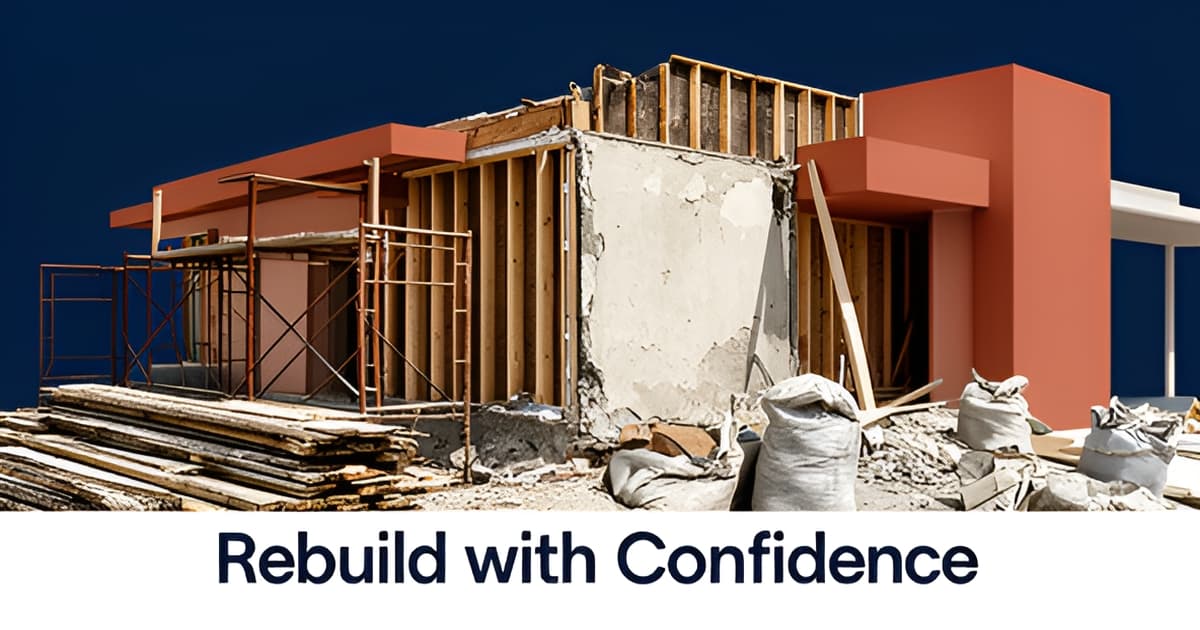
Cost to Rebuild a 1,600-Square-Foot 1920s Altadena Home Today
Key Facts
- Rebuilding a 1,600-square-foot Altadena home today runs $400–$815 per square foot in hard costs — roughly $640,000 to $1.3 million per documented rebuild data.
- Code-required upgrades on Altadena rebuilds have run from $30,000 to over $200,000, driven largely by how old the lost home was according to builder project data.
- The average Altadena home carried just $607,000 in insurance coverage against a $750,000 rebuild benchmark — a $140,000+ shortfall per Catalyst California policy research.
- Wildfire (WUI) code compliance adds 5–15% to overall rebuild cost, covering Class A roofing, ember-resistant vents, and defensible space per Altadena cost research.
- As of December 2025, only 23 of nearly 6,000 significantly damaged Altadena properties had completed rebuilding per rebuild tracking data.
- LA construction costs jumped 6% in Q1 2025 alone, with residential costs up 44% over five years per LA cost research.
- Even expedited like-for-like rebuilds must meet current codes, with modifications capped at 10% or 200 square feet per LA County rebuild guidance.
What Rebuilding a 1920s Altadena Home Really Costs Now
The first thing to understand about rebuilding a 1920s Altadena home is that nothing about it is a restoration. Once a structure is gone, the project is priced as new construction — and in today's market, that means roughly $400 to $815 per square foot in hard costs, or about $640,000 to $1.3 million for a 1,600-square-foot house.
The most defensible benchmarks cluster in the middle of that range. A policy analysis by Catalyst California uses a $500-per-square-foot rebuild benchmark, while a completed 2,490-square-foot Altadena rebuild documented by Go Home Builders came in at $545 per square foot all-in. Wildfire-rebuild bids across Altadena most commonly land between $400 and $600 per square foot, with bespoke, high-end builds reaching $700 to $800 or more.
One headline figure deserves skepticism. Realtor.com's economic research team estimated a typical Altadena rebuild at roughly $262,000 — far below every contractor-based benchmark, and likely a modeled figure for a smaller, standard home rather than a ground-up custom rebuild. Treat it as an outlier, not a planning number.
And that's the deeper trap: headline numbers exclude far more than homeowners expect. As LA County's own regulatory guidance warns, a generic per-square-foot figure should never serve as the full analysis, because site work, design, engineering, permits, and finishes often sit outside the construction number. For a 1,600-square-foot rebuild, budget beyond the headline for:
- Fire-rebuild site work — soil testing, debris removal certification, utility reconnection — typically $25,000 to $60,000 on a typical lot
- LA County permit and plan check fees of $15,000 to $40,000 or more, plus utility connections that can add $20,000 to $50,000
- Architecture and engineering, generally 5 to 10 percent of build cost
- A contingency of 15 to 20 percent, which most estimates quietly omit
The 1920s vintage of the lost home adds one more layer. Code-required upgrades on Altadena-area rebuilds have run from $30,000 to over $200,000, driven largely by how old the destroyed house was — and wildfire (WUI) compliance adds another 5 to 15 percent. Even on the expedited like-for-like pathway, current building, fire, and health and safety codes still apply.
At Altadena Custom Home Builder, we walk homeowners through these numbers during a free build consultation before any commitments are made, because a realistic budget — not a headline — is what gets a rebuild finished.
The Hidden Code-Upgrade Bill: Why a 1920s Home Costs More to Rebuild
A 1920s house wasn't built to survive a fire — or an earthquake — by today's standards. That gap between what your home was and what today's codes demand is where rebuild budgets quietly fall apart.
Across Altadena and Palisades rebuilds, code-required scope has run from $30,000 to over $200,000, driven directly by how old the lost house was, according to builder project data. A century-old home predates modern seismic anchoring, energy standards, and wildfire rules almost entirely — so the older the house, the bigger the bill.
Here's the part that surprises many Eaton Fire homeowners: even the expedited "like-for-like" rebuild pathway doesn't exempt you. As LA County's rebuild guidance makes clear, current building, fire, and health and safety codes still apply no matter how faithfully you recreate the original footprint.
The wildfire-specific requirements stack up quickly. Altadena cost research finds that WUI compliance adds 5–15% to overall cost, covering:
- Class A roofing and fire-rated windows and decks
- Ember-resistant vents and non-combustible siding
- Enclosed eaves and a 5-foot defensible-space zone
Revised fire hazard severity zones, finalized between April 2024 and March 2025, extend defensible-space and WUI obligations to properties in high and very-high zones — even though only 23% of significantly damaged Altadena homes sat in "very high" areas, per Catalyst California's rebuilding analysis.
Then comes the ground itself. Fire rebuild site work — soil testing, certified debris removal, utility reconnection, temporary power — typically runs $25,000–$60,000 on a standard lot. Foundation reuse requires forensic testing by a qualified design professional, and soil compaction reports apply wherever soil was disturbed more than 12 inches deep.
Altadena's hillside lots add another layer. Per LA construction cost research, seismic engineering runs $15,000–$50,000, soil and foundation work $10,000–$40,000, and hillside premiums add 15–30% to construction costs. Slope stabilization and retaining walls can exceed $100,000 on difficult sites.
One encouraging note: an IBHS/Headwaters Economics study found wildfire-resilient materials add only about 3% to material costs — resilience is cheaper than most homeowners assume. At Altadena Custom Home Builder, we walk Eaton Fire families through these code-mandated line items before budgeting, because the hidden bill is the one that sinks underfunded rebuilds.
The Insurance Gap: Why Your Policy Won't Cover the Full Rebuild
For many Altadena homeowners, the hardest part of recovery isn't the rebuild itself — it's discovering, months in, that the insurance check won't come close to covering it. The math is sobering before a single permit is filed.
According to policy research from Catalyst California, the average Altadena home carried $607,000 in coverage as of 2023 — against a rebuild example benchmarked at $750,000. That's a shortfall of more than $140,000 before a dollar goes toward temporary housing, design fees, or the site work that sits outside any headline construction figure.
The gap widens further when you account for code upgrades. Most policies include Building Ordinance or Law coverage, which pays for bringing a replacement home up to current building, fire, and energy codes — but it's typically capped at just 10–25% of your dwelling limit. On a $607,000 policy, that could mean as little as $60,700 to cover code-required scope that, on Altadena and Palisades rebuilds, has run from about $30,000 to over $200,000, driven largely by how old the lost home was. A 1920s house, in other words, sits at the expensive end of that range. Some policies carried no such coverage at all.
This isn't theoretical. In the course of reviewing fire-rebuild budgets, the team at Altadena Custom Home Builder has documented seven settled claims that had to be reopened because code-upgrade scope was missed entirely in the original settlement. Once a claim is closed, reopening it means negotiation, documentation, and delay — on top of a build that already runs 12–24+ months.
A few practical steps worth taking before you finalize a rebuild budget:
- Request a full copy of your policy, including endorsements, and confirm your Building Ordinance or Law limit in writing.
- Get a contractor-based rebuild estimate rather than relying on your carrier's own figure — carrier estimates often exclude code upgrades and site work.
- Document everything from the lost home — photos, plans, appraisals — since the age and character of the original structure directly affects code-upgrade scope.
- Track soft costs separately: architecture, permits, soil reports, and utility reconnection typically sit outside dwelling coverage.
If you're insured through California's FAIR Plan, note that it covers dwellings up to $3 million, but it's a last-resort product with its own limitations — many affected residents had no or only modest coverage at all.
For official guidance on the rebuilding process, LA County maintains resilient rebuilding resources that cover permitting pathways, defensible-space requirements, and current fire-code standards. And if you're weighing whether your policy will actually fund the home you want back, a free build consultation with an experienced rebuild contractor — including JMB Builders LLC (CSLB #1103479), a licensed Altadena general contractor — can give you a realistic cost picture to compare against your coverage before you sign anything.
The insurance company is not the homeowner's friend, as one contractor put it plainly — the two parties have opposite interests. Knowing your real rebuild number first is the best leverage you have.
Your Path to Rebuild: Like-for-Like Permits, Timelines, and Trade-offs
For owners of a burned 1920s home, the fastest permit pathway is also the most misunderstood. LA County's expedited like-for-like review promises speed, but it comes with hard caps that shape what a character rebuild can actually look like.
Under the expedited pathway, Eaton Fire properties qualify if the replacement keeps the legally established size, location, and use of the lost home, with modifications capped at the greater of 10% or 200 square feet, according to guidance on the County's rebuild rules. The County targets 10 business days for initial review and 5 business days for resubmittals — though these are review targets, not end-to-end schedules. Incentives sweeten the deal: LA County offers fee waivers and pre-approved plans for Eaton Fire rebuilds, and standard permit costs can otherwise exceed $40,000, per Altadena cost research.
The catch for a character home is that "like-for-like" is not code-exempt. Even on the expedited pathway, current building, fire, and health and safety codes still apply. That means a faithful 1920s recreation must still incorporate WUI requirements — Class A roofing, ember-resistant vents, non-combustible siding — which add roughly 5–15% to overall cost. And code-required scope on comparable rebuilds has run from $30,000 to over $200,000, driven largely by the age of the home lost.
A few other limits matter:
- Fee deferral and refund relief generally requires having owned and lived at the property before January 7, 2025 — fire-lot buyers can't assume those benefits transfer.
- Deviating from the prior footprint may trigger current Community Standards District requirements, including setbacks.
- A July 7, 2025 executive order suspended rooftop solar and battery mandates for qualifying rebuilds, though homes must still be built solar-ready.
Even with expedited review, realistic timelines run 12–24+ months for construction alone, before design, permitting, and site work. The pace on the ground reflects that: as of December 2025, only 23 of nearly 6,000 significantly damaged Altadena properties had completed rebuilding, and just 43% of owners had applied for or received permits, per Catalyst California's rebuild tracking. Historical precedent is sobering too — after the 2018 Camp Fire destroyed more than 13,500 homes, only about 2,500 were rebuilt six years later, as Realtor.com's reporting notes.
None of this means delay is inevitable — it means the pathway you choose, and the team guiding you through it, matters more than speed alone. If you're weighing like-for-like against a full custom rebuild of your Altadena lot, Altadena Custom Home Builder offers a free build consultation to walk through the trade-offs for your specific property.
Building Your Budget: A Practical Cost Framework and Next Steps
A 1,600-square-foot rebuild budget lives or dies on the numbers you refuse to guess at. The most defensible Altadena benchmarks — a $500/sq ft policy figure and a real completed rebuild at $545/sq ft all-in — give you a working range of $800,000 to $872,000 in hard costs alone, before anything soft touches the project.
Start with hard construction at $500–$545/sq ft, then layer the soft costs on top. A widely used planning framework from LA construction cost research recommends:
- Permits and fees: add 8–12% of hard costs
- Design and architecture: add 10–15%
- Site preparation: add 5–10%
- Contingency: add 15–20% — non-negotiable for a 1920s lot
For a 1,600-square-foot home at $500/sq ft, that formula produces a realistic all-in budget of roughly $1.1 million to $1.3 million. Site work alone on a fire rebuild — soil testing, certified debris removal, utility reconnection — runs $25,000 to $60,000 on a typical lot, per documented rebuild case data.
Here's the number most homeowners don't expect: wildfire-resilient materials add only about 3% to material cost, according to IBHS and Headwaters Economics research cited in Altadena cost analysis. Class A roofing, ember-resistant vents, and non-combustible siding cost less than most assume. Don't budget fear into the fire-code line item — the WUI compliance premium of 5–15% covers labor and detailing, not exotic materials.
Your budget assumes you can find a builder. That assumption is shaky: as one contractor put it, "there's not enough builders in L.A. to rebuild, so everyone's demand is going to be more than the supply." LA construction costs jumped 6% in Q1 2025 alone, and residential costs are up 44% over five years. The pace tells the story — as of December 2025, only 23 of nearly 6,000 significantly damaged Altadena properties had completed rebuilding.
That scarcity means the contractors worth hiring are booking out, and the ones available may not stay available. Locking in a qualified builder early is now part of budgeting, not a final step.
Altadena Custom Home Builder connects homeowners with vetted, licensed builders for ground-up custom homes and Eaton Fire rebuilds. Book a free build consultation to get your specific lot and square footage priced against real Altadena benchmarks.
This section features JMB Builders LLC (CSLB #1103479), an Altadena-based licensed general contractor building custom homes, ADUs, and Eaton Fire rebuilds — a paid placement. For official guidance, LA County's resilient rebuilding resources remain the authoritative reference for permit pathways and code requirements.
Frequently Asked Questions
How much does it actually cost to rebuild a 1,600-square-foot home in Altadena right now?
Why does rebuilding a 1920s house cost more than a newer one?
I saw an estimate that an Altadena rebuild costs around $262,000 — is that accurate?
Will my insurance actually cover the full rebuild?
Does the expedited like-for-like permit pathway let me skip modern building codes?
What hidden costs should I budget for beyond the construction price?
The Real Number That Gets Your Altadena Home Rebuilt
Rebuilding a 1,600-square-foot 1920s Altadena home isn't restoration — it's new construction, and the honest math runs roughly $800,000 to $872,000 in hard costs at the $500–$545 per-square-foot benchmarks, with soft costs pushing a realistic all-in budget toward $1.1 million to $1.3 million. The two traps that sink underfunded rebuilds are the code-upgrade bill — $30,000 to over $200,000 on century-old homes, since even like-for-like pathways require current codes — and the insurance gap, with average coverage of $607,000 falling short of a $750,000 rebuild example per Catalyst California's policy research. Your next steps are concrete: confirm your Building Ordinance or Law coverage in writing, get a contractor-based estimate rather than a carrier figure, document the lost home thoroughly, and lock in a qualified builder early — only 23 of nearly 6,000 damaged Altadena properties had completed rebuilding as of December 2025. Altadena Custom Home Builder offers a free build consultation to price your specific lot against real Altadena benchmarks before you commit to anything.