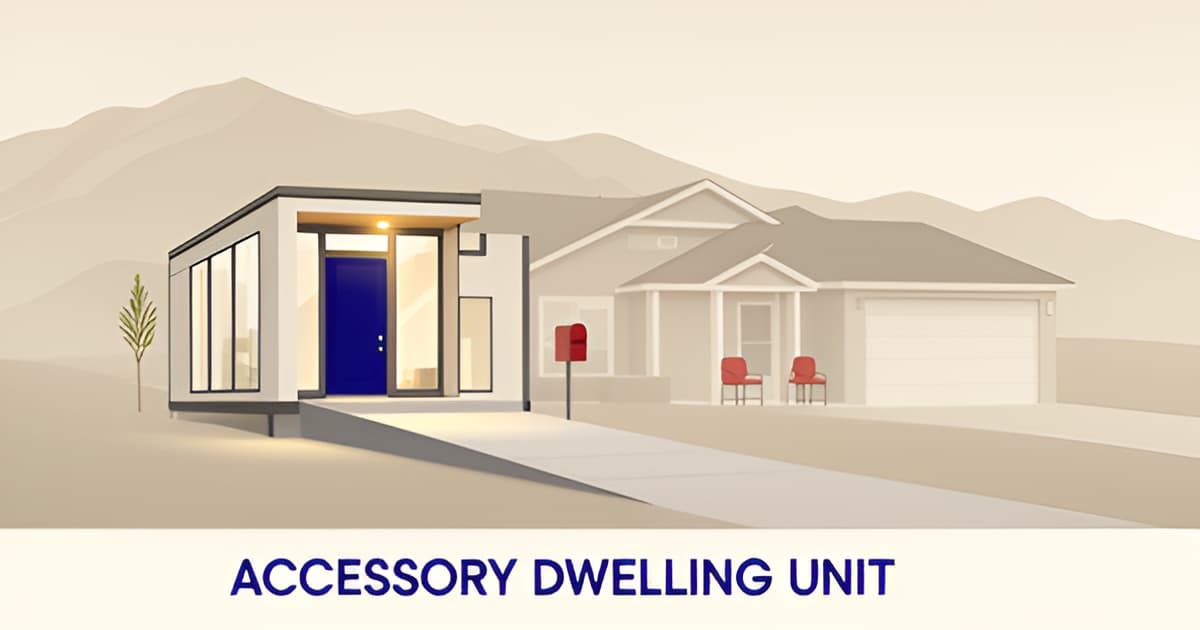
Building an ADU for Aging Parents in Altadena: Costs and Design Choices
Key Facts
- Assisted living costs a national median of $74,400 per year, while in-home care at 44 hours weekly runs about $80,080 according to the CareScout Cost of Care Survey.
- A turnkey 600–800 sq ft aging-parent ADU typically costs $200K–$320K — roughly three to four years of assisted living per financing research.
- 61% of homeowners build ADUs for multigenerational housing, and 73% say accessibility was an important design consideration per industry survey data.
- A permitted ADU may raise primary property value by 12–22%, turning a care expense into a lasting family asset according to NAR market data.
- Assisted living rates climbed 5% from 2024 to 2025, while an ADU is a one-time investment per CareScout's survey.
- LA-area code requires grab-bar backing in bathrooms and ramp handrails at 34"–38" height on both sides per regional building code.
- Fannie Mae's HomeStyle Renovation has explicitly covered detached ADUs since 2023, counting 75% of projected rent toward your DTI per financing guides.
The Real Cost of Care vs. the Cost of Building
The phone call usually comes first: a fall, a near-miss on the stairs, a doctor's quiet warning that Mom or Dad shouldn't be living alone anymore. From that moment, families face a decision that is equal parts emotional and financial — and the numbers deserve a hard look before anything else.
The 2025 national medians for long-term care are sobering. Assisted living runs about $74,400 per year, and non-medical in-home care at 44 hours a week costs roughly $80,080 annually, according to the CareScout Cost of Care Survey. Nursing homes run higher still, from about $114,975 to $129,575 per year depending on room type.
Compare that with a turnkey aging-parent ADU. A 600–800 square foot unit built with aging-in-place features typically costs $200K–$320K all-in, per financing research — roughly the cost of three to four years of assisted living. The critical difference: the ADU remains a family asset.
- Care costs recur forever and rise — assisted living rates climbed 5% from 2024 to 2025.
- An ADU is a one-time capital investment that adds housing flexibility for decades.
- Later, the unit can house adult children, a caregiver, or generate rental income.
- A permitted ADU may raise primary property value by 12–22%, according to NAR market data.
The broader shift is real: industry survey data shows 61% of homeowners build ADUs for multigenerational housing, and one in five Americans now shares a home with adult children, parents, or grandparents.
For Altadena families, the honest caveat is that these figures are national. No Altadena- or LA County-specific ADU cost or permitting data exists in current published research, and hillside lots, unincorporated LA County permitting, and post-fire site conditions can all move the final number. That's exactly why Altadena Custom Home Builder recommends starting with a site-specific feasibility conversation before committing to any budget — and why we offer a free build consultation to walk through your lot, your parent's needs, and realistic cost ranges. JMB Builders LLC (CSLB #1103479), an Altadena-based licensed general contractor experienced with ADUs and hillside builds, is one local resource worth discussing during that conversation.
The math rarely closes the case on its own. But when the alternative is spending $74,000+ every year on care that leaves nothing behind, building a home for a parent — one that keeps them close, independent, and safe — starts to look less like an expense and more like a decision the whole family can stand behind.
Designing for Aging in Place, Not for Renters
If you've ever toured a rental ADU and imagined your mother living there, you already know something is off: the layout was designed for a tenant, not for someone with a walker. An aging-parent ADU is a fundamentally different project, even at identical square footage.
The defining choices start with the floor plan. Aging-parent ADUs call for single-level living with the bedroom, bathroom, and kitchen just a few steps apart, so a bad night or a stiff morning doesn't require navigating stairs or long hallways. The layout also needs to feel like an independent home, not an annex — some parents want proximity for quick check-ins, while others want a real front door and enough distance that visits feel like visits, not check-ins.
Accessibility details are cheapest to solve on paper, which is why experts urge families to raise grab bars, roll-in showers, and wider doorways during the feasibility stage, before the design is locked in. The code context in the LA area reinforces this: grab bars aren't required inside dwelling-unit bathrooms, but backing for future grab-bar installation is required, and ramp handrails must run on both sides at 34"–38" in height. Framing those walls correctly now costs almost nothing; retrofitting later means opening them up.
For two parents moving in together, the layout question changes again. A one-bedroom unit forces couples to share a single bathroom and gives no one a door to close. A 2 bed/2 bath layout solves both problems, giving each parent a private bedroom and their own bathroom — which matters more as care needs diverge over time.
It also helps to zoom out on why this project is worth doing carefully. Nationally, 61% of homeowners cite multigenerational housing as their primary reason for building an ADU, and 73% say accessibility was an important design consideration, according to industry survey data. The design decisions you make now — step-free entries, short travel distances, adaptable bathrooms — are what keep the unit working as your parents' needs evolve.
One honest caveat: the figures above are national and LA City code references, and Altadena sits in unincorporated LA County, where hillside lots and site conditions can change both costs and requirements. That's exactly the kind of question worth working through with a local builder before drawings are final. A free build consultation through Altadena Custom Home Builder is a practical first step for Altadena-specific design and permitting questions, and featured builder JMB Builders LLC (CSLB #1103479) builds ADUs and Eaton Fire rebuilds throughout the area.
What an Aging-Parent ADU Actually Costs
Before you fall in love with a floor plan, you need an honest number. And an honest number for an aging-parent ADU usually lands between $200,000 and $320,000 turnkey for a 600–800 square-foot unit with aging-in-place features, according to one financing guide's cost breakdown.
That sticker price makes more sense against the alternatives. Assisted living runs a national median of $74,400 per year, and in-home care at 44 hours per week costs about $80,080 annually, per the CareScout Cost of Care Survey. A well-built ADU sits in that same financial neighborhood after two to four years — except it remains a family asset.
Here is how a roughly $250,000 project typically breaks down:
- Base build: $170K–$220K for the structure, finishes, and aging-in-place details
- Site work: $18K–$42K, driven heavily by grading, access, and slope conditions
- Utility hookups: $8K–$18K for water, sewer or septic, and power connections
- Permits and plan review: $2,500–$8,500, varying by jurisdiction
- Design and engineering: $6K–$18K, plus a 10% contingency held for surprises
Prefab vendors publish benchmarks worth knowing, though treat them as one company's pricing, not market averages. A vendor-published model lineup runs from $199,000 for a 450-square-foot studio to $449,000 for a 945-square-foot two-bedroom, two-bath unit, with delivery timelines of roughly four to six months. Other builder turnkey examples range from $195K to $340K depending on region and specification.
Here is the caveat that matters most for this article: no reliable Altadena- or LA County-specific cost data exists in the available research. Every figure above is national or vendor-published. Your final numbers will shift based on LA County unincorporated permitting, hillside and slope conditions, and how easily equipment and materials reach your building pad — factors that vary lot by lot in Altadena.
That is why we at Altadena Custom Home Builder treat published ranges as a starting conversation, not a quote. A free build consultation lets us look at your actual site, slope, and access before anyone commits to a number.
How Families Pay for It
Most families building an ADU for aging parents don't have $200K–$320K sitting in a savings account — and the way they choose to finance it says a lot about how the family shares risk. The financing structure is not really about interest rates; it's about who bears which risk in the family, and as one financing guide puts it, "There is no correct answer. There is a correct answer for your family."
The three main paths look like this:
- HELOC — a revolving line against your existing equity, with rates recently running around 8.25%–9.75%. Flexible draws suit phased construction, but variable rates mean your payment can move.
- Fixed home equity loan — a lump sum at roughly 7.5%–8.75%, giving you payment certainty through a 6–9 month build.
- Fannie Mae HomeStyle Renovation — the standout for ADUs specifically. Since 2023 it explicitly covers detached ADUs on single-family lots, priced only about 0.25%–0.5% above a standard 30-year fixed, and it counts 75% of the ADU's projected market rent toward your debt-to-income ratio.
That rental-income provision matters more than it first appears. If the ADU is ever converted to a rental after your parents' tenancy ends, the income typically covers the debt service on a $250K unit within the first year of tenancy — which is why HomeStyle often outperforms a HELOC on paper even before you compare rates.
The family-structure option deserves equal attention. A common arrangement has the parents contributing 30%–60% of the project cost in exchange for a life estate — a legally protected right to live in the unit for the rest of their lives. This shifts risk in both directions: parents gain housing security they can't be removed from, and adult children reduce their borrowing. It also raises questions about Medicaid look-back rules, capital gains treatment, and what happens to the unit after a parent passes — which is why this structure should never be set up without an estate attorney. Expect roughly $1,500–$4,000 in legal fees for a properly drafted life estate.
One more number to keep in view: a permitted ADU raises the primary property's value by an estimated 12–22%, per NAR market data. Against assisted living at a national median of $74,400 per year, a financed ADU builds an asset rather than paying rent to a care facility.
Altadena Custom Home Builder covers ADU financing questions as part of its free build consultation — especially for hillside lots and LA County unincorporated permitting, where site conditions can move your all-in budget more than any rate spread will.
Your Next Steps on an Altadena Lot
The difference between a smooth aging-parent ADU project and a frustrating one usually comes down to sequencing — raising the right questions before anything is drawn. If your parent's move-in timeline is tied to a health event or a lease ending, as ADU specialists advise, the decisions you make in the first few weeks matter most.
Start by putting mobility on the table at the feasibility stage, before design locks in. Grab bars, roll-in showers, and wider doorways are far cheaper to plan than to retrofit, and regional code already requires grab-bar backing in bathrooms and ramp handrails at 34"–38" height. Note that these published requirements come from LA City's building department — Altadena sits in unincorporated LA County, so verify the county's current requirements for your specific project rather than assuming they mirror city rules.
Altadena's terrain adds another layer most flat-lot guides ignore. Many lots here are hillside or slope lots, which affects everything from foundation design and grading to driveway access and utility runs — all of which influence how easily a parent with limited mobility can actually get from the street to the front door. Site work can run $18K–$42K on a typical ADU, and cost guides recommend a 10% contingency on top; hillside conditions can push both figures higher.
Before you commit to a design, work through this short list:
- Document your parent's current and probable mobility needs — a single-level layout with bedroom, bathroom, and kitchen within a few steps is the defining choice for aging-in-place ADUs.
- Get a site-specific read on your lot's slope, access, and utility conditions, since these drive cost and layout more than square footage does.
- Confirm what LA County unincorporated permitting requires for your address, including any fire-zone or hillside ordinances that apply.
- Build your timeline backward from your parent's actual move-in driver, and pressure-test it against realistic construction durations — no one can guarantee a permit or completion date, so build in buffer.
On that last point: vendor-published timelines for smaller detached units run roughly 4–5 months, versus 6–9 months for larger layouts, per one ADU company's benchmarks — treat those as planning ranges, not promises. And with 61% of homeowners citing multigenerational housing as their primary reason for building, per industry survey data, you're solving a common problem, not an unusual one.
Altadena Custom Home Builder is an independent guide to ground-up custom homes, rebuilds, and ADU projects on Altadena's hillside and slope lots. If you have Altadena-specific questions about your lot, LA County unincorporated permitting, or how an aging-parent ADU fits your property, book a free build consultation — we'll help you pressure-test feasibility before you spend on design.
Frequently Asked Questions
How much does it cost to build an ADU for aging parents compared to assisted living?
Is an ADU for a parent really different from a rental ADU?
When should we plan for grab bars and accessibility features — before or after the build?
What's the best layout if both of my parents are moving in together?
How do families actually finance an aging-parent ADU?
Do these national cost numbers apply to Altadena lots?
The Decision That Keeps Giving Back
Building an ADU for aging parents is one of the few decisions where the financial math and the emotional case point the same direction. Assisted living at a national median of $74,400 per year and in-home care at roughly $80,080 annually, per the CareScout Cost of Care Survey, are recurring costs that rise every year and leave nothing behind. A $200K–$320K aging-in-place ADU is a one-time investment that keeps your parents close and independent — and remains a family asset that can later house adult children, a caregiver, or generate rental income. The design choices matter as much as the dollars: single-level living, short distances between bedroom, bathroom, and kitchen, and accessibility features like grab-bar backing and roll-in showers planned before design locks in. And because every Altadena lot is different — hillside slopes, unincorporated LA County permitting, post-fire site conditions — the real numbers come from your actual property, not national averages. Start with a free build consultation through Altadena Custom Home Builder to pressure-test feasibility on your lot before you spend a dollar on design.